
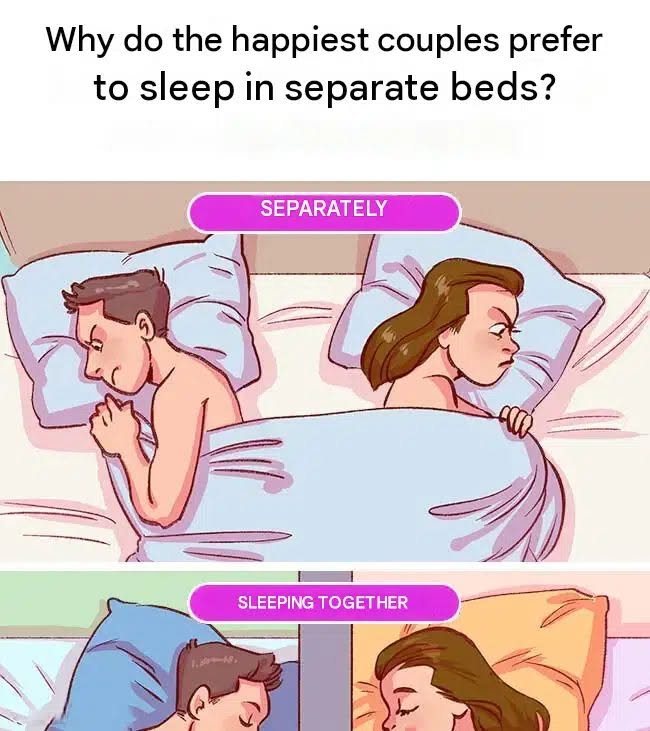
When picturing a long-term, loving relationship, the classic cultural image is almost always a couple sleeping soundly side-by-side in a shared bed. For generations, sharing a mattress has been viewed as a core symbol of intimacy, commitment, and romance. However, modern sleep science, relationship counselors, and a growing number of thriving couples reveal a surprising trend: sleeping in separate beds—often referred to in the hospitality and wellness industries as a “sleep divorce”—is becoming an increasingly popular choice for maintaining a healthy relationship.
While the term sounds harsh, sleeping apart has nothing to do with marital discord. Instead, it is rooted in sleep science, circadian rhythms, and practical health management. In this comprehensive article, we explore why many happy couples choose separate bedrooms, the science of sleep quality, financial considerations, and essential tips for keeping intimacy strong.
The Science of Sleep Disruption and Relationship Health
To understand why separate sleeping arrangements work for many couples, we must examine how sharing a bed impacts nightly rest.
1. Chronic Sleep Deprivation
Tossing, Turning, and Snoring: Different sleep schedules, snoring, restless leg syndrome, and blanket-hogging frequently wake up the sleeping partner throughout the night.
The Ripple Effect: When one partner is repeatedly woken up, it fragments their sleep cycles, leading to chronic fatigue, irritability, lowered immune function, and elevated cortisol (stress hormone) levels. Over time, sleep deprivation can breed resentment and unnecessary daily tension between partners.
2. Differing Circadian Rhythms
People naturally fall into different chronotypes: “night owls” who thrive late into the evening and “early birds” who prefer sleeping and waking with the sun. Forcing two different biological clocks into the exact same sleep schedule often leads to friction when one partner stays up reading or working while the other tries to fall asleep.
Financial, Legal, and Housing Considerations
Choosing separate bedrooms or customized sleep setups carries practical financial and lifestyle factors for modern households.
1. Housing Choices and Dual-Master Homes
Real estate trends show a rising demand for homes featuring dual master suites or multi-bedroom layouts specifically designed to accommodate separate sleeping quarters for couples who value personalized rest.
2. Investing in High-End Sleep Solutions
For couples who prefer staying in the same room but struggle with mattress disruptions, investing in split-king adjustable beds or high-end mattresses with independent motion isolation provides a middle ground without requiring separate bedrooms.
Essential Tips for Maintaining Intimacy and Connection
Choosing to sleep in separate beds does not mean sacrificing romance or emotional closeness. Couples who practice successful sleep separation often follow these core guidelines:
Prioritize Pores and Cuddling: Spend time together talking, cuddling, or reading in bed before parting ways to sleep in your respective rooms.
Maintain Synchronized Morning Routines: Wake up around the same time when possible to enjoy morning coffee or chat about the day ahead together.
Keep Communication Open: Ensure both partners view separate sleeping arrangements as a mutual tool for better health and well-being rather than a sign of emotional distance.
Fascinating Facts About Sleep and Relationships
Historical Sleep Patterns: Sleeping in separate beds or even separate rooms was actually common practice among wealthy couples throughout the 19th and early 20th centuries, prioritizing individual rest and hygiene before modern housing styles changed.
The Rise of the “Sleep Divorce”: Sleep surveys indicate that up to one in four couples now occasionally or permanently sleep in separate beds to guarantee restorative, uninterrupted nightly rest.
Conclusion
While sharing a bed remains a cherished tradition for many, prioritizing quality sleep through separate beds is proving to be a secret weapon for relationship happiness. By ensuring both partners get deep, uninterrupted rest, couples can wake up refreshed, patient, and ready to enjoy their time together.
Frequently Asked Questions (FAQ)
Does sleeping in separate beds mean a relationship is in trouble?
Not at all. For many happy couples, separate beds are a practical choice driven by snoring, different work schedules, or insomnia, allowing both partners to get the rest they need to thrive.
How can couples maintain intimacy if they sleep apart?
Couples can maintain strong emotional and physical intimacy by spending quality time connecting before bed, sharing cuddle sessions, and keeping open, honest communication about their sleep needs.
What is a “sleep divorce”?
A “sleep divorce” is a lighthearted term used to describe couples who choose to sleep in separate beds or rooms to improve their sleep quality and overall health.
Are split-king mattresses a good alternative to separate rooms?
Yes. A split-king setup combines two twin XL mattresses on independent adjustable frames inside a single bed frame, eliminating motion transfer while allowing couples to sleep right next to each other.
