
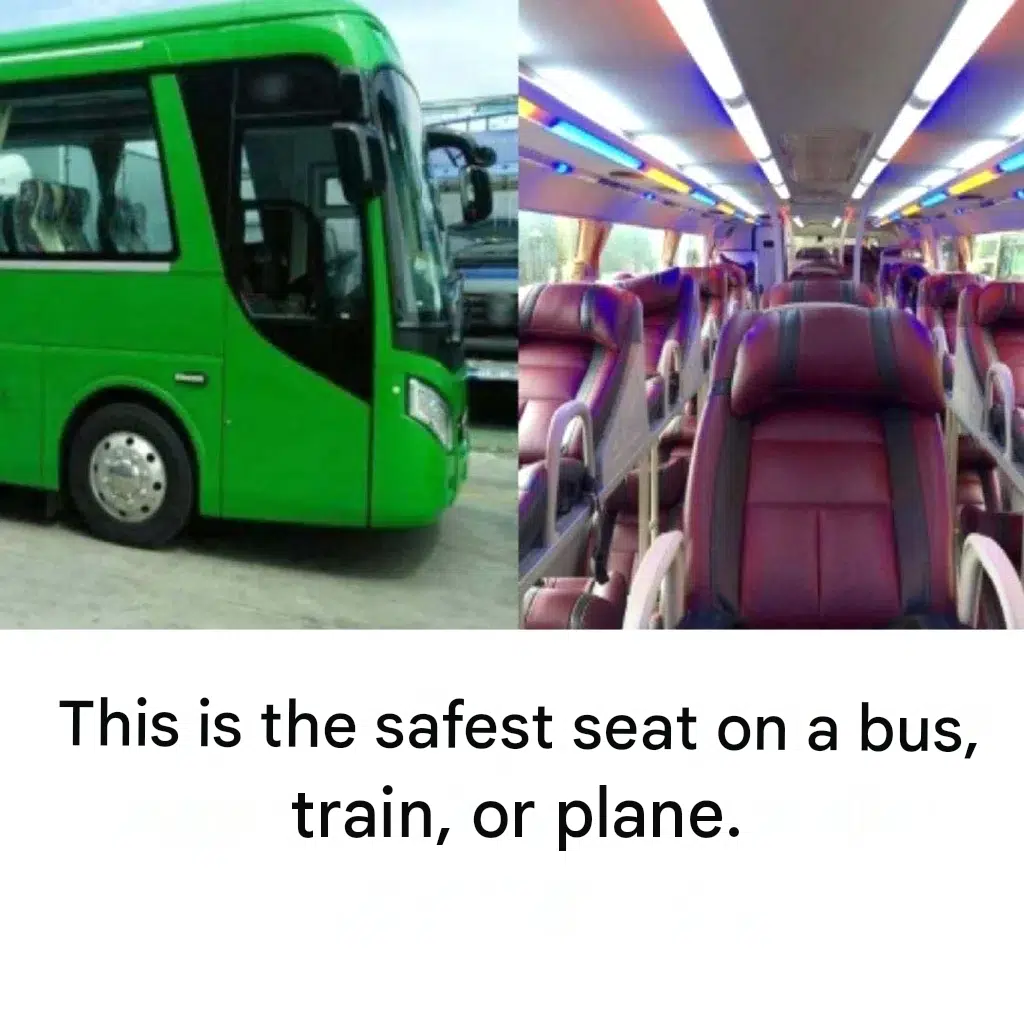
When embarking on a long-distance trip or commuting to work each day, most travelers prioritize convenience, comfort, or a window view. We choose seats based on legroom, proximity to the exit, or whether we want to catch a nap without being disturbed by foot traffic. However, safety engineers, crash analysts, and transit experts evaluate public transportation seating through a completely different lens. Every year, millions of passengers board buses, commuter trains, and commercial aircraft, yet very few know that where you choose to sit can significantly alter your statistical safety profile in the rare event of an accident.
Understanding vehicle dynamics, structural crumple zones, impact physics, and emergency evacuation protocols allows travelers to make smarter, safer choices. In this comprehensive guide, we unpack the crash test data, physics, and expert recommendations regarding seat safety across three major modes of public travel: buses, trains, and planes.
The Physics of Vehicle Collisions: Why Seat Selection Matters
To understand why certain seats offer superior protection, it is essential to look at how dynamic kinetic energy behaves during an impact. When a moving vehicle—whether a motorcoach traveling at highway speeds or a passenger train navigating a bend—comes to a sudden stop due to a collision or derailment, everything inside that vehicle continues moving forward at the original speed until an opposing force stops it.
In modern transportation engineering, vehicles are designed with structural “crumple zones” at the front and rear. These engineered sections deform upon impact, absorbing a tremendous amount of kinetic energy and preventing that force from transferring directly into the passenger cabin. Consequently, the seating areas located farthest from primary structural crumple zones—and away from rigid peripheral boundaries—statistically absorb less direct impact force.
Furthermore, directional forces play a massive role. In a head-on collision, passengers facing backward experience deceleration forces distributed evenly across their back, neck, and head, rather than being thrown forward against seat backs or seatbelts. Understanding these mechanics provides a clear roadmap for selecting the safest spots on any journey.
What Is the Safest Seat on a Commercial Bus?
Buses are statistically among the safest highway vehicles, largely due to their massive size and height relative to passenger cars. However, when motorcoach accidents or highway rollovers occur, seat location plays a crucial role in passenger outcomes.
The Safest Position: Middle Rows, Aisle Seats
If safety is your main priority on a charter bus, long-distance coach, or city transit bus, target the middle rows on the aisle side, positioned away from the front windshield and rear engine compartments.
Distance from Front-End Collisions: Head-on collisions are among the most severe highway crashes. Sitting at least 4 to 5 rows behind the driver ensures a substantial buffer zone of structural steel and empty space, reducing the risk of flying glass and direct crushing forces.
Protection from Rear Impacts: Rear-end collisions from heavy trucks can crush the back rows of a bus. Sitting ahead of the last few rows places you in a central safety pocket.
Aisle Seat Advantages: In side-impact crashes or T-bone collisions at intersections, window seats absorb the primary structural deformation and glass shattering. Aisle seats afford an extra buffer of space, keeping you further away from external impact points.
Seats to Avoid on a Bus
To minimize risk, avoid the following spots whenever possible:
The Front Row: Directly behind the driver or opposite the entryway leaves passengers exposed to large front windshields and minimal forward barrier protection.
The Rear Center Seat: In buses with a back bench, the middle seat lacks a seatback directly in front of it, creating a dangerous projectile path down the aisle during sudden braking.
Window Seats in High-Traffic Lanes: While great for scenery, window seats subject passengers to higher risk during side swipes or rollover events.
What Is the Safest Seat on a Train?
Rail travel is remarkably safe compared to private motor vehicles, but derailments, signal oversights, and highway grade-crossing accidents do occasionally occur. Train passenger cars are long, heavy steel shells, and safety dynamically varies depending on where you sit within individual cars and where the car is situated within the train set.
The Safest Car and Seat Selection on a Train
1. Choose Cars in the Middle of the Train
The leading locomotive and first two passenger cars bear the brunt of kinetic energy during head-on collisions or grade-crossing impacts with heavy trucks. Conversely, the very last car is vulnerable to rear-end collisions from trailing trains. Choosing a passenger car situated in the middle third of the train consistent with overall length offers optimal protection from both frontal and rear impact vectors.
2. Select Rear-Facing Seats
In passenger rail cars equipped with fixed seating arrangements where some seats face forward and others face backward, rear-facing seats are mathematically safer. During rapid deceleration, inertia pushes your body deeper into the cushioned seatback, supporting your spine, neck, and head. Forward-facing passengers without seatbelts are thrown forward into the seat in front of them or into aisle spaces.
3. Sit Away from Windows and Bulkheads
Similar to bus travel, aisle seats in train coaches provide a buffer against side impacts or derailed car scraping. Additionally, sitting a few rows away from rigid interior bulkheads, restrooms, or luggage racks minimizes the risk of impact with hard surfaces if unrestrained objects shift during sudden stops.
What Is the Safest Seat on an Airplane?
Aviation safety is heavily regulated, making commercial airline travel statistically the safest form of long-distance transport in human history. Nevertheless, nervous flyers and curious travelers often ask whether specific airplane seats yield higher survival rates during rare emergency landings or runway incidents.
What the Data Shows: The Rear Cabin and Aisle Seats
Investigative studies analyzing aviation accident databases—including a comprehensive analysis of Federal Aviation Administration (FAA) crash data by Time Magazine covering 35 years of aircraft accidents—reveal a clear trend:
The Back Third of the Plane: Passengers seated in the rear third of the aircraft cabin had a lower fatality rate (28%) compared to those in the middle third (39%) or front third (38%).
Rear Middle Seats: The absolute lowest fatality rate in historical crash data was observed in the middle seats located in the rear section of the aircraft (28% fatality rate).
Proximity to Exit Rows: Independent studies by the University of Greenwich examining emergency evacuations highlighted that passengers seated within five rows of an emergency exit have significantly higher rates of successful evacuation during post-landing smoke or fire emergencies.
+———————————————————————–+
| AIRPLANE SAFETY OVERVIEW |
+——————-+—————————————————+
| Section | Relative Safety Factors |
+——————-+—————————————————+
| Front Cabin | Highly comfortable; higher impact force exposure. |
| Over-Wing (Middle)| Structural stability; close to main exits. |
| Rear Cabin | Lowest historical fatality rates; near tail exit. |
+——————-+—————————————————+
Balancing Structural Integrity and Evacuation Speed
While the wing section of an airliner represents the strongest structural part of the aircraft (where the heavy spar passes through the fuselage), it also houses fuel tanks. The rear cabin offers structural flexibility that absorbs energy, keeping the tail section intact in many landing incidents.
More importantly, survival in aviation incidents often depends on rapid evacuation after the aircraft stops. Sitting in an aisle seat within a few rows of an emergency exit ensures you can reach a slide quickly without getting trapped in cabin bottlenecks.
Comparing Safety Across Transport Modes
To help you plan your next journey, the following comparison table synthesizes the safest choices for each mode of public transport:
Transport Mode Safest Location Key Reason Primary Hazard to Avoid
Charter / Interstate Bus Middle rows, Aisle seat Maximum distance from crumple zones & glass shatter Front windshield area & rear bench
Passenger Train Middle cars, Rear-facing aisle seats Energy absorption from middle cars; seatback deceleration protection First car behind engine & last car
Commercial Airplane Rear cabin, Aisle seats within 5 rows of exit Historical crash survival data & faster evacuation capability Business class / Front rows in severe impacts
Essential Travel Security & Financial Preparedness Tips
Selecting the best seat is a great proactive step, but comprehensive travel safety involves broader preparation. Unexpected disruptions, medical emergencies, or accident-related delays can happen on any trip.
1. Travel Insurance and Financial Protection
Before embarking on long-distance or international journeys, ensure you have robust protection in place:
Comprehensive Travel Insurance: Secure coverage that includes emergency medical care, medical evacuation, trip cancellation, and lost baggage reimbursement.
Personal Injury & Health Coverage: Review your health insurance policy to verify coverage limits when traveling across state lines or international borders.
Credit Card Protection Policies: Many premium credit cards offer built-in travel accident insurance, trip delay coverage, and rental car protection if you book tickets using the card.
2. Legal Services and Emergency Contacts
If you are involved in a transit accident, having access to professional legal counsel and emergency documentation is crucial:
Keep digital and physical copies of your government identification, health insurance cards, and emergency contact numbers in a secure, water-resistant pouch.
Understand transit passenger rights and retain all travel receipts, boarding passes, and incident reports in case legal representation or insurance claims are required following an accident.
3. Smart Packing for Emergency Readiness
Wear Practical Clothing: Choose natural fibers (cotton, wool, denim) over synthetic materials when flying or taking long bus trips, as synthetics can melt under extreme heat. Wear closed-toe shoes with good grip.
Keep Necessities Accessible: Store essential medications, power banks, primary IDs, and basic first-aid items in a small carry-on bag placed directly under the seat in front of you—not in distant overhead bins.
Practical Tips for Your Next Trip
To turn these safety insights into actionable habits, keep these quick tips in mind next time you book a ticket:
Book Ahead for Seat Selection: Whenever possible, reserve your seats early so you can select middle-row aisle seats on buses or rear/exit-adjacent seats on planes.
Count the Rows to the Exit: Once seated on a plane or train, count the number of seat rows between you and the nearest emergency exit. If low visibility or smoke fills the cabin, you can feel along the seats to locate the exit.
Wear Your Seatbelt Continuously: Many modern motorcoaches and all commercial aircraft feature lap belts or three-point harnesses. Keep your seatbelt fastened whenever you are seated, even if the seatbelt sign is off, to protect against severe turbulence or sudden braking.
Listen to Safety Briefings: Pay attention to flight attendant announcements or posted bus/train evacuation diagrams. Location details for emergency windows, hammer points, and evacuation slides vary by vehicle model.
Fascinating Facts About Transit Safety
Commercial Aviation’s Stellar Record: Statistically, you would have to fly every single day for over 10,000 years to experience a fatal commercial airline accident, making air travel mathematically far safer than driving a personal vehicle.
The Power of Seatbacks: The principle of rear-facing seat safety is so well established in biomechanics that military transport planes (such as the RAF C-130 Hercules) routinely face passenger seats toward the rear of the aircraft to maximize troop safety during tactical landings.
High-Speed Rail Integrity: Modern high-speed trains (like Japan’s Shinkansen or European TGV models) use advanced crumple zone technology and automatic train control (ATC) systems that monitor track conditions miles ahead, virtually eliminating head-on collision risks.
Conclusion
While no single seat guarantees absolute safety in every scenario, physics, structural engineering, and historical accident data clearly show that seat location matters. On buses, choosing an aisle seat in the middle rows keeps you far away from impact zones. On trains, sitting in the middle cars in a rear-facing seat offers the best protection during sudden stops. On airplanes, securing an aisle seat in the rear section near an emergency exit balances structural protection with swift evacuation capability.
By combining smart seat selection with proper travel insurance, situational awareness, and simple safety precautions, you can travel with confidence and peace of mind wherever your journey takes you.
Frequently Asked Questions (FAQ)
Is the middle seat on a plane safer than the window seat?
Statistically, middle seats in the rear section of an aircraft have shown slightly lower fatality rates in historical crash analyses. This is because surrounding seats provide a human and structural buffer on both sides. However, aisle seats offer easier access to emergency exits, which can be critical for quick evacuations.
Why do buses usually lack seatbelts if safety is a priority?
Large charter buses and modern long-distance coaches are increasingly equipped with three-point seatbelts. However, traditional city transit buses rely on “compartmentalization”—a safety design featuring closely spaced, energy-absorbing seatbacks that protect unrestrained passengers during low-speed urban collisions.
What is the safest seat for someone prone to motion sickness?
If you suffer from motion sickness, the smoothest ride on an airplane is directly over the wing (the center of gravity). On a bus or train, sitting in the middle of the vehicle facing forward while looking out at the horizon helps align your inner ear balance with visual cues.
Does sitting near an emergency exit guarantee safety?
Sitting near an emergency exit provides a distinct advantage during emergency evacuations, allowing you to exit the vehicle quickly. However, passengers in exit rows must be physically capable and willing to operate heavy emergency doors or windows during a crisis.
