
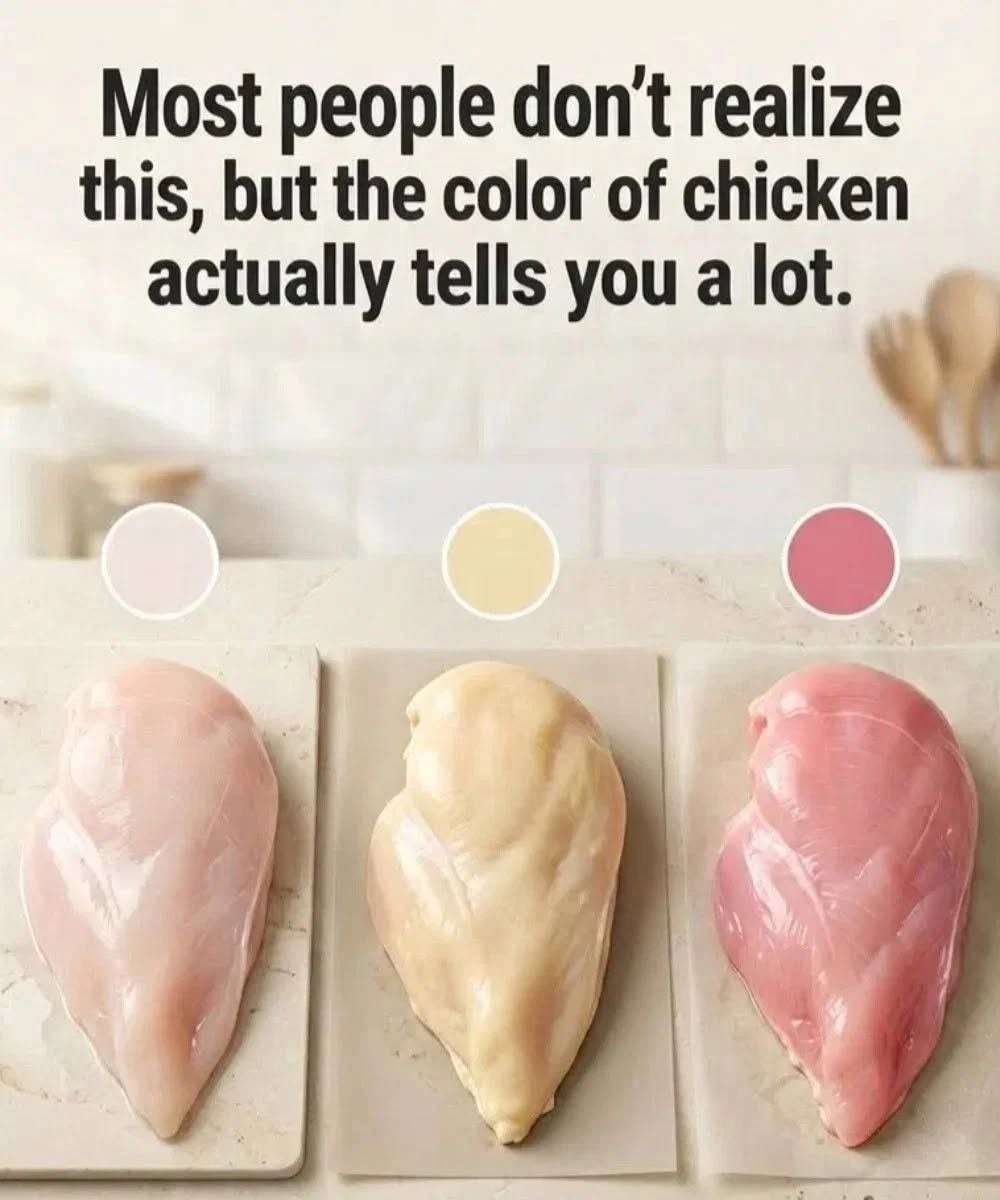
When browsing the meat aisle at the supermarket, consumers frequently encounter raw chicken breasts ranging in color from soft pale pink to yellowish hues and vibrant rosy pinks. While dramatic discoloration can indicate spoilage, normal variations in raw chicken color stem primarily from diet, bird breed, age, and processing methods.
Understanding what causes these natural color differences enables home cooks to evaluate poultry quality confidently and practice safe food storage habits.
Below is a detailed guide breaking down raw chicken color indicators, quality markers, and safe handling guidelines.
Raw Chicken Quality & Color Matrix
+-------------------------------------------------------------------+
|               RAW CHICKEN COLOR & QUALITY MATRIX                  |
|                                                                   |
|  [ PALE PINK ]       • Standard grain-fed poultry                 |
|  [ YELLOWISH TINT ]  • Corn-fed diet rich in natural carotenoids    |
|  [ DEEP ROSY PINK ]  • Higher myoglobin content or air-chilled      |
|  [ GREY / GREEN ]    • Sign of bacterial spoilage (discard)       |
+-------------------------------------------------------------------+
Key Highlights of Raw Poultry Color:
-
Dietary Influence: Yellowish skin or meat often results from diets rich in corn or marigold petals, which contain natural carotenoid pigments.
-
Air-Chilled vs. Water-Chilled: Air-chilled chicken retains a natural pink tone and firm texture, whereas water-chilled meat can absorb moisture and look paler.
-
Myoglobin Content: Darker or deeper pink shades reflect higher concentrations of myoglobin, an oxygen-binding protein in muscle tissue.
-
Freshness Indicators: Fresh raw poultry should always appear moist and firm, with a clean scent and no sliminess or grey/green discoloration.
What Different Raw Chicken Colors Mean
1. Light / Pale Pink (Standard Grain-Fed)
-
Cause: The most common appearance for commercially raised poultry fed standard wheat or grain diets.
-
What It Means: Indicates fresh, standard chicken meat suitable for all cooking methods.
2. Yellowish Tint (Corn-Fed)
-
Cause: Chickens fed a diet heavy in yellow corn, alfalfa, or marigold extracts absorb xanthophylls into their fat and muscle tissue.
-
What It Means: Completely safe and healthy to eat, often marketed as premium or pasture-raised corn-fed poultry.
3. Deep Rosy Pink (Air-Chilled / Higher Myoglobin)
-
Cause: Air-chilled processing seals in natural juices without water dilution. Active breeds or specific muscle cuts also contain more myoglobin.
-
What It Means: High-quality meat with excellent flavor retention and minimal shrinkage during cooking.
4. Grey, Green, or Dull Brown (Signs of Spoilage)
-
Cause: Bacterial growth or oxidation breakdown of proteins.
-
What It Means: Discard immediately. Fresh chicken should never exhibit dull grey shades, foul odors, or a slimy surface film.
Conclusion
Recognizing natural raw chicken color variations helps shoppers make informed choices at the butcher counter while ensuring proper kitchen hygiene and safe food handling.
Frequently Asked Questions (FAQ)
Is yellow chicken safe to eat?
Yes. A yellow hue is simply a reflection of the bird’s corn-based diet and carotenoid intake; it does not indicate spoilage or inferior quality.
How can you tell if raw chicken has gone bad?
Spoiled raw chicken typically develops a sour or ammonia-like smell, a slimy or sticky surface texture, and a dull grey or greenish color.
