
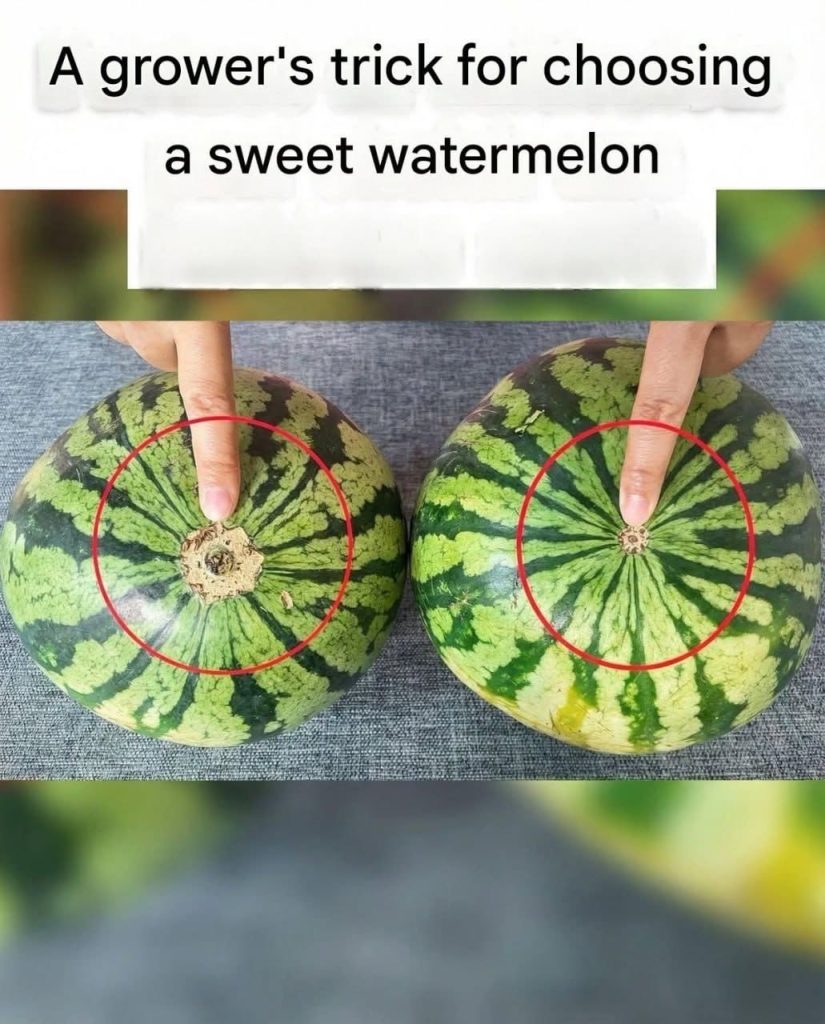
Picking a ripe, juicy watermelon at the grocery store or farmers’ market can sometimes feel like a game of chance. While many people rely on the classic “thump test” to listen for a hollow sound, professional growers look for specific visual cues on the rind that indicate maximum sweetness and sugar content.
By examining the blossom end (the circle spot at the bottom opposite the stem) and checking for small or large belly spots, you can easily identify the sweetest melon in the bin.
Here is the breakdown of how to use this simple grower’s trick to pick the perfect watermelon every time.
Watermelon Selection Quick Guide
+-------------------------------------------------------------------+
|                   GROWER'S WATERMELON SELECTION GUIDE             |
|                                                                   |
|  [ BLOSSOM END ]    • Smaller spot = Sweet & fully ripened       |
|                       • Larger spot  = Thicker rind & less sweet  |
|  [ FIELD SPOT ]     • Creamy yellow / orange = Ripe & sweet       |
|                       • White or pale green = Unripe              |
|  [ WEBBING ]        • Dark brown web marks = High pollination    |
+-------------------------------------------------------------------+
Key Highlights of the Grower’s Trick:
-
Check the Blossom End Circle: The bottom spot opposite the stem reveals a lot about the fruit. A smaller, tighter circle typically indicates a thinner rind and a sweeter, more concentrated flavor inside.
-
Look for the Creamy Field Spot: The side of the watermelon that rested on the ground should be a warm, creamy yellow or buttery-gold color rather than stark white.
-
Examine the Sugar Webbing: Brown, thread-like web spots indicate that bees pollinated the blossom frequently during growth, which often correlates with higher sweetness.
-
Feel the Weight: A fully ripe watermelon consists mostly of water and natural sugars, making it feel heavy for its overall size.
Step-by-Step Guide: How to Pick the Best Watermelon
1. Compare the Bottom Spots (Blossom End)
When comparing two melons of equal size, look at the bottom ring where the flower once was. Watermelons with smaller blossom ends tend to have a thinner rind layer, meaning you get more juicy, red fruit per bite.
2. Inspect the Stem and Tendril
If the stem is still attached, look for a dry, brown stem rather than a green one. A dried stem indicates that the watermelon ripened naturally on the vine before being harvested.
3. Check for Uniformity and Firmness
A good watermelon should be firm, symmetrical, and free from soft spots, major dents, or bruises. A dull finish rather than a shiny rind is also a sign of full maturity.
Conclusion
Next time you visit the market, skip the guesswork and use this simple visual trick to find a perfectly sweet, ripe watermelon every time!
Frequently Asked Questions (FAQ)
What does a dark yellow spot on a watermelon mean?
A dark yellow or creamy field spot means the watermelon spent plenty of time ripening in the field attached to the vine, ensuring optimal sweetness.
Does the shape of a watermelon affect its taste?
Rounder watermelons are often referred to as “female” melons in traditional farming folklore and are known for being sweeter, while longer, oval-shaped melons tend to be more watery.
