
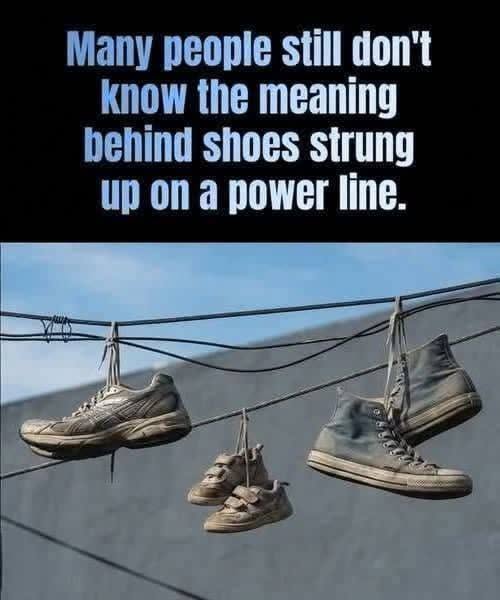
Walking down a city street or suburban neighborhood, almost everyone has looked up and noticed a pair of sneakers dangling high above by their laces from power lines. While viral images and urban myths frequently suggest dark or secret meanings, the phenomenon—often called “shoe tossing” or “shoefiti”—has a complex history rooted in various cultural traditions, youth rituals, and simple pranks.
Understanding why people throw shoes over telephone wires reveals a fascinating mix of urban folklore, rites of passage, and pop culture trends.
In this cultural breakdown, we explore the most common explanations behind shoes on power lines, dispelling myths and uncovering the real origins.
Shoe Tossing & Urban Folklore Matrix
+-------------------------------------------------------------------+
|                   SHOE TOSSING ORIGINS MATRIX                     |
|                                                                   |
|  [ COMMEMORATION ] • School graduations, military discharge       |
|  [ YOUTH TRADITION]• Pranks, bullying, or simple athletic play    |
|  [ URBAN LEGEND ]  • Misconceptions regarding neighborhood markings|
+-------------------------------------------------------------------+
Key Reasons Behind Shoes on Power Lines:
-
Rites of Passage & Milestones: In many communities, tossing old sneakers over power lines marks significant life transitions, such as completing the school year, graduating, or finishing military service.
-
Pranks and Neighborhood Play: Often, shoes end up on power lines simply due to childhood antics, older siblings playing tricks, or kids throwing away worn-out sneakers.
-
Memorials and Tributes: In certain urban areas, shoes are hung as a quiet visual tribute to remember a local friend or community member who passed away.
-
Urban Art & Expression: Known in some art circles as “shoefiti,” some individuals consider shoe tossing a form of street art or boundary marking.
Debunking Common Myths About Shoes on Power Lines
Step 1: Separating Myth from Reality
While popular rumors often claim that dangling shoes mark drug territories or gang boundaries, police departments and urban researchers have repeatedly noted that most instances are unrelated to illegal activity.
Step 2: Recognizing Practical Reasons
Old, worn-out sports shoes or worn sneakers tied together by laces naturally catch on overhead wires when thrown, making them stick indefinitely.
Step 3: Understanding Utility Removal
Power and telecom companies periodically clear dangling shoes during routine line maintenance to prevent line sagging or interference.
Pro Tips for Safety and Property Care
-
Never Attempt to Remove Shoes Yourself: Power lines carry high voltage; attempting to retrieve items from electrical cables poses severe risk of electrocution.
-
Report Line Hazards: Contact local electric utility companies if hanging objects appear to weigh down power lines or damage equipment.
-
Dispose of Shoes Responsibly: Donate gently used footwear or recycle worn-out athletic shoes through specialized textile recycling programs.
Conclusion
While shoes on power lines often spark curiosity and urban legends, they usually represent harmless neighborhood traditions, playful pranks, or personal milestones. The next time you spot a pair above, you’ll know the full story behind the wire!
Frequently Asked Questions (FAQ)
What is the official term for shoes tied together on power lines?
The phenomenon is commonly referred to as “shoe tossing,” “shoe flinging,” or “shoefiti” in urban art culture.
Do shoes on power lines cause power outages?
While a single pair of sneakers rarely damages heavy electrical lines, accumulated debris or shoes near transformers can pose maintenance challenges for utility crews.
Is shoe tossing practiced globally?
Yes, shoe tossing is observed worldwide, including in North America, Europe, Australia, and Latin America, often sharing similar cultural explanations.
