
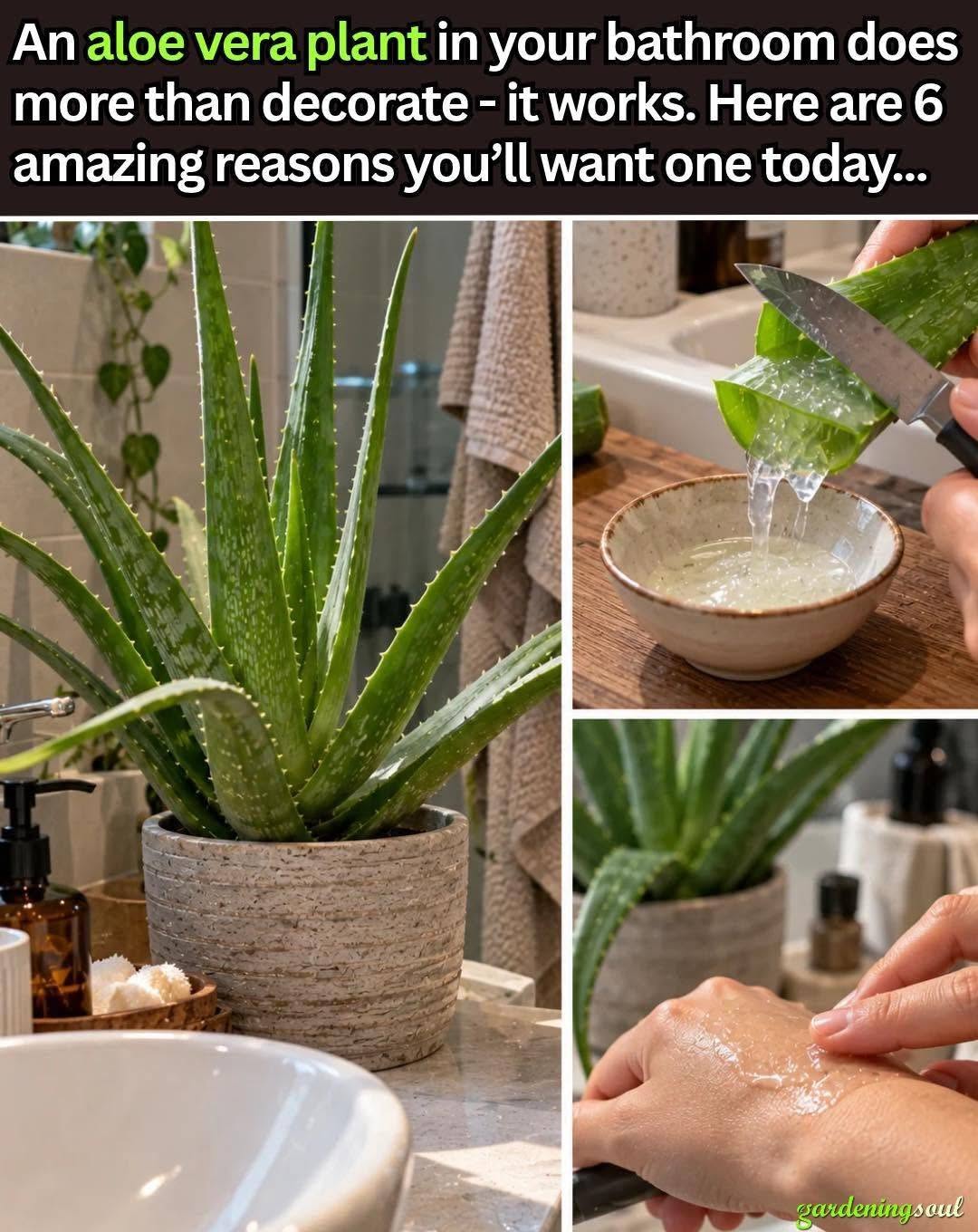
An aloe vera plant can do more than add a touch of natural beauty to your bathroom. With its thick, green leaves and elegant appearance, this popular succulent brings a refreshing look to your space while providing a convenient source of aloe gel for certain skin-care applications.
For centuries, aloe vera has been used in traditional skin care. Today, it remains a popular ingredient in moisturizers, lotions, and cosmetic products. Although keeping an aloe vera plant in your bathroom does not automatically improve your health or purify the air, it can offer several practical benefits when properly cared for.
Here are six reasons to consider adding this versatile plant to your bathroom.
1. Aloe Vera Adds a Natural, Relaxing Touch to Your Bathroom
Bathrooms are often designed around practical needs, but a little greenery can make the space feel warmer and more inviting.
Aloe vera has long, pointed leaves that create an attractive natural focal point. Its compact growth makes it suitable for bathroom shelves, windowsills, and countertops where sufficient light is available.
Pairing aloe vera with neutral-colored towels, wooden accessories, or stone-textured planters can create a simple, spa-inspired atmosphere.
Although a plant cannot replace good ventilation or cleaning, its presence can make your bathroom feel more connected to nature.
2. Fresh Aloe Vera Gel Can Help Moisturize the Skin
One of the best-known uses of aloe vera is topical skin care.
The clear gel inside the leaves contains water and various naturally occurring compounds. When formulated appropriately, aloe vera gel can help soothe and hydrate the skin.
Some people use aloe vera products when their skin feels dry or uncomfortable after exposure to the sun. Evidence suggests that certain aloe preparations may help with minor skin irritation, although results vary depending on the condition and product.
If you have a healthy aloe vera plant at home, its leaves may provide a convenient source of fresh gel for limited external use.
However, fresh plant gel is not the same as a commercially formulated product. It can become contaminated, and some people experience irritation or allergic reactions.
Before applying it to your skin, test a small amount on a limited area and discontinue use if redness, itching, burning, or swelling develops.
Do not apply aloe vera to deep wounds, severe burns, or infected skin without appropriate medical advice.
3. Aloe Vera Is Relatively Easy to Care For
If you enjoy houseplants but do not have much time for gardening, aloe vera is a practical option.
Unlike many tropical plants, aloe vera stores water in its thick leaves and generally tolerates periods of dry soil.
To keep it healthy, provide bright natural light, preferably near a sunny window. Use a pot with drainage holes and a well-draining cactus or succulent potting mix.
Water the plant thoroughly when the soil has dried out, then allow excess water to drain away. Avoid leaving the roots sitting in water because this can cause root rot.
Bathrooms can be humid, particularly after hot showers, but aloe vera does not need a constantly humid environment. A bathroom without sufficient natural light may not be suitable for long-term growth.
If your bathroom is dark, consider placing the plant near a bright window elsewhere in your home and moving it occasionally for decoration.
