
The Evolution of Masculinity and Transportation: What Went Wrong?
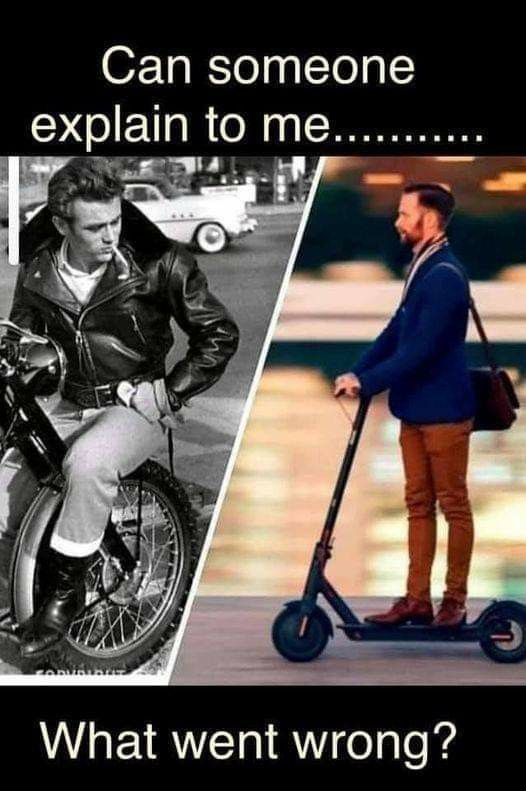
Cultural shifts across generations often leave people looking back with a mixture of amusement and nostalgia. One of the most popular viral comparisons contrasts the classic, rugged image of mid-century icons like James Dean straddling a motorcycle in a leather jacket with the modern urban commuter riding an electric scooter in fitted trousers. The tongue-in-cheek caption asks a simple question: “Can someone explain to me… What went wrong?”
Examining this cultural contrast reveals far more than just changing fashion trends. It highlights a massive evolution in urban mobility, lifestyle priorities, technological convenience, and cultural definitions of independence across the decades.
The Cultural Symbolism of Mid-Century Transportation
In the mid-20th century, automobiles and motorcycles were much more than simple modes of transportation—they were powerful symbols of freedom, rebellion, and personal independence. Icons like James Dean popularized a rugged aesthetic built around leather jackets, heavy machinery, and unscripted outdoor adventure.
Owning and maintaining a vehicle or motorcycle required mechanical know-how, grit, and physical engagement.
Mechanized Freedom: Traditional motorcycles and classic cars represented an untamed frontier, allowing individuals to explore open highways and rural landscapes.
Rugged Aesthetics: Heavy leather, denim, and work boots weren’t just fashion statements; they were practical gear designed for protection against the elements and mechanical work.
Cultural Defiance: Vehicles served as outlets for youth culture to break away from traditional societal constraints, emphasizing raw individuality and daring attitude.
The Modern Urban Shift: Efficiency, Convenience, and Micromobility
Fast forward to the modern era, and the urban landscape has transformed dramatically. As global populations concentrate heavily in metropolitan areas, traffic congestion, parking shortages, and environmental concerns have completely redefined how people move from place to place.
Enter the electric scooter and modern micromobility. For city dwellers navigating crowded downtown streets, high-speed rail systems, and compact office spaces, traditional motorcycles or gas-guzzling classic cars are often impractical.
Advantages of Modern Urban Commuting:
Unmatched Efficiency: Electric scooters allow commuters to bypass gridlock traffic, navigate bike lanes, and arrive at work without breaking a sweat.
Cost-Effectiveness: Avoiding high insurance premiums, parking fees, gas prices, and vehicle maintenance makes lightweight personal transit remarkably affordable.
Environmental Consciousness: Zero-emission electric vehicles align with growing consumer demand for sustainable, low-impact urban living.
Financial Wisdom, Practicality, and Lifestyle Choices
While nostalgic memes often poke fun at modern conveniences, the shift toward electric scooters and public transit also reflects sound financial pragmatism. Maintaining a personal car or motorcycle in a major metropolitan area involves substantial recurring expenses—including auto insurance, loan payments, vehicle registration, and regular repairs.
Adopting a practical approach to modern commuting parallels smart financial management:
Evaluate Necessity vs. Luxury: Streamlining daily transit costs frees up capital for high-yield savings, investments, or long-term financial goals like homeownership and retirement planning.
Adapt to Your Environment: Just as previous generations chose tools that fit their rural or suburban lifestyles, modern city dwellers choose transit options optimized for dense urban spaces.
Prioritize Utility: Practicality often outweighs aesthetic tradition when managing daily efficiency and household budgets.
Practical Tips for Balancing Modern Convenience with Classic Appreciation
You don’t have to choose strictly between vintage grit and modern efficiency. Here are a few ways to appreciate both worlds:
Embrace Multi-Modal Commuting: Use efficient transit options like scooters or public trains for daily work commutes while saving classic vehicles or road trips for weekend leisure.
Learn Basic Maintenance: Whether tuning up a bicycle, an electric scooter, or a vintage car, maintaining your own equipment fosters a healthy sense of self-reliance.
Keep an Open Mind: Recognize that every generation develops transportation habits tailored to solve the unique logistical and environmental challenges of its time.
Fascinating Facts About Transportation Evolution
The History of the Scooter: While electric kick scooters are a modern urban phenomenon, motorized scooters actually date back to early 20th-century inventions like the 1915 Autoped, which predated many modern motorcycles.
The Rise of Urban Micromobility: Global cities have invested billions of dollars in dedicated bike lanes and pedestrian infrastructure over the past two decades to accommodate lightweight personal transit devices.
The Cultural Impact of Cinema: Films like Rebel Without a Cause cemented the motorcycle and leather jacket as eternal symbols of youthful defiance and American pop culture history.
Conclusion
The humorous comparison between mid-century rebels and modern scooter commuters captures a profound societal transition. While the aesthetic has shifted from roaring engines and leather jackets to electric motors and business-casual attire, the core human desire remains the same: finding the best way to get where we need to go. Understanding both perspectives helps us appreciate how far transportation has evolved while keeping a fond eye on the past.
FAQ Section
Why have electric scooters become so popular in cities?
Electric scooters offer a fast, portable, and cost-effective way to navigate congested urban environments, bypass parking hassles, and connect easily with public transit systems.
Are vintage motorcycles still practical for daily commuting?
While classic motorcycles offer immense aesthetic and nostalgic appeal, they require frequent mechanical maintenance, specialized gear, and lack the fuel efficiency and modern safety features of newer vehicles.
What does the “What went wrong?” meme signify?
The meme plays on generational nostalgia, playfully contrasting the rugged, rebellious masculinity of mid-century pop culture icons with the practical, fast-paced reality of modern urban life.
