
The Hilarious Contradiction of Grocery Store Plastic Packaging and Bag Bans
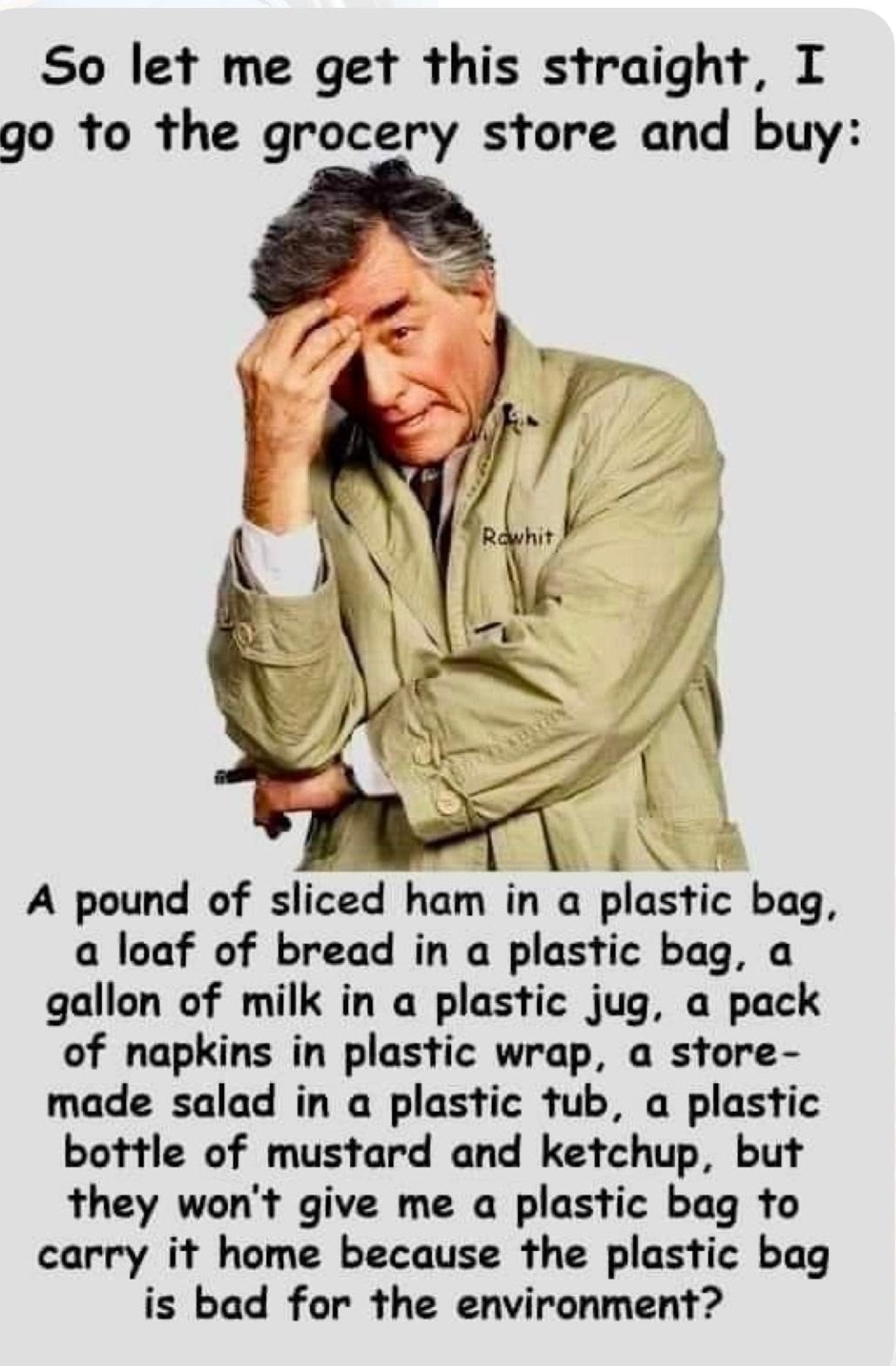
Modern grocery shopping often comes with its fair share of regulatory quirks and environmental paradoxes. A popular viral meme featuring detective Columbo rubbing his head in disbelief captures a frustration shared by millions of shoppers: “So let me get this straight, I go to the grocery store and buy: A pound of sliced ham in a plastic bag, a loaf of bread in a plastic bag, a gallon of milk in a plastic jug, a pack of napkins in plastic wrap, a store-made salad in a plastic tub, a plastic bottle of mustard and ketchup, but they won’t give me a plastic bag to carry it home because the plastic bag is bad for the environment?”
While the meme is designed for comedic effect, it strikes a chord by highlighting a genuine irony in contemporary retail policy. Examining the history of single-use plastics, the economics of packaging, and modern environmental regulations reveals why our grocery aisles look the way they do today.
The Evolution of Packaging and Single-Use Plastics
For decades, consumer goods transitioned rapidly from paper, glass, and metal containers to lightweight, durable plastics. In the mid-to-late 20th century, plastic revolutionized the food industry by extending product shelf life, preventing food spoilage, reducing shipping weight, and keeping manufacturing costs exceptionally low.
When modern single-use plastic bags were introduced at checkout counters, they were praised for their waterproof durability, low cost, and convenience. However, as global plastic waste accumulated in landfills and oceans, policymakers began targeting checkout bags as a primary symbol of unnecessary single-use waste.
Product Preservation: Packaging protects perishable items like meat, dairy, and produce from contamination, significantly reducing global food waste.
Logistics and Safety: Plastic jugs and wrappers prevent breakage and leakage during transport from manufacturing plants to grocery store shelves.
The Regulatory Target: While product packaging remains largely unregulated, checkout bags became an easy legislative target for reducing visible litter in cities and towns.
The Environmental Paradox of Retail Sustainability
The core humor of the Columbo meme lies in the glaring contrast between mandatory checkout bag bans and the mountain of plastic packaging encasing individual grocery items. While banning thin checkout bags reduces thousands of plastic films from littering streets, shoppers naturally wonder why broader industrial packaging standards remain untouched.
Environmental scientists and supply chain analysts point out that replacing all food-grade plastic packaging overnight is extraordinarily difficult because alternative materials—such as biodegradable bioplastics, glass, or heavy paper—often carry higher carbon footprints during production, heavy transport, and refrigeration.
Financial Wisdom, Smart Shopping, and Reducing Waste
Navigating modern grocery store regulations while managing your household budget involves adopting practical, sustainable habits that also save money:
Invest in Reusable Bags: Keep sturdy cloth or canvas shopping bags in your vehicle or home entryway so you never have to purchase paper or single-use bags at checkout.
Minimize Over-Packaging: Choose loose produce, bulk items, or goods packaged in recyclable cardboard and glass whenever possible to reduce personal household waste.
Plan Grocery Trips Mindfully: Creating structured shopping lists prevents impulse purchases of heavily packaged convenience foods, benefiting both your health and your monthly budget.
Practical Tips for Eco-Friendly Grocery Shopping
If you want to reduce your environmental footprint while streamlining your weekly supermarket routine, try these simple strategies:
Bring Your Own Produce Bags: Swap single-use plastic produce bags for lightweight mesh cotton bags to carry fruits and vegetables.
Support Local Farmers Markets: Shopping at local markets often eliminates excessive industrial packaging entirely, allowing you to buy fresh goods directly from growers.
Recycle Store Bags: If you accumulate plastic film or bags, drop them off at designated recycling bins located at most major grocery store entrances rather than tossing them in household trash.
Fascinating Facts About Packaging History
The Invention of Plastic Wrap: Modern polyethylene food wrap was originally developed during World War II for military applications before being introduced to commercial household markets in the late 1940s.
The First Plastic Bag Ban: Bangladesh became the first country in the world to implement a nationwide ban on thin plastic shopping bags in 2002 after discovering they severely clogged urban drainage systems during monsoon floods.
The Rise of Biodegradables: Modern material scientists are rapidly developing sustainable plant-based polymers derived from cornstarch, sugarcane, and seaweed to replace traditional petroleum-based plastics.
Conclusion
The viral meme highlighting grocery store plastic contradictions captures a universal frustration with modern environmental rules. While the debate over single-use plastics and packaging continues to evolve, maintaining a sense of humor and adopting practical, eco-friendly habits helps make everyday shopping a little smoother.
FAQ Section
Why are checkout bags banned while food packaging is still allowed?
Checkout bags are easily targeted by local legislation to reduce roadside litter, whereas food-grade plastic packaging is legally mandated to preserve perishable items, prevent contamination, and extend shelf life.
Are paper bags better for the environment than plastic bags?
Not necessarily. While paper bags decompose faster and are easily recycled, manufacturing them requires significantly more water, energy, and chemical processing, often resulting in a higher overall carbon footprint.
How can I reduce my household plastic waste at the grocery store?
You can reduce plastic waste by using reusable shopping bags, buying loose produce without plastic wraps, choosing items packaged in glass or cardboard, and shopping at bulk food stores.
