
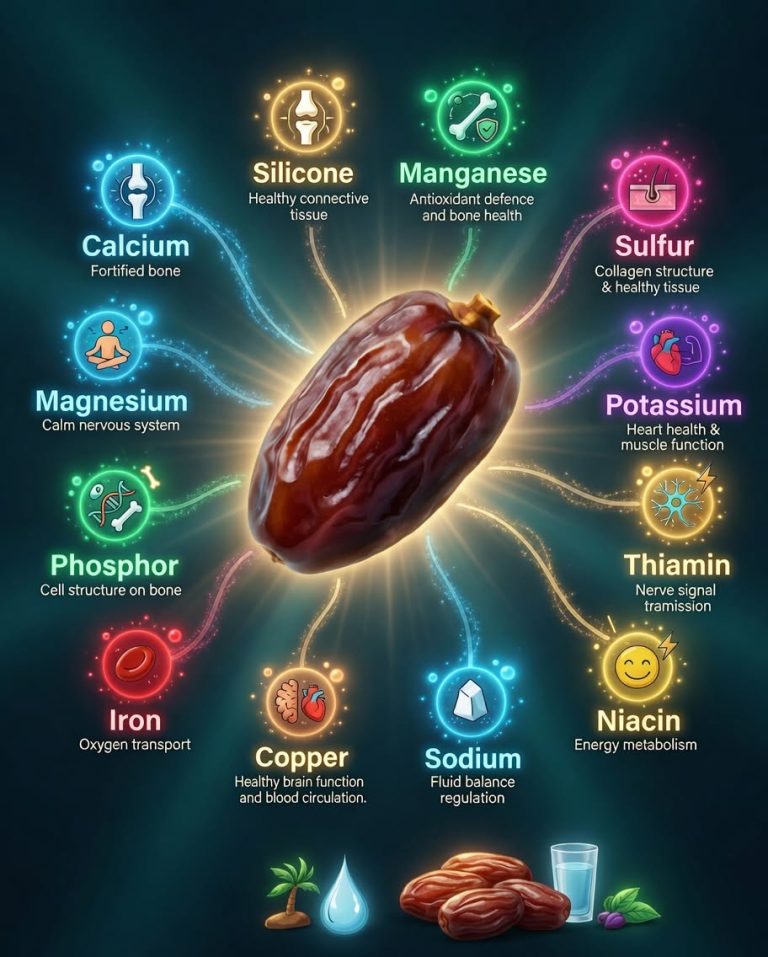
Dates have been cultivated and cherished across arid and subtropical regions for thousands of years. Beyond their natural sweetness and delicious caramel flavor, dates are exceptionally nutrient-dense fruits packed with a diverse array of essential vitamins, minerals, and dietary fiber. When infographics highlighting the rich mineral profile of dates circulate online, they spark widespread curiosity and appreciation for whole-food nutrition.
In this comprehensive health guide, we explore the rich nutritional composition of dates, their key mineral benefits, the role of natural sugars in energy metabolism, and practical ways to incorporate dates into a healthy diet.
The Nutritional Profile and Mineral Composition of Dates
Dates are often referred to as nature’s candy, but their impressive vitamin and mineral makeup elevates them to a true functional superfood.
Essential Minerals Found in Dates
As illustrated by nutritional charts, dates contain a wide spectrum of vital minerals that support various bodily systems:
Calcium: Supports fortified bones and dental strength.
Magnesium: Promotes a calm nervous system and aids muscle relaxation.
Phosphorus (Phosphor): Contributes to cellular structure and bone mineralization.
Iron: Essential for healthy red blood cell production and oxygen transport.
Copper: Supports healthy brain function and optimal blood circulation.
Potassium: Promotes heart health, electrolyte balance, and proper muscle function.
Manganese: Provides antioxidant defense and supports bone health.
Sulfur: Aids in collagen structure and healthy tissue maintenance.
Vitamins and Energy Metabolism
In addition to minerals, dates provide key B-complex vitamins, including Thiamin (crucial for nerve signal transmission) and Niacin (essential for cellular energy metabolism).
Health Benefits of Incorporating Dates into Your Diet
Regular consumption of dates offers numerous science-backed health benefits when enjoyed as part of a balanced diet.
Natural Energy Boost
Because dates are rich in natural carbohydrates—primarily glucose, fructose, and sucrose—they provide a rapid and sustained source of energy. This makes them a favorite pre-workout snack for athletes and active individuals.
Digestive Health and Fiber
Dates are an excellent source of dietary fiber, which promotes healthy digestion, prevents constipation, and supports a thriving gut microbiome. Fiber also helps regulate blood sugar absorption by slowing down digestion.
The Economic and Agricultural History of Date Palms
The cultivation of date palms (Phoenix dactylifera) has played a pivotal role in human civilization, shaping trade routes and agricultural economies for millennia.
Resilience in Arid Climates
Date palms are remarkably resilient, capable of thriving in extreme desert climates with high temperatures and minimal water, making them a cornerstone of agriculture in Middle Eastern and North African regions.
Global Trade and Economic Impact
Today, date production is a multi-million-dollar global industry, providing sustainable livelihoods for farmers and supporting international food supply chains.
Practical Ways to Add Dates to Your Daily Routine
If you want to harness the nutritional benefits of dates, consider these delicious and practical ways to eat them:
Natural Sweetener Substitute: Blend pitted dates into smoothies, oatmeal, or homemade energy bars as a wholesome alternative to refined sugar.
Stuffed Snack Delights: Fill pitted Medjool dates with almond butter, walnuts, or a sprinkle of sea salt for a satisfying snack.
Baking and Raw Desserts: Use pureed dates as a sticky binder in raw vegan brownies, energy balls, and baked goods.
Salad Enhancements: Chop dried dates and toss them into green salads with goat cheese and nuts for a sweet texture contrast.
Pre-Workout Fuel: Eat 1 or 2 dates about 30 minutes before exercise for a quick, easily digestible energy boost.
Fascinating Facts About Dates
Ancient Longevity: Date palm seeds have been successfully germinated after lying dormant in archaeological excavations for thousands of years.
The Tree of Life: In many ancient cultures, the date palm was revered as the “Tree of Life” because its fruit sustained human populations through harsh desert famines.
High Antioxidant Content: Compared to similar dried fruits like figs and raisins, dates possess one of the highest concentrations of polyphenols (antioxidants).
Conclusion
Dates are far more than just a sweet treat; they are a nutritional powerhouse loaded with essential minerals, vitamins, and dietary fiber that support everything from heart health to energy metabolism. By integrating this ancient superfood into your daily meals, you can enjoy delicious flavor while nourishing your body from the inside out.
Frequently Asked Questions (FAQ)
1. Are dates good for weight loss?
Yes, in moderation! While dates are calorie-dense, their high fiber content promotes satiety and reduces cravings for processed sweets, making them a great snack when portion-controlled.
2. How many dates should I eat per day?
Eating 2 to 3 dates daily is generally considered a healthy portion to reap their mineral and fiber benefits without consuming excessive sugar.
3. Do dates spike blood sugar rapidly?
Despite their sweetness, dates have a low to moderate glycemic index because their high fiber content slows down sugar absorption into the bloodstream.
4. What is the best way to store fresh dates?
Soft fresh dates should be stored in an airtight container in the refrigerator to maintain moisture, while dried dates can be kept in a cool, dark pantry for months.
