
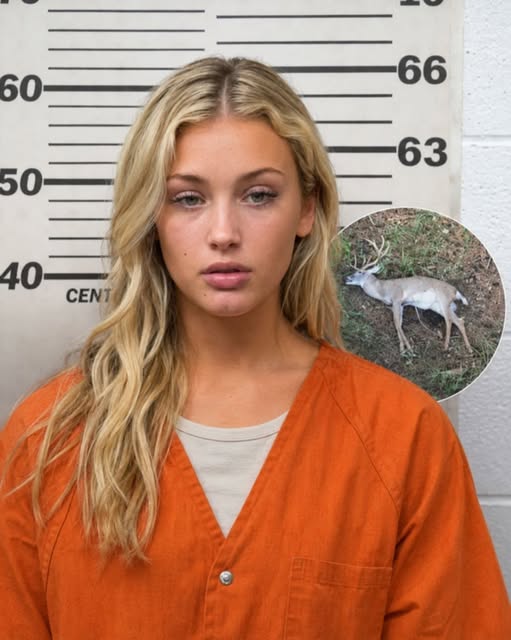
In recent months, social media feeds have been flooded with dramatic mugshots paired with outrageous backstories. From bizarre small-town crimes to unbelievable viral arrests, these posts are designed to grab immediate attention and spur rapid sharing. One image currently going viral shows a polished blonde woman wearing an orange jumpsuit against a height chart, inset with a small photo of a white-tailed deer.
The viral captions accompanying the photo claim she was arrested in connection with an unusual poaching or wildlife incident. However, like many viral sensation posts circulating today, there is much more to the picture than meets the eye. Here is the full breakdown of the truth behind this viral mugshot, how AI technology created it, and why fake arrest stories are dominating online trends.
Fact-Checking the Mugshot: Real Photo or AI Generation?
Upon closer examination by digital forensics experts and tech-savvy scrollers, the viral mugshot proves to be entirely synthetic and AI-generated.
While the image looks convincing at a quick glance, several key visual markers reveal its digital origin:
-
Unrealistic Mugshot Aesthetics: The subject features flawless makeup, studio-style lighting, and perfectly styled hair—details almost never present in authentic police booking photos.
-
Height Chart Inconsistencies: The background measurement scale displays erratic numbers and non-standard spacing that do not align with real law enforcement processing rooms.
-
AI Artifacting: Smooth, plastic-like skin textures and subtle blending errors around the orange jumpsuit collar are classic hallmarks of AI image generators like Midjourney or Stable Diffusion.
Why Fake Mugshot Stories Go Viral
Deceptive posts pairing AI-generated portraits with dramatic crime stories have become a staple strategy for high-traffic social media pages.
1. Exploiting the “Hot Convict” Trope
Ever since real-life mugshots went viral in the past, social media algorithms have heavily favored content that pairs attractive portraits with criminal booking contexts. Creators use AI to generate striking faces specifically engineered to maximize user engagement.
2. Clickbait and Engagement Farming
Surprising or absurd headlines—such as illegal deer poaching or unusual wildlife encounters—prompt thousands of users to comment, tag friends, and share the post. High engagement signals algorithms to push the post to millions of additional feeds, driving traffic to monetized sites.
Understanding digital media literacy, verifying online sources, and identifying AI-generated content are crucial components of modern digital safety, legal awareness, and online privacy.
How to Spot AI-Generated Images Online
As artificial intelligence models become more sophisticated, spotting fake images requires a keen eye. Keep these red flags in mind when scrolling:
-
Check the Background Details: AI models often struggle with consistent text, straight grid lines, clock faces, and background measurement scales.
-
Inspect Hands and Textures: Look closely at hair strands, skin pores, and clothing seams. Extremely smooth, airbrushed textures usually indicate synthetic generation.
-
Verify via Reverse Image Search: Running a reverse image search will quickly reveal whether a photo originates from a legitimate news outlet or an online AI image gallery.
Frequently Asked Questions (FAQ)
Is the person in the mugshot a real criminal?
No. The individual depicted in the image does not exist; the photo is a 100% digitally generated portrait created using artificial intelligence software.
Are there legal consequences for posting fake AI mugshots?
While generating fictional art is legal, using real individuals’ likenesses or falsely accusing real people of crimes can lead to defamation lawsuits and platform policy violations.
Conclusion: Don’t Let AI Fool Your Feed
Sensational headlines featuring flawless mugshots and wild crime tales make for entertaining social media scrolling, but they rarely tell the real story. This viral photo is simply a clever piece of AI-generated content designed to catch your eye and drive online engagement. Taking a moment to double-check the details ensures you stay one step ahead of the internet’s latest visual illusions!
