
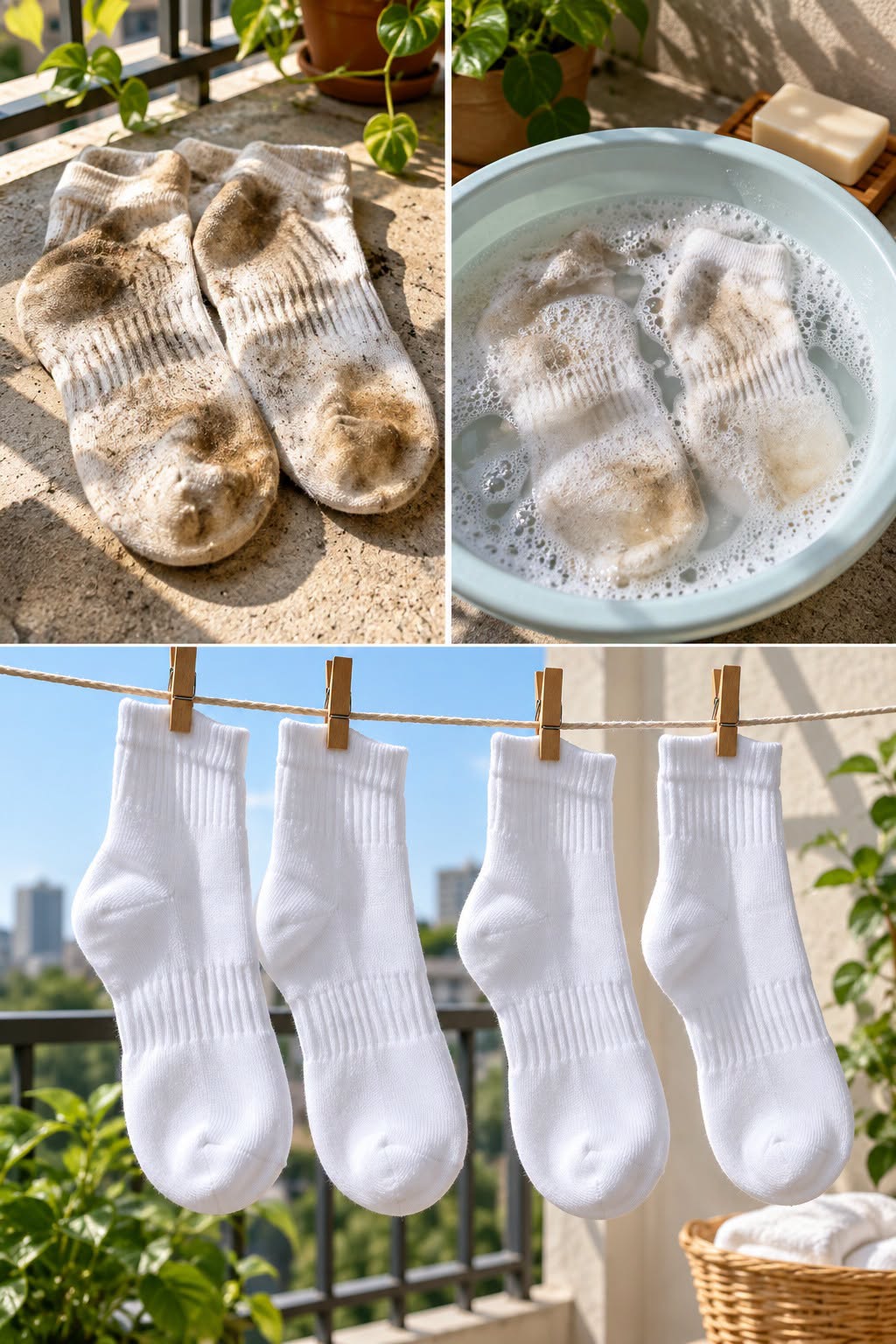
White socks are a classic wardrobe staple, but keeping them bright, clean, and free from dingy yellowing or ground-in dirt stains is an ongoing household challenge. Over time, friction, sweat, outdoor mud, and soil particles become trapped deep within fabric fibers. Traditional washing machine cycles often fail to lift these tough stains completely, leaving socks looking aged and worn out long before their actual lifespan is over.
Fortunately, restoring heavily stained white socks to a pristine, bright state does not require expensive commercial chemicals or harsh bleaches that weaken fabric over time. By utilizing accessible household ingredients, natural chemical reactions, and proven pre-treatment soaking techniques, you can effectively lift ground-in grime and extend the life of your everyday socks. In this ultimate laundry guide, we cover step-by-step cleaning methods, the science of stain removal, fabric care management, and long-term household savings strategies.
Ingredients and Materials You Will Need
Achieving dramatic whitening results requires simple, non-toxic household agents that work synergistically to break down organic matter and lift dirt particles.
Baking Soda (Sodium Bicarbonate): Acts as a natural alkaline deodorizer and mild abrasive that helps loosen ground-in grime.
White Vinegar (Acetic Acid): Works as a natural fabric softener and brightener while breaking down mineral deposits and alkaline residue.
Hydrogen Peroxide (3% Concentration): A gentle, non-chlorine oxygen bleaching agent that lifts discoloration without damaging cotton or synthetic blends.
Dish Soap or Laundry Bar Soap: Formulated to cut through oil, grease, and body lipids trapped in footbed fibers.
Warm to Hot Water: Helps dissolve cleaning agents and opens up cotton fibers to release trapped soil.
Plastic Soaking Basin: For pre-soaking heavily soiled garments before washing.
Step-by-Step Guide to Whiten Heavily Soiled Socks
Follow this simple, highly effective step-by-step process to restore bright white socks without using harsh liquid chlorine bleach.
Step 1: Initial Rinse and Scrub
Shake off any loose dirt, dried mud, or surface debris from the socks.
Rinse the socks thoroughly under warm running water to flush out surface-level dirt.
Apply a small amount of liquid dish soap or rub a wet laundry bar soap directly over the heavily stained soles and toes.
Gently scrub the fabric against itself for 1–2 minutes to loosen embedded grime particles.
Step 2: The Deep-Cleaning Oxygen & Baking Soda Soak
Fill a plastic washbasin or sink with warm to hot water.
Add 1/2 cup of baking soda and 1/2 cup of 3% hydrogen peroxide to the water. Mix thoroughly until fully dissolved.
Submerge the pre-scrubbed socks completely in the solution.
Allow the socks to soak for at least 1 to 2 hours (or overnight for severely stained socks). The oxygen bubbles will work deep within the weave to lift trapped discoloration.
Step 3: Machine Wash and Vinegar Rinse
Remove the socks from the soak solution and wring out excess water gently.
Load the socks into your washing machine along with your regular laundry detergent.
Pour 1/2 cup of distilled white vinegar into the fabric softener compartment. The vinegar neutralizes remaining alkaline soap residue and naturally brightens white fabrics during the rinse cycle.
Wash on a normal or heavy-duty warm water cycle.
Step 4: Sun Drying for Natural Bleaching
Once the wash cycle is complete, hang the white socks outside on a clothesline in direct sunlight.
The natural ultraviolet (UV) rays from sunlight act as an organic whitening agent, removing lingering shadows and eliminating odor-causing bacteria naturally.
The Chemistry of Stain Removal: Why Household Hacks Work
Understanding the scientific mechanisms behind laundry hacks helps you treat different types of stains effectively without ruining garment integrity.
Alkaline vs. Acidic Cleaning Actions
Baking soda creates a mild alkaline environment in water, which helps emulsify fats, oils, and organic acids found in sweat and soil. When combined with hydrogen peroxide, it creates an oxygenation process that breaks down color-causing organic compounds (chromophores) in stains.
Avoiding the Pitfalls of Chlorine Bleach
While liquid chlorine bleach is a common go-to for white laundry, using it excessively on cotton-synthetic sock blends can backfire. Chlorine reacts with body oils and synthetic fibers like elastane or polyester, causing white fabrics to turn yellow over time and weakening elastic stretch bands. Oxygen-based brightenings—such as hydrogen peroxide and baking soda—are far safer for long-term fabric maintenance.
Practical Laundry Tips for Everyday Sock Maintenance
Preventing severe discoloration is always easier than restoring dingy fabrics. Implementing these simple laundry habits will keep your white socks looking new longer:
Wash White Socks Promptly: Avoid letting damp, dirty socks sit in a laundry hamper for days, as bacteria and soil setting times increase stain stubbornness.
Separate Whites from Colors: Always wash white garments in dedicated white loads to prevent color dye transfer from darker clothing.
Avoid Overusing Laundry Detergent: Excess detergent build-up leaves a soapy film on fabrics that attracts and holds dirt, causing socks to turn gray over time.
Wash Socks Inside Out: Turning socks inside out before washing ensures that sweat, dead skin cells, and foot oils on the interior fabric are directly exposed to soapy water.
Use Water Softeners in Hard Water Areas: Hard water containing high mineral concentrations (calcium and magnesium) can dull white fabrics; adding a water softener or vinegar helps neutralize mineral deposits.
Financial, Home Business, and E-Commerce Insights
Laundering and garment care practices carry broader implications for household budgeting, smart consumer habits, and small business operations.
Extending Textile Lifespans for Household Savings
Properly maintaining footwear, clothing, and household textiles significantly extends their usable life. Reducing the frequency of replacing worn-out clothing items supports long-term household budgeting, allowing family capital to be redirected toward savings accounts, debt reduction, emergency reserves, or high-yield investment portfolios.
Home Services and Eco-Friendly Commercial Opportunities
As sustainable living gains global momentum, consumers increasingly seek eco-friendly household tips and non-toxic cleaning alternatives. Small businesses, home care entrepreneurs, and eco-friendly cleaning services that promote non-hazardous, green cleaning solutions tap into a expanding market of environmentally conscious consumers. Entrepreneurs expanding in this sector can leverage digital marketing, local SEO, and content creation to build thriving service platforms.
Fascinating Facts About Laundry History and Science
Ancient Sun Bleaching: Long before chemical bleaches were manufactured, ancient civilizations laid wet linens out in sunny fields—a process known as “bleachfields”—to naturally whiten fabrics using solar UV rays and atmospheric moisture.
The Origin of Soap: The earliest recorded soap recipe dates back to 2800 BC in ancient Babylon, made from boiled water, alkali, and cassia oil.
Microfiber Trapping: Cotton fibers have natural twists that hold onto dirt particles tightly, which is why ground-in soil on cotton sock soles requires mechanical friction or chemical soaking to release fully.
Conclusion
Keeping your white socks bright, clean, and comfortable does not require expensive commercial stain removers or harsh chemical bleaches. By utilizing simple household items like baking soda, hydrogen peroxide, white vinegar, and natural sunshine, you can easily lift stubborn ground-in dirt while preserving fabric softness and elasticity. Incorporating these easy pre-soak techniques into your regular laundry routine ensures your socks look pristine step after step.
Frequently Asked Questions (FAQ)
1. Why do white socks turn gray or yellow after washing?
Socks often turn gray or yellow due to detergent residue build-up, washing with colored clothes, hard water mineral deposits, or using chlorine bleach on synthetic fiber blends.
2. Can I use hot water to wash white socks?
Warm to hot water is ideal for white cotton socks because heat helps dissolve laundry detergent completely and opens up cotton fibers to release embedded dirt and body oils.
3. How long should I soak dirty white socks before washing?
Soaking socks for 1 to 2 hours in a baking soda and hydrogen peroxide solution works well for moderate stains, while overnight soaking is recommended for heavily ground-in mud or soil.
4. Is vinegar safe to use in the washing machine?
Yes! White distilled vinegar is safe for most washing machines when poured into the fabric softener dispenser. It helps strip soap buildup, softens fabrics naturally, and eliminates unpleasant foot odors.
