
For generations of students throughout the 20th century, learning penmanship was a core daily ritual in primary school. Students sat at wooden desks practicing rhythmic arm movements, repetitive loops, and slant drills designed to master classic cursive scripts. Among the most influential handwriting techniques taught in American schools was the Palmer Method, a fast, uniform cursive system developed by Austin Palmer in the late 19th century.
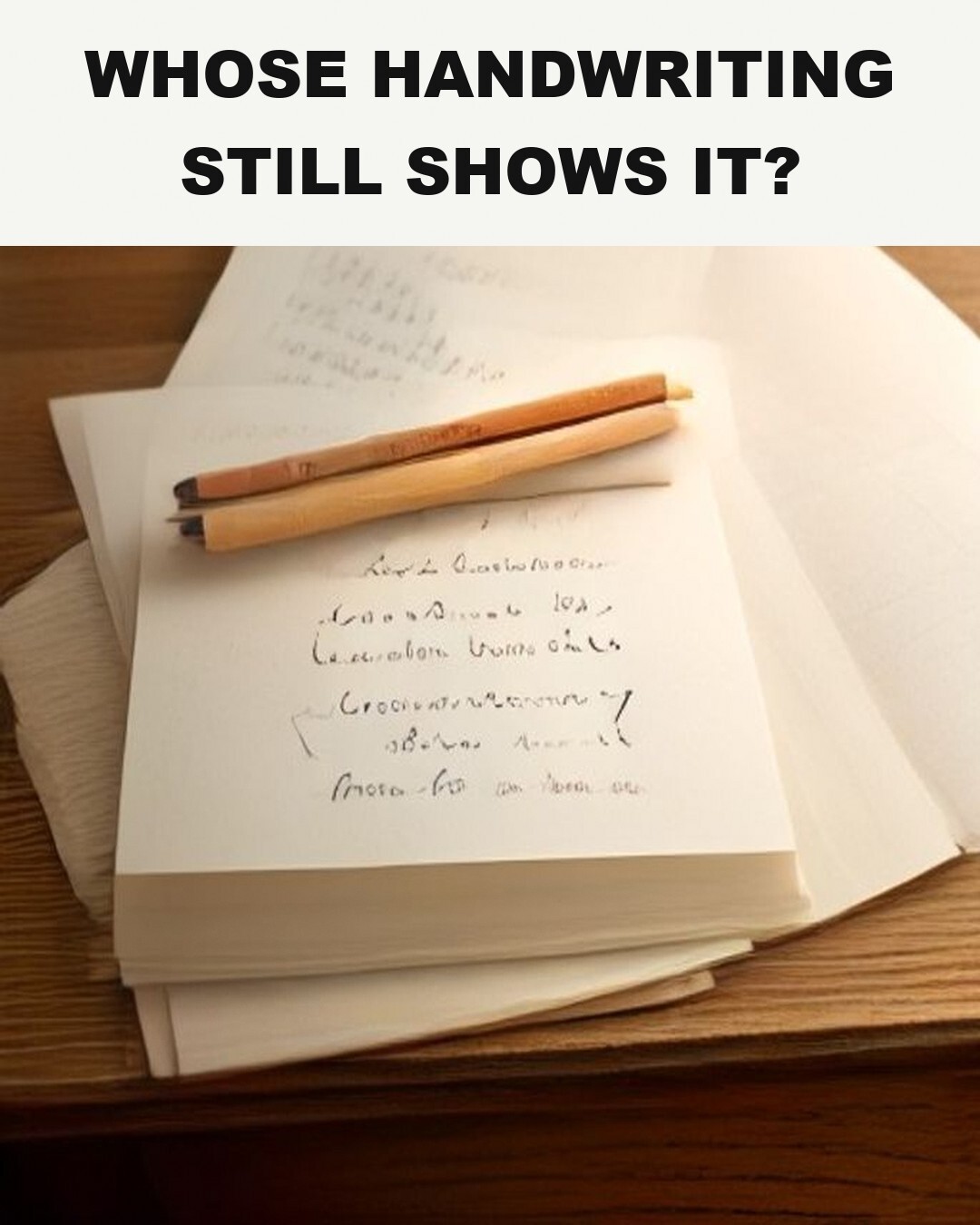
An engaging nostalgic post titled “WHOSE HANDWRITING STILL SHOWS IT?” shows a stack of handwritten paper pages with vintage wooden pencils resting on top, evoking fond memories of cursive drills, letter writing, and timeless penmanship.
Visual Breakdown: A Nostalgic Desk Setup
The photograph highlights traditional, pre-digital writing materials that defined vintage classrooms and home study desks.
+-----------------------------------------------------------------------+
|                    VINTAGE PENMANSHIP DESK SETUP                      |
|                                                                       |
|   [ Wooden Pencils ]  ---> Resting at an angle atop handwritten paper  |
|                                         |                             |
|                                         v                             |
|   [ Stack of Paper ]  ---> Cream-colored unruled stationery pages     |
|                                         |                             |
|                                         v                             |
|   [ Cursive Script ]  ---> Slanted, rhythmic handwriting lines         |
+-----------------------------------------------------------------------+
Key Visual Components
- The Stationery: A neat stack of heavy cream paper sheets resting on a warm wooden tabletop.
- The Writing Tools: Two classic vintage wooden pencils with exposed leads resting across the top of the written page.
- The Cursive Script: Distinct, rhythmic lines of cursive handwriting displaying uniform slant and fluid letter connections.
The Legacy of the Palmer Method
- Designed for Speed & Efficiency: Created as a simplified alternative to the ornate Spencerian script, the Palmer Method relied on muscle movement from the shoulder and forearm rather than finger movement, allowing clerks, bookkeepers, and students to write quickly without fatigue.
- A Hallmark of Generational Identity: Parents and grandparents who attended school between the 1920s and 1970s often share strikingly similar, elegant handwriting due to standardized classroom penmanship drills.
- The Modern Shift: As digital devices, keyboards, and touchscreens replaced handwritten letters, formal cursive education declined in elementary curricula, making classic Palmer-style penmanship an admired vintage art.
Traditional Penmanship Systems Compared
| Method | Historical Era | Key Characteristics |
| Spencerian Method | Mid-19th Century | Highly decorative, formal flourishes, varied stroke thickness |
| Palmer Method | Late 19th to Mid-20th Century | Streamlined, plain, speed-oriented, uniform slant |
| D’Nealian Method | Late 20th Century to Present | Slanted manuscript letters designed for easy transition to cursive |
Frequently Asked Questions (FAQ)
1. What made the Palmer Method different from earlier cursive styles?
The Palmer Method simplified complex decorative flourishes and emphasized “arm movement” over finger movements, allowing writers to produce clean, legible script much faster.
2. Is cursive handwriting still taught in schools today?
While computer literacy replaced handwriting in many curricula over past decades, several regions and states have re-introduced mandatory cursive instruction to support cognitive development and historical reading skills.
Conclusion
Whether admiring a grandmother’s immaculate recipe cards or reading vintage love letters, the distinct beauty of classic cursive handwriting remains a treasured connection to our shared past.
