
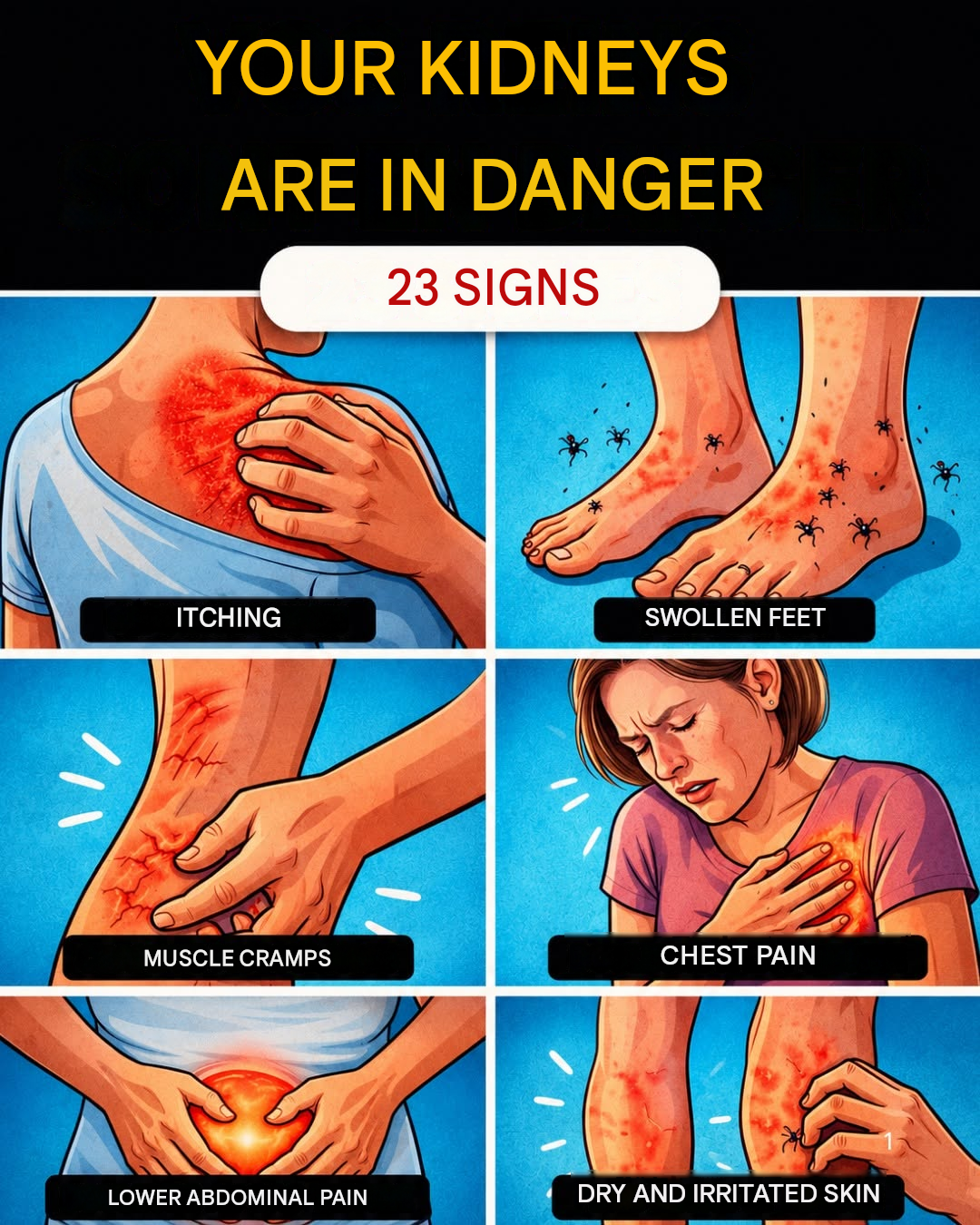
Your kidneys are two bean-shaped organs that work silently every day to maintain your body’s balance.
They filter toxins, regulate blood pressure, balance electrolytes, and even help produce red blood cells. But when a problem starts to appear, the signs are often subtle… until it’s too late.
Recognizing warning signs early can help protect your kidneys from permanent damage.
Here are 23 signs that your kidneys might be asking for help: Constant fatigue.The kidneys produce erythropoietin, a hormone that stimulates the production of red blood cells. When they function
-
- less efficiently, anemia can develop, leading to persistent fatigue and weakness.
- Difficulty sleeping:The accumulation of toxins in the blood due to poor filtration can disrupt sleep and even worsen sleep apnea.
- Dry or itchy skin:When the kidneys misregulate minerals, the skin can become dry, flaky, and itchy due to an imbalance of calcium and phosphorus.
- Frequent urination at night.Getting up several times to urinate (nocturia) may indicate kidney problems or a urinary tract infection.
X
5. Foamy urine.
Excessive foam can be a sign of protein in
the urine (proteinuria), a possible indicator of kidney damage.
Muscle cramps.Imbalances in calcium, potassium or sodium can cause muscle spasms and pain.
Swelling of the ankles, feet or hands.Sodium and fluid retention due to poor kidney function can cause edema.
Swelling around the eyes:Protein loss in the urine can cause swelling of the eyelids, especially upon waking.
High blood pressure.The kidneys play a role in regulating blood pressure. When they are affected, blood pressure can rise or become difficult to control.
Shortness of breath.Excess fluid in the lungs or anemia can lead to breathing difficulties.
Metallic taste in the
mouth.Urea buildup can alter taste and cause bad breath.
Loss of appetite.Waste accumulated in the blood can cause nausea and loss of appetite. Difficulty concentrating.Anemia and toxins can reduce cerebral oxygenation, leading to confusion or difficulty concentrating.
12 Celebrity Moments So Embarrassing They Wanted To Disappear On Camera
Plus…
796
199
265
14. Constant feeling of cold.
Anemia related to kidney disease can cause a feeling of cold even in a warm environment.
Bad breath.
-
- High urea levels can give breath an ammonia-like odor.
- Decreased urine output.Urinating much less than usual can be an early sign of kidney failure.
- Dark or bloody urine.Brown, dark or bloody urine (hematuria) is a serious sign requiring medical attention.
How to protect your kidneysIf you recognize several of these signs, don’t ignore them. Early detection is essential.Important recommendations:
Pain in the lower back or side.This may indicate a kidney infection, kidney stones, or polycystic kidney disease.
Changes in skin color:The accumulation of toxins can give the skin a yellowish or grayish tint.
Persistent itching of the back or arms.This is not always dry skin; it may be related to the accumulation of waste in the blood.
Sudden weight loss.This may be related to nausea, vomiting, or loss of appetite associated with kidney problems.
Nausea and vomiting.Toxins can irritate the digestive system. • Stay well hydrated
• Follow a kidney-friendly diet (low in salt and moderate in protein)
• Monitor your blood pressure and blood sugar levels
• Avoid overuse of painkillers or
non-steroidal anti-inflammatory drugs (NSAIDs)
• Have regular medical checkups
Conclusion
The kidneys rarely “complain” before the damage becomes significant.
By paying attention to these 23 warning signs , you can act in time, consult a healthcare professional and protect your long-term health.
