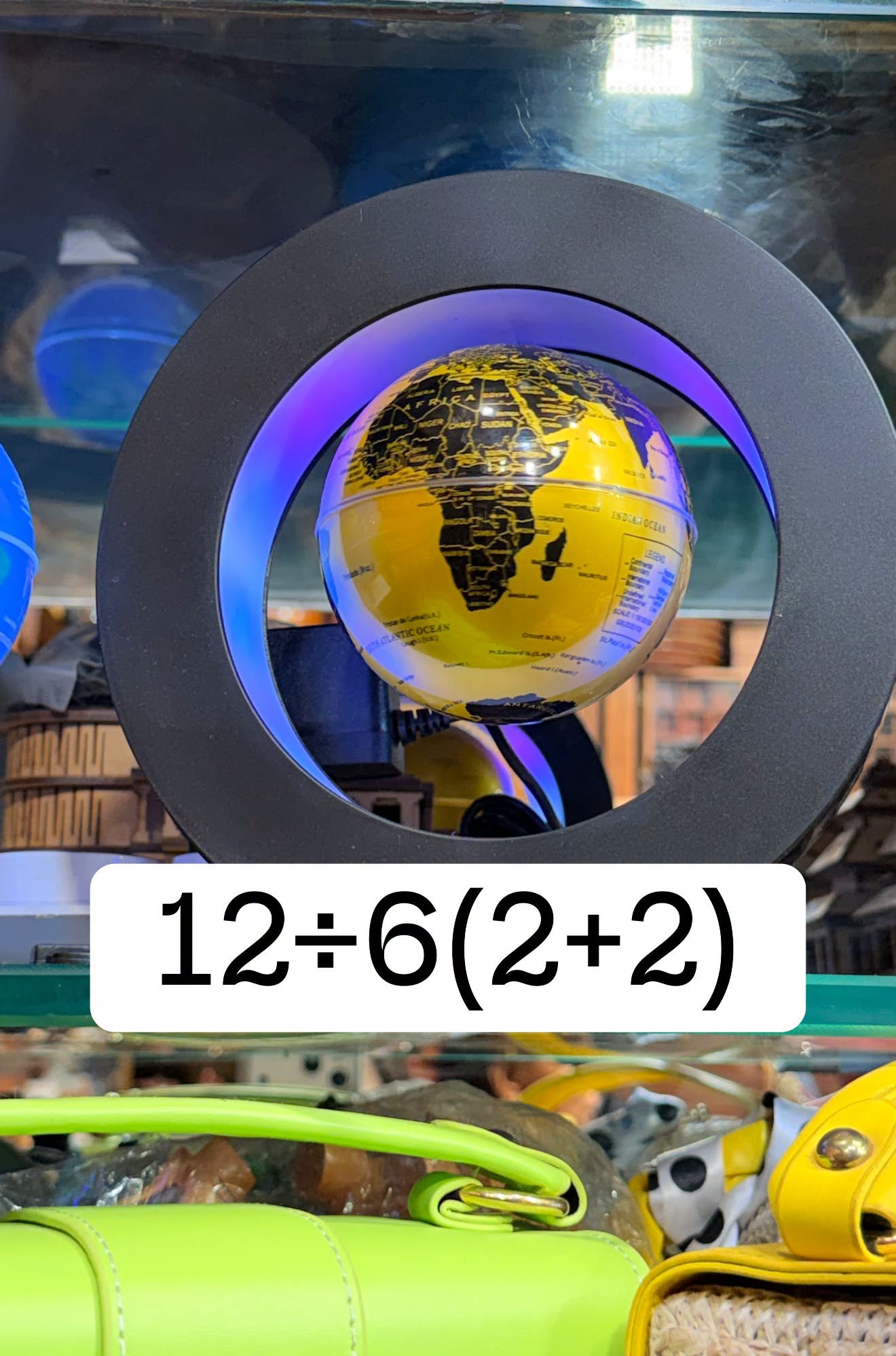
Internet culture is frequently captivated by viral math puzzles, brain teasers, and arithmetic equations designed to spark lively debate across social media networks. Equations that look simple at first glance often divide comment sections into competing factions, generating thousands of shares, reactions, and heated discussions. While these puzzles appear to be harmless tests of elementary arithmetic, they actually provide a fascinating window into human cognitive psychology, educational methodologies, and digital engagement algorithms. Understanding why certain math problems go viral requires examining the role of mathematical conventions like the order of operations, the ambiguity of implied multiplication, the cognitive shortcuts that lead people to make common errors, and the mechanics of online content monetization. This article explores the mathematical rules behind these puzzles, the cognitive biases that influence problem-solving, and the broader economic impact of viral digital content. The Mathematics of Order of Operations: PEMDAS and BODMASAt the core of every viral math debate lies a fundamental set of mathematical rules known as the order of operations. Standardized across global mathematics, these conventions ensure that every mathematical expression has one definitive, unambiguous answer.The Acronyms: PEMDAS vs. BODMASDepending on regional educational systems, students learn the order of operations through standardized acronyms:PEMDAS (United States & Canada): Parentheses, Exponents, Multiplication and Division, Addition and Subtraction. BODMAS (UK, India, & Australia): Brackets, Orders, Division and Multiplication, Addition and Subtraction. Solving the Expression: $12 \div 6(2 + 2)$Applying the order of operations to the expression $12 \div 6(2 + 2)$:Parentheses Take Precedence: First, evaluate the operation inside the parentheses: $(2 + 2) = 4$. Substituting this back gives $12 \div 6 \times 4$ (or $12 \div 6(4)$).Multiplication and Division (Left-to-Right): Multiplication and division share equal precedence and must be evaluated strictly from left to right.Calculate Division: First, calculate $12 \div 6 = 2$.Calculate Multiplication: Next, multiply that result by 4: $2 \times 4 = 8$.(Note: Some calculators and traditional algebraic interpretations treat implied multiplication—such as writing $6(4)$ without a multiplication sign—as having higher priority than division, which would evaluate $6 \times 4$ first to yield $12 \div 24 = 0.5$. However, strict standard operational rules dictate evaluating division and multiplication strictly from left to right, resulting in 8).Cognitive Psychology: Why Smart People Make Simple Arithmetic ErrorsThe viral nature of math riddles relies heavily on human cognitive processing and mental shortcuts, often referred to by psychologists as heuristics.System 1 vs. System 2 ThinkingPsychologist Daniel Kahneman’s framework divides human thought into two distinct systems:System 1 Thinking: Fast, automatic, intuitive, and unconscious. When individuals glance quickly at a math equation, System 1 attempts to process numbers quickly without pausing to recall formal operational rules. System 2 Thinking: Slow, deliberate, analytical, and conscious. Solving the puzzle correctly requires activating System 2 to pause, analyze the operators, and apply mathematical hierarchy. The Psychology of Online ArgumentationWhen people notice an incorrect answer in a comment section, they feel an immediate psychological urge to correct the mistake. This emotional trigger drives massive comment volume, pushing social media algorithms to amplify the post to wider audiences. Digital Economics and AdSense MonetizationFor digital publishers and content creators, viral math puzzles are powerful tools for driving website traffic, increasing page views, and maximizing advertising revenue through programmatic networks like Google AdSense. High-CPC Keywords in Educational and Financial ContextsWebsites publishing puzzle solutions and brain teasers often integrate high-value commercial and educational topics to attract competitive advertiser bidding:Education and Online Learning: Articles exploring mathematical methodology, cognitive science, and e-learning platforms attract educational advertisers.Technology and Software: Digital platforms utilize advanced analytics to track user engagement, page session duration, and click-through rates. Financial Services and Insurance: High-traffic informational sites optimize ad yield by balancing entertainment content with professional finance and insurance advertising categories.Practical Tips for Solving Online Math PuzzlesTo avoid falling into common cognitive traps when encountering math riddles online, keep these practical tips in mind:Always Clear Parentheses First: Evaluate everything inside grouping symbols before tackling external operators. Follow Left-to-Right Rules: When faced with consecutive multiplication and division, evaluate strictly from left to right. Double-Check Your Work: Recalculate each step independently to verify your final numerical result before joining the comment debate. Be Skeptical of Viral Claims: Remember that many viral puzzles are intentionally structured to provoke ambiguous interpretations and maximize social media engagement. Fascinating Facts About Mathematical Literacy and Viral ContentThe Power of Algorithmic Engagement: Posts featuring common mathematical misconceptions routinely generate ten times more comments than standard informational articles. Global Educational Variations: While mathematical rules are universal, slight variations in how algebra and order of operations are taught globally contribute to widespread public confusion over multi-operator expressions. The History of Order of Operations: Standardized operational hierarchy was adopted during the 16th and 17th centuries with the introduction of modern algebraic notation, ensuring consistency in scientific and mathematical calculations. ConclusionViral math puzzles demonstrate how human psychology, educational habits, and digital algorithms intersect online. By following strict standard order of operations, expressions like $12 \div 6(2 + 2)$ yield a clear and unambiguous solution of 8. Combining engaging content with solid educational value helps publishers capture audience attention while promoting mathematical literacy across digital platforms. Frequently Asked Questions (FAQ)What is the correct answer to the math puzzle $12 \div 6(2 + 2)$?Using standard order of operations (evaluating parentheses first, then division and multiplication from left to right), the answer is 8 ($12 \div 6 = 2$, and $2 \times 4 = 8$).Why do people get 1 instead of 8?Some people prioritize implied multiplication over division—calculating $6(4) = 24$ first, and then dividing $12 \div 24 = 0.5$ (or rounding/interpreting it as 1)—leading to intense online debates.What do PEMDAS and BODMAS stand for?PEMDAS stands for Parentheses, Exponents, Multiplication, Division, Addition, Subtraction. BODMAS stands for Brackets, Orders, Division, Multiplication, Addition, Subtraction. Both represent the exact same mathematical order of operations. How do publishers monetize viral math puzzles?Publishers drive high web traffic through social media shares and comments, monetizing page views via automated advertising networks like Google AdSense.
The Psychology and Mathematics of Viral Math Puzzles: Order of Operations, Cognitive Biases, and Online Engagement