
When discovering unusual vintage objects tucked away in family attics, antique shops, or estate sales, identifying their original purpose can be a captivating historical puzzle. In the era before modern hygiene products, plastic cotton swabs, and specialized personal care devices, people relied on durable, artisan-crafted tools made of metal, bone, or ivory for daily grooming and hygiene.
When presented with a collection of slender, beautifully textured metal instruments featuring curved, spoon-like tips, many modern observers are left guessing their function. Let us explore the intriguing history of these antique personal care items, how hygiene practices have evolved over time, and what these fascinating vintage tools were truly designed to accomplish.
The History of Personal Hygiene and Grooming Implements
Throughout human history, personal hygiene tools have reflected the craftsmanship, materials, and medical understanding of their respective eras.
1. Antique Ear Scoops and Hygiene Sets
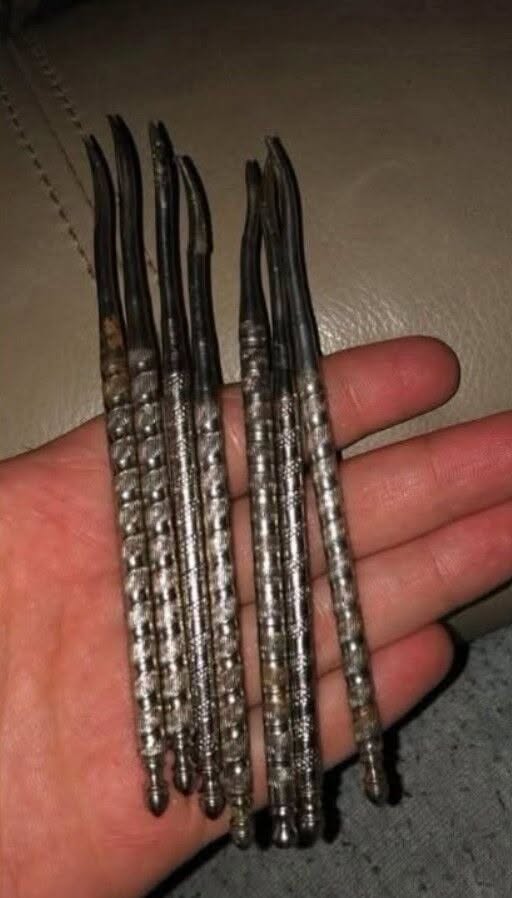
The metal instruments shown in the hand are antique ear spoons or ear cleaners (sometimes referred to historically as auricalps). Before the invention of disposable cotton swabs in the 20th century, individuals used slender metal implements crafted from silver, brass, bronze, or steel to clean earwax buildup from the ear canal.
2. Craftsmanship and Portable Hygiene Kits
During various periods—ranging from Roman antiquity to the Victorian era—wealthy individuals carried personal grooming sets suspended from their belts or stored in ornate travel cases. These multi-use sets typically included tweezers, toothpicks, nail cleaners, and curved ear scoops, all featuring intricately knurled metal handles for a secure grip during delicate use.
The Anatomy and Design of Vintage Ear Cleaners
Examining the physical structure of these antique instruments reveals a high level of specialized metalworking and thoughtful industrial design.
Textured Knurled Handles: The spiral and cross-hatched patterns carved into the metal shafts provided a firm, non-slip grip for the user’s fingers, preventing accidental slips during delicate grooming tasks.
Curved Spoon-Like Tips: The slender, rounded, and gently curved tips were specifically shaped to scoop out earwax safely without sharp edges poking into sensitive internal ear tissues.
Durable Metallic Alloys: Crafted from sturdy metals designed to withstand frequent polishing and sterilization, these tools were family heirlooms meant to last for generations.
Digital Engagement and Viral Curiosity
Oddities and mystery object photographs are among the most powerful drivers of engagement on social media platforms like Facebook.
Why Mystery Object Posts Go Viral
When users encounter a bizarre or unfamiliar antique tool online, curiosity immediately takes over. Comment sections fill up with wild guesses, humorous jokes, and historical debates. This high level of active participation boosts algorithmic reach, helping digital publishers expand their audience and drive traffic back to their websites.
Strategic Considerations for Digital Publishers
For content creators and digital publishers, combining engaging curiosity hooks with well-researched, high-value articles is a proven formula for success. Balancing audience entertainment with sound financial management, strategic content investment, and strict adherence to copyright and media regulations—often guided by an attorney or specialized legal services provider—ensures long-term publishing stability.
Practical Tips for Modern Ear Care and Hygiene
While antique metal ear cleaners offer a fascinating glimpse into historical grooming, modern medical science provides clear guidelines for safe ear care:
Avoid Inserting Objects into the Ear Canal: Modern physicians strongly advise against inserting cotton swabs, hairpins, or metal tools deep into the ear canal, as this can push earwax deeper or damage the delicate eardrum.
Let Natural Cleaning Work: The ear features a natural self-cleaning mechanism where skin cells migrate outward, carrying wax with them naturally.
Consult a Healthcare Professional: If you experience excessive earwax buildup, discomfort, or hearing muffling, visit a medical specialist for safe professional removal rather than attempting home remedies with sharp tools.
Fascinating Facts About Historical Grooming Tools
Roman Hygiene Culture: Ancient Romans considered personal grooming extremely important, often using silver or bronze hygiene sets at public bathhouses.
Victorian Elegance: In the 19th century, elaborate silver-plated grooming kits were popular wedding gifts and status symbols among the Victorian upper class.
The Invention of the Cotton Swab: Disposable cotton-tipped applicators were invented in the 1920s by Leo Gerstenzang, revolutionizing domestic hygiene and gradually replacing reusable metal ear scoops.
Archaeological Discoveries: Archaeologists frequently uncover antique bronze and bone ear scoops in medieval and Roman excavation sites across Europe and Asia.
Conclusion
Antique metal ear cleaners offer a captivating window into the daily hygiene habits of past centuries, showcasing remarkable craftsmanship and decorative metalwork. While modern medical standards have shifted toward safer cleaning methods, these intriguing vintage tools remain treasured collectibles that spark curiosity and conversation today.
Frequently Asked Questions (FAQ)
What are the metal tools shown in the image?
They are antique metal ear cleaners or ear spoons used historically for personal hygiene before modern cotton swabs were invented.
Why do the handles have textured patterns?
The knurled and spiral patterns on the handles were designed to provide a secure, non-slip grip for the user’s fingers during delicate grooming tasks.
Are metal ear cleaners safe to use today?
No. Modern medical professionals advise against inserting metal tools or cotton swabs into the ear canal, as they can cause accidental injury to the eardrum or push wax deeper.
Why do mystery object posts perform so well on social media?
Unusual antique photos spark immediate curiosity, driving users to comment with their guesses, debate historical uses, and share the post with friends.
