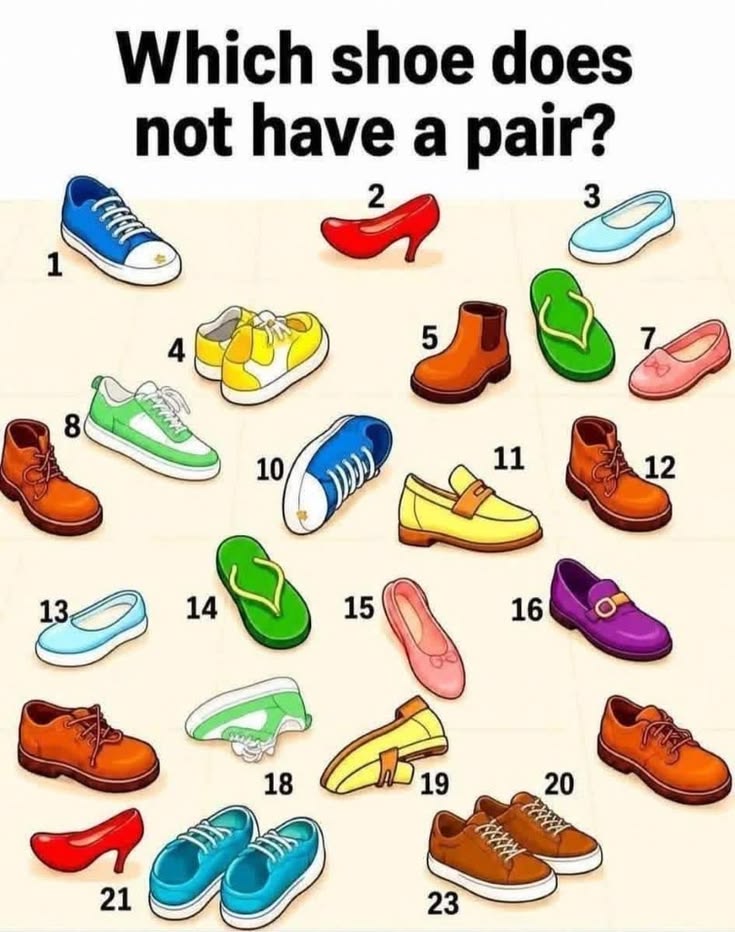
Visual puzzles, hidden-object games, and logical brain teasers have become immensely popular across social media platforms. When scrolling through your daily feed, encountering a colorful puzzle that tests your observation skills and attention to detail provides an irresistible challenge. One such viral puzzle asks a deceptively simple question: “Which shoe does not have a pair?” accompanied by an array of numbered shoes scattered across the page. At first glance, sorting through dozens of various footwear styles—ranging from sneakers and heels to loafers, boots, and sandals—can feel overwhelming. However, systematic observation and careful matching can help you crack the puzzle. Let us explore the psychology of visual search games, how our brains process patterns, and how to find the single odd-one-out among the shoes. The Psychology of Visual Search and Pattern RecognitionWhen human eyes scan a cluttered image containing multiple repeating objects, our visual cortex immediately initiates a sorting process based on color, shape, and pattern.1. Feature Integration TheoryCognitive psychologists study how we find specific items in a crowd through feature integration theory. Initially, our brains process basic features like color and orientation simultaneously across the entire image. When looking for pairs, we quickly group identical colors—such as matching the brown boots, green sneakers, or red heels—before verifying their exact matches. 2. Overcoming Visual FatigueWhen an image contains numerous similar items, visual fatigue can set in quickly, causing observers to overlook subtle differences in orientation or missing pairs. Taking a methodical, grid-by-grid approach ensures that every numbered shoe is accounted for. Step-by-Step Breakdown of the Shoe PairsTo determine which shoe is left without a partner, let us examine the numbered footwear items displayed in the puzzle: Blue and White Sneakers: Shoe 1 and Shoe 10 form a matching pair of casual blue-and-white sneakers. Additionally, Shoe 22 (at the bottom) features a pair of bright turquoise sneakers. Red High Heels: Shoe 2 and Shoe 21 form a matching pair of classic red high-heeled pumps. Light Blue Flats: Shoe 3 and Shoe 13 form a matching pair of light blue slip-on flats. Yellow Athletic Shoes: Shoe 4 and Shoe 19 form a matching pair of yellow athletic trainers. Orange-Brown Boots: Shoes 5, 8, 12, 17, and 20 represent classic brown boots or lace-up shoes, with Shoe 23 showing a pair of brown sneakers. Green Flip-Flops: Shoe 6 and Shoe 14 form a matching pair of green sandals. Pink Flats: Shoe 7 and Shoe 15 form a matching pair of pink bow flats. Yellow Loafers: Shoe 11 is a yellow dress loafer. Purple Loafers: Shoe 16 is a purple dress shoe with a buckle strap. Green Sneakers: Shoe 8 and Shoe 18 form a matching pair of green-and-white athletic shoes. Upon careful inspection, Shoe 16 (the purple shoe with a buckle) stands out as the unique item that lacks a matching partner anywhere else in the puzzle. Digital Engagement and Viral Puzzle PsychologyVisual puzzles like the missing shoe challenge are expertly crafted to maximize audience interaction on social media.Why Visual Puzzles Drive EngagementWhen users spot the odd item out or struggle to find a match, they are naturally compelled to leave a comment, debate with other users, or share the post with friends. This surge in comments and shares signals high engagement to social media algorithms, boosting the post’s visibility. Strategic Considerations for Digital PublishersFor content creators and digital publishers, incorporating interactive visual puzzles is an effective way to increase average reading time, page views, and overall user retention. Balancing entertainment content with sound financial management, strategic investment in digital tools, and adherence to copyright and media regulations—often guided by an attorney or specialized legal services provider—ensures long-term publishing success. Practical Tips for Solving Visual Puzzles FasterTo improve your speed and accuracy when tackling hidden-object and matching puzzles, try these strategies:Scan by Color Categories First: Group items mentally by color (e.g., all reds, all blues, all browns) to quickly identify isolated items that lack a twin. Work Methodically: Scan the image from top-left to bottom-right in sections rather than jumping randomly across the page. Double-Check Your Matches: Once you think you have found the odd-one-out, re-scan the remaining numbers to ensure you didn’t miss a subtle pair hidden elsewhere. Fascinating Facts About Footwear HistoryAncient Footwear: The oldest known shoes discovered by archaeologists are woven sagebrush sandals dating back approximately 10,000 years, found in Oregon, USA.The Origin of High Heels: High heels were originally worn in 10th-century Persia by military cavalrymen to help secure their boots firmly in stirrups while riding horses.Mass Production: The industrial revolution transformed shoemaking from a custom hand-crafted trade into a mechanized global industry capable of producing millions of standardized pairs daily.Color Psychology in Fashion: Footwear colors often reflect cultural trends, with classic neutral tones dominating professional attire while vibrant colors signal creative expression.ConclusionVisual brain teasers like the missing shoe puzzle offer a delightful way to test our observation skills while providing a fun mental break during the day. By carefully examining each numbered item and sorting through the colorful array of footwear, observant puzzle-solvers can successfully uncover the lone odd-one-out. Keep your eyes sharp for the next visual challenge! Frequently Asked Questions (FAQ)Which shoe does not have a pair in the puzzle?Shoe 16 (the purple buckled shoe) is the odd item out that does not have a matching pair anywhere in the image. Why do visual puzzles go viral on social media?Visual puzzles invite immediate participation, encouraging users to test their skills, comment with their answers, and debate findings with friends. How can I get better at solving hidden-object and matching puzzles?Scanning the image by color categories and working methodically through the grid helps you identify isolated items much faster. Do brain teasers offer cognitive benefits?Yes, engaging with visual puzzles helps stimulate neural pathways associated with pattern recognition, spatial reasoning, and attention to detail.
Which Shoe Does Not Have a Pair? The Ultimate Visual Brain Teaser