
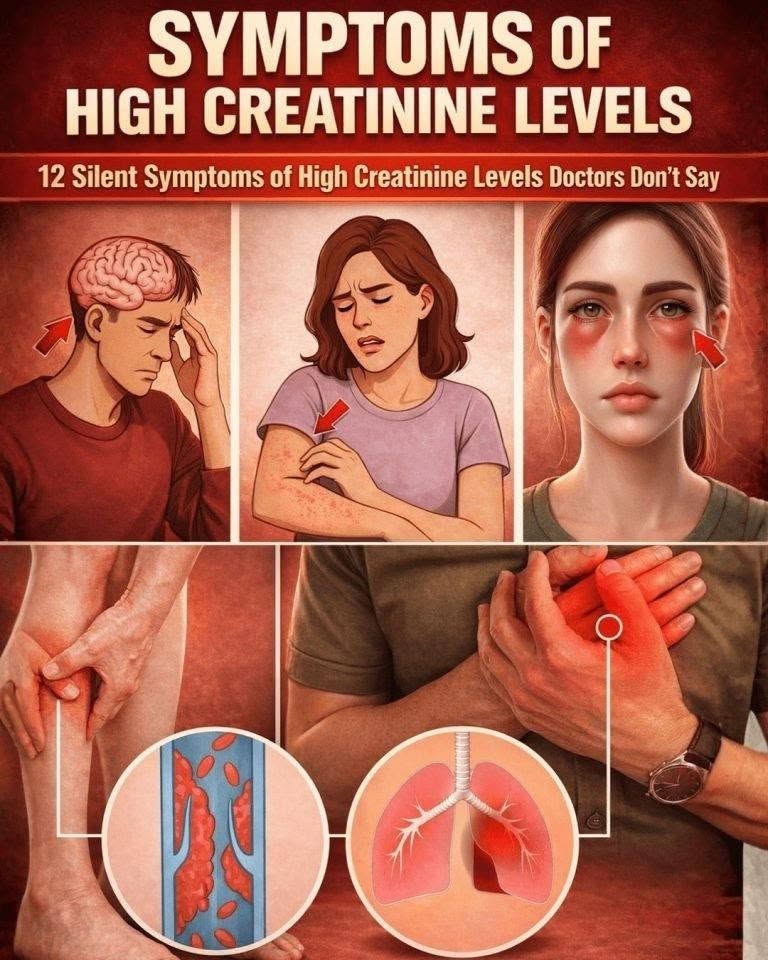
Your kidneys work around the clock to filter waste products from your blood, maintain fluid and electrolyte balance, and perform several other essential functions.
One waste product commonly measured during a blood test is creatinine.
Creatinine is produced naturally through normal muscle activity and is removed from the bloodstream primarily by the kidneys. When kidney filtration decreases, creatinine may accumulate in the blood.
However, high creatinine does not automatically mean you have kidney disease. Creatinine can also be influenced by muscle mass, diet, hydration and other factors. Healthcare professionals therefore
interpret it alongside tests such as estimated glomerular filtration rate (eGFR) and urine albumin. Nkf
Here are 12 possible changes that may occur when kidney function is impaired.
- Persistent Fatigue
Feeling tired occasionally is normal.
But persistent, unexplained fatigue can occur as kidney disease becomes more advanced.
Reduced kidney function can contribute to anemia and allow waste products to accumulate in the bloodstream, potentially leaving you feeling weak or unusually tired. Institut National du Diabète et des Maladies Digestives et Rénales
Fatigue alone doesn’t indicate high creatinine or kidney
