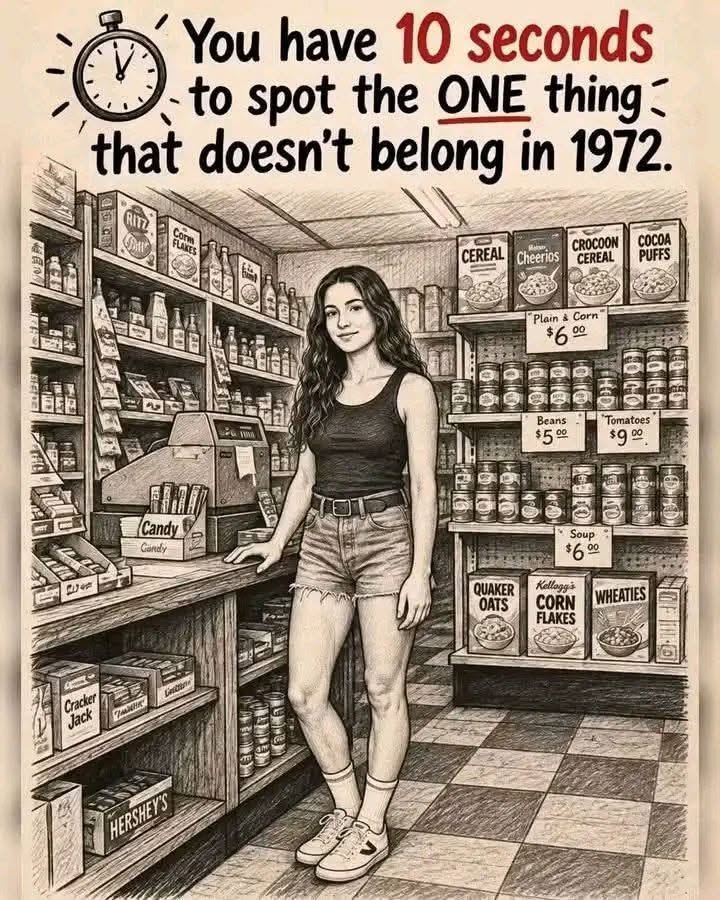
Historical visual puzzles and anachronism challenges have become incredibly popular across social media platforms, capturing the curiosity of puzzle enthusiasts worldwide. The vintage-style illustration presented here—titled “You have 10 seconds to spot the ONE thing that doesn’t belong in 1972″—transports viewers back to a classic neighborhood grocery store. Featuring retro product boxes like Ritz, Cheerios, Cocoa Puffs, Quaker Oats, Wheaties, and Cracker Jack, along with old-fashioned shelving, a mechanical cash register, and classic checkerboard floor tiles, the black-and-white sketch looks like an authentic snapshot from the early 1970s. However, hidden within this nostalgic setting is an anachronistic element—a modern item that was physically impossible to exist in 1972. Observational challenges like this do far more than provide a quick moment of social media entertainment; they actively engage our visual processing centers, test our historical knowledge, and encourage meticulous attention to detail. In this comprehensive article, we will analyze the subtle details of this 1970s grocery store puzzle, reveal the exact out-of-place object, examine the fascinating economic and retail history of the 1970s, and explore how visual puzzle exercises benefit cognitive health and focus.The Visual Puzzle Explained: A Modern Intruder in 1972At first glance, the image immerses viewers directly into a cozy, independent grocery store from the Nixon era. A young store clerk stands proudly behind the counter, surrounded by canned goods, packaged snacks, and classic cereal boxes. The warm lighting, wooden counter, and hand-lettered price signs all contribute to a convincing retro atmosphere. Yet, upon closer inspection, modern fashion design breaks the historical continuity of the scene. Finding this hidden anomaly requires looking past the grocery inventory and examining the clerk’s personal apparel. Detailed Solution: What Doesn’t Belong in 1972?If you have spent time scanning the photo and want to verify your answer—or if you need help finding the subtle error—here is the complete breakdown of the modern item hidden in this vintage image:The Modern Sneakers (Veja-Style Shoes)Looking closely at the young clerk standing behind the counter, examine the footwear on her feet. She is wearing a pair of modern, low-profile leather sneakers featuring the distinctive side logo branding popularized by contemporary footwear brands like Veja. Why they don’t belong: In 1972, athletic footwear looked entirely different. While classic canvas sneakers like Converse Chuck Taylors, Keds, and early leather running shoes by brands like Nike (founded in 1971) or Adidas existed, the specific minimalist European sneaker design with prominent side V-logos and chunky soles did not exist in the fashion landscape of 1972.The Retail and Grocery Landscape of 1970s AmericaTo fully appreciate why this image resonates with so many people, it helps to examine how grocery shopping and retail commerce operated in 1972.+——————————————————————-+
| 1970s RETAIL VS. MODERN SHOPPING |
+——————————————————————-+
| 1970s Grocery Experience | Modern Retail Experience |
+—————————-+————————————–+
| Independent Neighborhood Stores | Nationwide Supermarket Chains |
| Mechanical Cash Registers | Digital POS & Touchscreen Terminals |
| Hand-Lettered Price Tags | Electronic Shelf Labels (ESL) |
| Printed Paper Receipts | Contactless & Mobile Payments |
+——————————————————————-+
Classic Brands and PackagingThe illustration accurately recreates several iconic food brands that filled pantry shelves during the 1970s: Cracker Jack & Hershey’s: Classic confectionary staples prominently displayed on lower wooden shelves. Quaker Oats & Wheaties: Traditional breakfast cereals packaged in vintage cardboard boxes with historical graphic designs. Ritz Crackers & Corn Flakes: Familiar pantry items arranged neatly behind the counter. The Cognitive Benefits of Visual Anachronism PuzzlesEngaging with visual brain teasers that feature hidden objects or historical anomalies offers proven benefits for brain function and mental agility.1. Sharpening Selective Attention and Visual DiscriminationWhen reviewing a detailed image like a crowded grocery store, your visual system experiences high cognitive load. To spot what doesn’t belong, your brain must filter out dozens of expected visual cues (cereal boxes, tin cans, wooden shelves) while isolating an unexpected modern detail (contemporary sneaker design). This process trains selective attention and improves detail discrimination. 2. Activates Long-Term Memory and Contextual KnowledgeUnlike standard maze or word puzzles, anachronism puzzles require you to draw upon historical context stored in your long-term memory. Recognizing that modern sneaker fashion does not match the 1972 timeline requires bridging visual recognition with historical apparel knowledge, creating stronger neural connections across different brain regions. 3. Provides Stress Relief Through Active FocusFocusing intensely on a detailed visual challenge acts as a form of active mindfulness. By immersing your attention entirely in visual search, daily stressors and mental fatigue take a back seat, offering a refreshing mental break.Practical Strategies for Solving Visual Spot-the-Difference PuzzlesIf you want to solve visual perception challenges faster and with greater accuracy, consider using these structured observation techniques:Divide the Image into Grid Sections: Rather than scanning randomly across the image, divide the picture mentally into quadrants and systematically inspect each section from top to bottom.Scan Subject Apparel and Accessories: In historical photo puzzles, modern clothing items—such as shoes, synthetic fabrics, modern wristwatches, or contemporary eyeglasses—are frequent hidden anomalies. Examine Typography and Branding: Check whether logos, fonts, and product packaging match the specific historical decade stated in the puzzle prompt. Adjust Screen Contrast and Zoom: Zooming in on high-density areas can immediately reveal fine details that might otherwise be missed. Financial, Insurance, and Business Considerations in Retail EvolutionThe evolution of grocery stores from 1970s independent mom-and-pop shops to modern digital-first supermarkets offers valuable insights into commercial business strategy, retail investment, and risk management.Commercial Real Estate and Small Business FinancingRunning an independent neighborhood grocery store in the 1970s required substantial capital investment in physical inventory, commercial shelving, refrigeration units, and business loans. Today, modern retail businesses navigate complex supply chain software, digital payment processing, and e-commerce integration.Retail Business Insurance and Risk ManagementOperating a physical retail establishment involves significant liability risks. Modern store owners rely heavily on comprehensive commercial property insurance, general liability coverage, and worker’s compensation policies to safeguard their businesses against unexpected accidents, inventory loss, or property damage.ConclusionThe 1972 Grocery Store visual puzzle is a wonderful exercise in historical observation and nostalgic visual engagement. By seamlessly hiding modern footwear within a convincing vintage storefront scene, the challenge tests our attention to detail and historical awareness. Taking a few minutes out of your day to tackle visual brain teasers is an enjoyable, effective way to keep your mind sharp, improve focus, and celebrate cultural history.Did you manage to spot the modern sneakers within the 10-second time limit? Share this puzzle with your friends and family to see who can find the answer the fastest! Frequently Asked Questions (FAQ)What doesn’t belong in the 1972 grocery store image?The out-of-place item is the clerk’s footwear: she is wearing modern, low-profile leather sneakers with distinctive side branding (resembling modern Veja shoes) that did not exist in 1972. Why are anachronism brain teasers so popular on social media?Anachronism puzzles combine nostalgia, visual observation, and historical knowledge. They spark natural curiosity by challenging viewers to spot subtle chronological errors within otherwise convincing vintage scenes. How can visual puzzles help improve attention to detail?Regularly practicing visual search tasks strengthens selective attention, visual working memory, and pattern recognition, training the brain to efficiently distinguish between relevant details and background distractions.
1972 General Store Visual Puzzle: Can You Spot the Anachronism Hidden in Plain Sight?