
Introduction
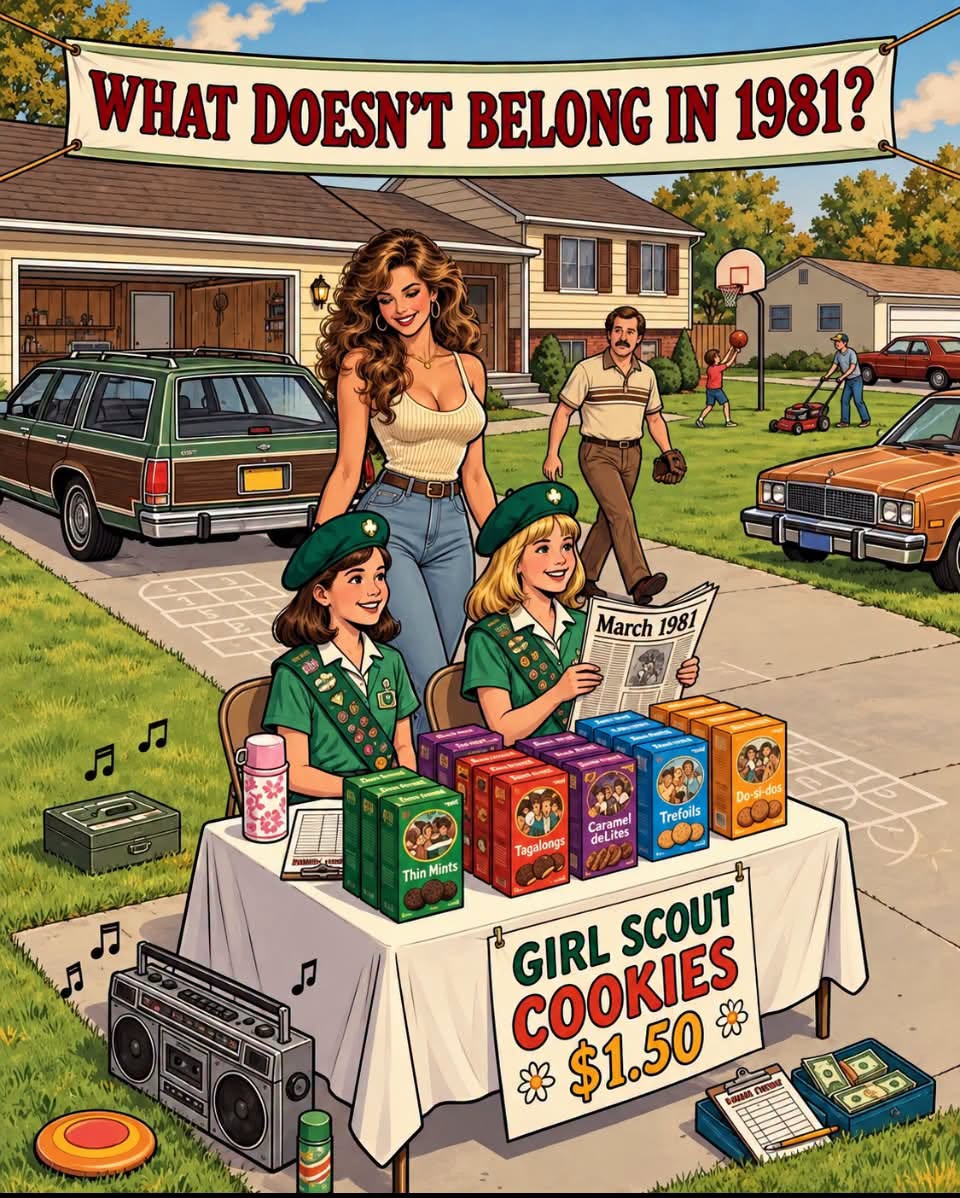
Nostalgia visual puzzles have taken the internet by storm, challenging our memories of past decades and testing our attention to detail. Images that capture classic American suburban scenes—complete with station wagons, boomboxes, wood-paneled garages, and Girl Scout cookie stands—evoke a warm sense of nostalgia. However, hidden within these detailed retro illustrations are subtle historical anomalies or modern additions that simply do not belong in the era depicted.
Solving these visual challenges requires more than just a quick glance; it involves evaluating historical accuracy across pop culture, daily items, automotive designs, and financial landmarks. Understanding how life operated in 1981 gives us a unique perspective on how much technology, finance, consumer goods, and daily habits have evolved over the decades. In this comprehensive guide, we will analyze the key elements of a 1981 neighborhood scene, break down how to spot historical inaccuracies, explore fascinating facts about the early 1980s, and answer the most common questions about retro nostalgia puzzles.
Deconstructing the 1981 Neighborhood Scene
To spot what doesn’t belong in a retro image set in March 1981, one must first understand what was authentic to that exact moment in history.
The Suburban Aesthetic and Culture
The early 1980s represented a unique bridge between the late 1970s aesthetic and the bold, colorful pop culture of the mid-to-late 80s. Wood-paneled station wagons, classic sedans, suburban green lawns, hopscotch drawn in chalk on driveways, and classic lawnmowers were defining symbols of American suburban neighborhoods.
Music and Technology of the Early 80s
Portable music transformed neighborhood culture during this era. Large cassette boomboxes were a staple on suburban sidewalks, playing iconic hits of 1981. Cassette tapes had surpassed vinyl in convenience, and battery-powered portable players allowed youth culture to enjoy music outdoors.
Identifying Anachronisms in Visual Puzzles
When analyzing retro illustrations for historical inaccuracies, experts look across four primary categories: packaging, technology, fashion, and financial details.
Packaging and Logo Evolution
Companies continuously redesign their logos, cookie boxes, and packaging throughout the decades. For example, Girl Scout cookie boxes from 1981 featured distinct artwork, fonts, and box shapes compared to modern packaging formats seen today. Modern logo variants or contemporary box designs placed in an 1981 setting serve as prime examples of visual anachronisms.
Pricing and Economic Realities
The price of everyday items reflects the economic conditions of the time. In 1981, inflation, interest rates, and consumer pricing differed significantly from today’s market. Evaluating whether cookie pricing, fuel costs, or vehicle values align with historical records is one of the most effective ways to solve retro visual challenges.
Practical Tips for Solving Visual Anachronism Puzzles
If you love testing your observation skills with retro imagery, keeping these practical strategies in mind will help you spot hidden mistakes faster:
-
Examine the Text and Dates: Check newspapers, signs, banners, and documents for matching dates or conflicting year references.
-
Inspect Electronics and Appliances: Look closely at audio equipment, cars, tools, and household items to verify whether their model or design existed in that exact year.
-
Analyze Brand Logos: Pay close attention to corporate branding, typography, and product packaging details.
-
Check Pricing: Compare stated prices on signs or advertisements against historical averages for the decade.
Fascinating Facts About 1981
-
The Launch of MTV: Music Television (MTV) officially debuted in August 1981, forever changing pop culture and music distribution across America.
-
Space Shuttle Era Begins: NASA launched Columbia on Space Shuttle mission STS-1 in April 1981, marking the beginning of a new era in space exploration.
-
Personal Computing Milestone: IBM introduced its first Personal Computer (IBM PC Model 5150) in August 1981, laying the groundwork for the modern digital age.
Conclusion
Nostalgia visual puzzles provide an engaging, educational way to test our visual observation skills while celebrating the cultural history of iconic decades like the 1980s. By carefully examining automotive styling, consumer packaging, technology, and economic details, we gain a deeper appreciation for how rapidly everyday life evolves. Whether you spotted the anomaly immediately or enjoyed analyzing every nostalgic detail, testing your knowledge against history is always a fun and rewarding challenge.
FAQ Section
What makes 1981 such a popular decade for nostalgia content?
The early 1980s represent a transitional era filled with memorable pop culture, iconic music, distinct fashion, and classic suburban lifestyles, making it ideal for nostalgic reflection and visual content.
How can I verify if an item existed in a specific year?
You can verify historical accuracy by researching product launch dates, archival photographs, corporate branding timelines, and consumer catalog archives from that year.
Why are visual spot-the-difference puzzles so popular on social media?
Visual puzzles drive high social media engagement because they spark curiosity, encourage friendly debate in the comments section, and test viewers’ attention to detail.
