
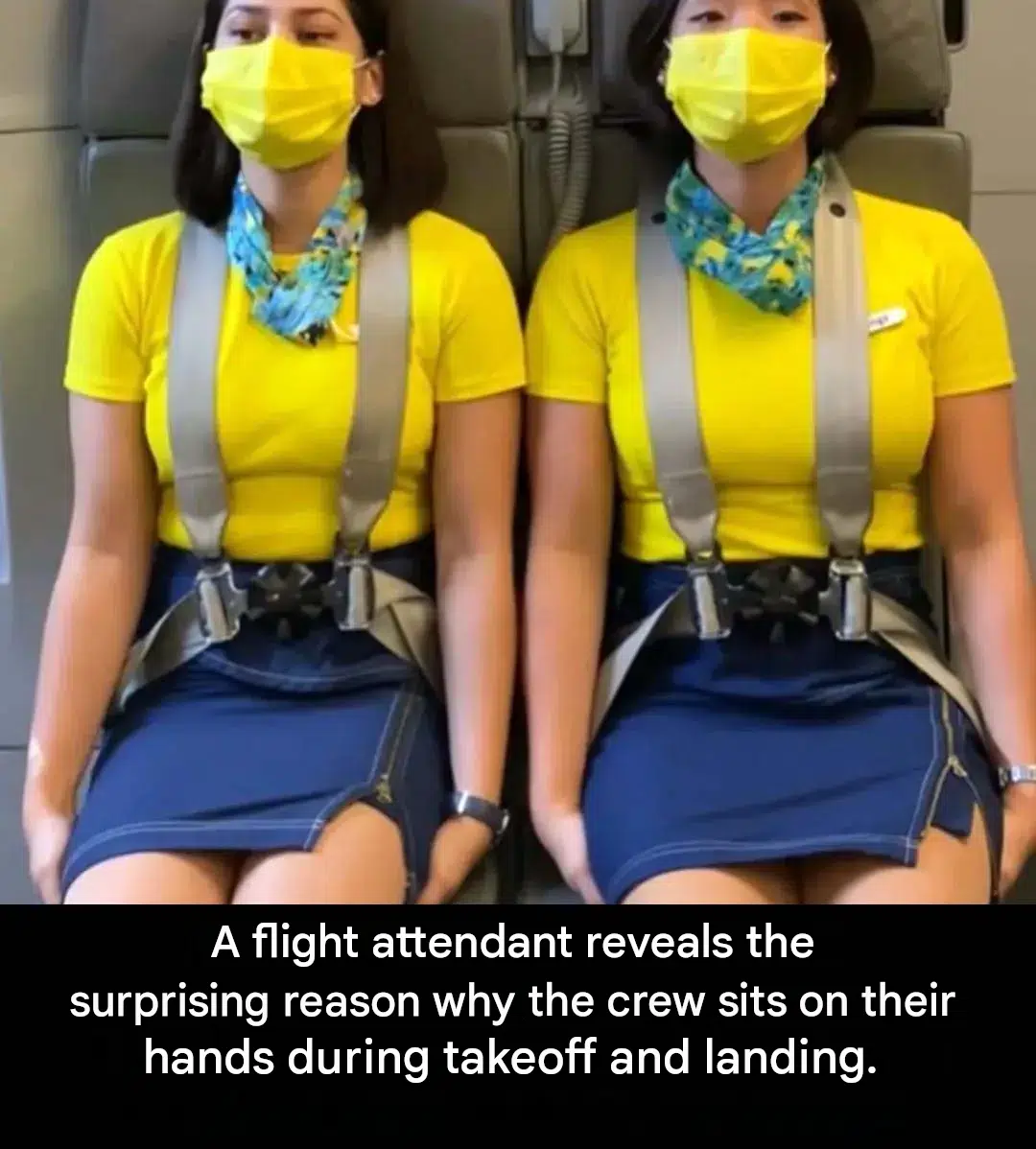
When boarding a commercial aircraft, passengers are often greeted by flight attendants seated near the galley or emergency exits. If you have ever observed cabin crew closely during takeoff and landing, you might have noticed a peculiar posture: they sit upright with their shoulder harnesses fastened tightly, palms facing upward, placed securely underneath their thighs or sitting directly on their hands.
To the average flyer, this posture might look like a casual way to relax or keep warm. However, this specific physical position is a vital, highly calculated safety protocol practiced by professional aviation crew members worldwide. Understanding why flight attendants adopt this posture sheds light on the rigorous safety standards of commercial aviation and how every detail of cabin operations is engineered to protect both passengers and crew.
The Physics of Aviation Safety and Emergency Preparedness
Commercial flight operations are divided into distinct phases, with takeoff and landing recognized as the most critical and statistically vulnerable periods of any flight. During these phases, the aircraft is operating at high speeds close to the ground, and any sudden mechanical failure, runway obstacle, or severe weather shift requires instantaneous reaction times from the flight crew.
Cabin crew members are not merely on board to serve refreshments; they are certified safety professionals trained extensively in emergency evacuations, fire suppression, crowd control, and first aid. To perform these critical duties in an emergency, crew members must protect their most valuable physical tools: their hands and arms.
Why Do Flight Attendants Sit on Their Hands?
The practice of sitting on hands during takeoff and landing serves several crucial safety functions designed to mitigate injury and maintain operational readiness.
1. Preventing Injury from Sudden Impacts or Turbulence
During sudden aborted takeoffs, hard landings, or unexpected runway incidents, the human body experiences violent deceleration forces. If a flight attendant’s arms are resting loosely on their lap or gripping armrests externally, the rapid forward momentum can cause their arms to flail violently. This can lead to fractured wrists, dislocated elbows, or severe soft-tissue injuries against bulkheads or meal carts. By tucking their hands under their thighs, the body’s natural weight and the seat cushions anchor the arms securely in place.
2. Restricting Range of Motion to Avoid Flail Injuries
Aviation safety engineering refers to “flail injuries”—trauma caused by unrestrained body parts striking interior cabin structures during a rapid deceleration event. Keeping palms up and hands pinned beneath the legs minimizes the range of motion for upper limbs, significantly reducing the likelihood of bone fractures or joint dislocations.
3. The “Brace” Position and Silent Review
While sitting in this rigid posture, flight attendants are mentally executing a procedure known as the “silent review.” They mentally rehearse emergency evacuation procedures, review door operation mechanics, assess potential hazards outside the windows, and prepare to command an emergency evacuation the second the aircraft comes to a complete halt. Physical stillness aids intense mental concentration.
Financial, Legal, and Insurance Implications in Aviation
Aviation safety protocols are deeply intertwined with strict federal regulations, airline liability policies, and worker protection standards.
1. Crew Occupational Health and Insurance
Flight attendants face unique occupational hazards. Ensuring strict adherence to safety postures during takeoff and landing minimizes workplace injuries, reducing workers’ compensation claims, medical leave expenses, and insurance liabilities for commercial airlines.
2. Regulatory Compliance and Safety Audits
Aviation regulatory bodies—such as the Federal Aviation Administration (FAA) and international counterparts—mandate rigorous training for cabin crew. Compliance with standard brace positions and jumpseat protocols is regularly audited to ensure airlines maintain the highest safety certifications.
3. Passenger Safety and Emergency Readiness
When cabin crew members remain safe and uninjured during a rough landing or emergency stop, they are immediately physically capable of unlatching jumpseat harnesses, opening heavy emergency exit doors, deploying inflatable slides, and guiding hundreds of passengers to safety within the crucial 90-second evacuation window.
Essential Travel Safety and Preparedness Tips for Passengers
While flight attendants protect themselves with specialized jumpseat protocols, passengers can also adopt smart habits to maximize their personal safety during flights:
Keep Seatbelts Fastened: Keep your seatbelt securely buckled low and tight across your hips whenever you are seated, even when the fasten-seatbelt sign is turned off. Unexpected clear-air turbulence can occur without warning.
Stow Carry-On Items Properly: Always place small bags completely under the seat in front of you so they do not become dangerous projectiles during sudden deceleration. Keep aisles clear.
Pay Attention to Safety Briefings: Review the safety instruction card in your seat pocket and take note of the location of the nearest emergency exits relative to your row.
Fascinating Facts About Commercial Aviation Safety
The 90-Second Rule: Aircraft manufacturers must prove during certification testing that a fully loaded commercial airplane can be completely evacuated in 90 seconds or less using only half of its available emergency exits.
Jumpseat Design: Flight attendant jumpseats are engineered with automatic spring-loaded mechanisms that fold up out of the way when unoccupied, ensuring they never obstruct emergency aisle pathways during an evacuation.
Rigorous Training: Cabin crew undergo annual recurrent training where they must physically practice emergency door operations, slide descents, firefighting, and water survival drills.
Conclusion
The sight of flight attendants sitting upright with their hands tucked beneath their thighs during takeoff and landing is a powerful reminder of the meticulous planning behind commercial aviation safety. By protecting their hands from flail injuries and maintaining strict physical readiness, cabin crew ensure they are fully prepared to handle emergencies and guide passengers to safety.
Frequently Asked Questions (FAQ)
Do passengers need to sit on their hands during takeoff?
No, passengers do not need to sit on their hands. Passengers are protected by standard lap seatbelts and forward seat backs. The hand-tucking posture is specific to flight attendants sitting in upright rear-facing or bulkhead-facing jumpseats without a traditional seat in front of them.
What is the “silent review” performed by flight attendants?
The silent review is a mental rehearsal where cabin crew members mentally walk through emergency procedures, check exit operability, evaluate potential cabin hazards, and prepare for rapid command decisions in the event of an aborted takeoff or landing incident.
Why do flight attendants wear shoulder harnesses on jumpseats?
Unlike standard passenger seatbelts which are simple lap belts, flight attendant jumpseats feature a four-point harness (lap belt plus two shoulder straps) to secure the upper torso completely against extreme deceleration forces during landing and takeoff.
Are jumpseats comfortable for flight attendants?
No, jumpseats are designed strictly for safety and functional efficiency rather than comfort. They are typically upright, firm, and positioned directly near emergency exits or galleys to allow immediate access to the cabin.
