
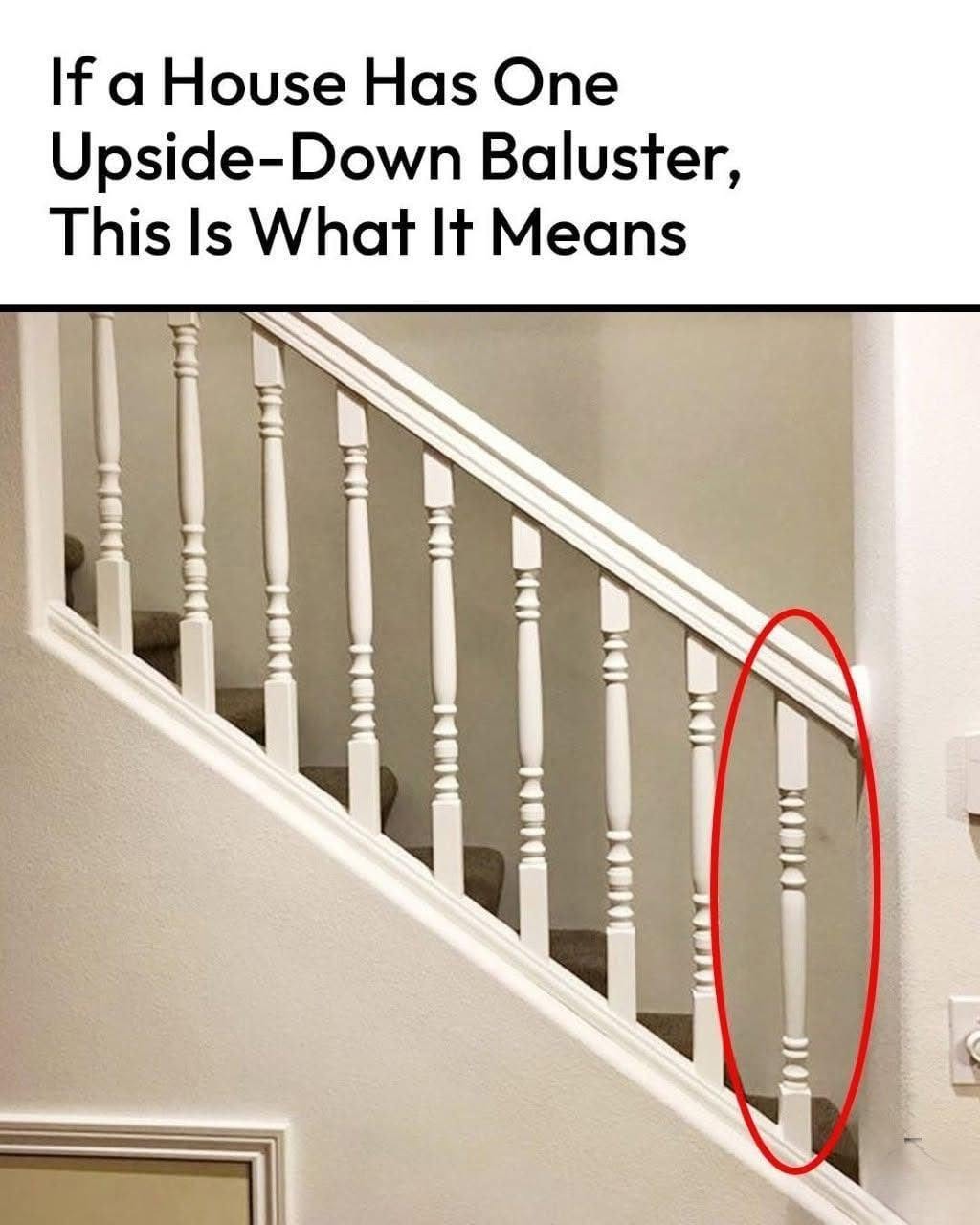
Homeowners and architectural enthusiasts often notice curious details in older homes, but few features spark as much intrigue as a staircase featuring a single inverted baluster (also known as a spindle or staircase post). Finding one baluster installed upside down among a row of perfectly oriented wooden spindles often leads to urban legends and architectural myths.
While viral online posts frequently claim that an upside-down baluster carries deep symbolic or superstitious meaning, the historical reality is a mix of traditional carpentry folklore and practical construction error.
This comprehensive guide breaks down the cultural traditions surrounding upside-down balusters, evaluates popular architectural folklore myths, details staircase safety inspection standards, and offers practical advice on household budgeting and home asset management.
The Origins and Folklore of the Inverted Baluster
+———————————————————————–+
| UPSIDE-DOWN BALUSTER PATHWAY |
+———————————————————————–+
| 1. TRADITIONAL FOLKLORE –> “Humility spindle” to avoid vanity/hubris |
+———————————————————————–+
|
v
+———————————————————————–+
| 2. EVIL SPIRIT MYTH –> Belief that flawless craft attracts bad luck|
+———————————————————————–+
|
v
+———————————————————————–+
| 3. CARPENTRY REALITY –> Human error, batch installation, or repair|
+———————————————————————–+
1. The “Humility Spindle” Concept
According to long-standing architectural folklore, historical woodworkers intentionally flipped one baluster upside down to demonstrate humility before God. The belief was that only the Divine could achieve absolute perfection, and creating a flawless piece of work was an act of hubris or vanity that invited bad luck upon the home.
2. Wardening Off Evil Spirits
Similar to traditions in quilt-making or Persian rug weaving—where weavers deliberately introduce a small imperfection—some traditions suggest that an inverted baluster traps or confuses evil spirits, preventing negative energy from traveling up the stairs into family living quarters.
3. Modern Carpentry Reality
In the overwhelming majority of modern homes, an upside-down baluster is simply the result of human error during mass assembly or subsequent home renovations. When carpenters install dozens of pre-turned balusters in a single day, or when an amateur DIYer replaces a broken spindle, symmetrical turning details can lead to an accidental inverted installation.
Architectural Symbolism Comparison Table
+——————–+———————–+———————–+
| Legend / Theory | Core Premise | Historical Validity |
+——————–+———————–+———————–+
| Humility Spindle | Avoids hubris & vanity| Common Cultural Tale |
| Spirit Trap | Confuses bad luck | Folklore & Superstition|
| Builder’s Mark | Master carpenter sign | Rare / Unsubstantiated|
| Installer Error | Accidental flip | High Practical Reality|
+——————–+———————–+———————–+
Step-by-Step Instructions: How to Inspect and Fix an Inverted Baluster
Follow these simple steps if you discover an upside-down spindle in your home and wish to fix or secure it:
+———————————————————————–+
| STAIR BALUSTER INSPECTION GUIDE |
+———————————————————————–+
| Step 1: Check if the baluster is structural & securely attached. |
| Step 2: Measure spacing between spindles (must be 4 inches or less). |
| Step 3: Remove top casing or securing nails using a trim pry bar. |
| Step 4: Rotate the baluster 180° to orient correctly with others. |
| Step 5: Secure with wood glue & finish nails; wood-fill & repaint. |
+———————————————————————–+
Verify Structural Integrity: Ensure the baluster is firmly secured between the handrail (top rail) and the shoe rail or stair tread. A loose spindle compromises stair handrail safety regardless of its orientation.
Check Code Compliance: Building safety codes require that staircase balusters be spaced closely enough so that a 4-inch sphere cannot pass between any two spindles. Ensure all posts are tight and properly spaced.
Carefully Remove the Spindle: To correct the orientation, use a trim pry bar and utility knife to gently loosen the top and bottom wooden fillets or finish nails holding the spindle in place.
Rotate and Re-Anchor: Flip the baluster 180 degrees so that the lathe-turned decorative detail aligns with the surrounding spindles. Apply a small bead of carpenter’s wood glue to the top and bottom pins, insert into the rail slots, and secure with 18-gauge finish nails.
Fill and Touch Up: Fill nail holes with wood putty, sand smoothly when dry, and apply matching paint or wood stain to complete the repair.
Home Management, Household Budgeting, and Financial Health
Maintaining structural interior features like staircases supports overall home valuation, safety, and smart financial planning.
Smart Home Budgeting & DIY Maintenance
Addressing minor interior defects—such as loose, squeaky, or inverted staircase spindles—as a DIY project saves hundreds of dollars in professional carpentry service fees. Maintaining your home’s structural and visual details preserves curb appeal and resale value. Managing your home improvement and maintenance budget intentionally enables families to preserve capital to build emergency savings accounts, pay off high-interest credit card debt, or allocate funds toward long-term financial investments.
Homeowner Safety, Asset Protection, and Insurance Security
Ensuring stair handrails, balusters, and treads adhere to strict safety standards prevents accidental slips, trips, and falls for household members and visitors. Combining a safe living environment with adequate homeowner’s insurance and routine health checkups covered by your health insurance provider safeguards both your family’s physical well-being and personal financial security.
Frequently Asked Questions (FAQ)
Does an upside-down baluster lower a home’s appraisal value?
No. An upside-down baluster is a minor cosmetic variation and does not impact home appraisals or structural integrity, provided the handrail system is firm, secure, and complies with local building codes.
Should I flip an upside-down baluster in a historic home?
If you live in a historic home where the inverted spindle was intentionally crafted as part of local folklore or historical architecture, keeping it intact preserves a unique conversation piece and historical character.
Conclusion
Whether viewed as a symbol of humility or a simple carpentry mistake, an upside-down baluster adds character and history to any home. Inspect your staircase today to ensure it remains safe, secure, and beautiful for years to come!
