
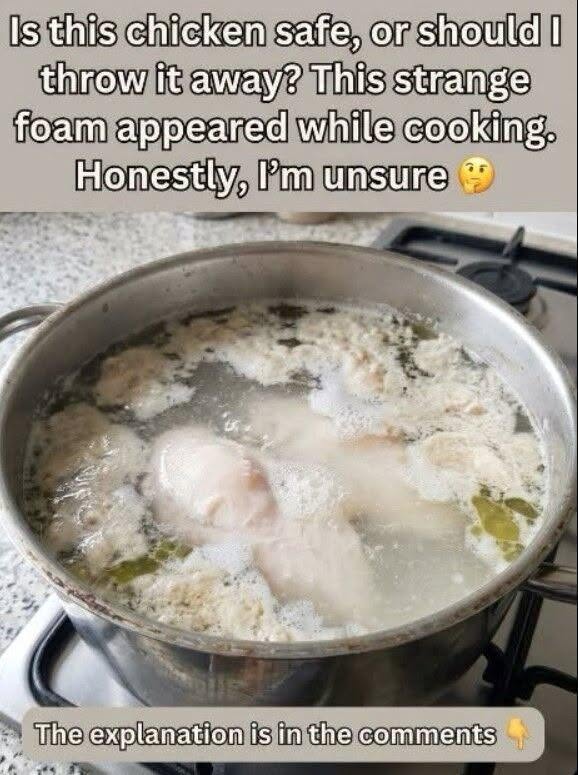
When boiling chicken breasts or simmering whole poultry for homemade soups and stocks, home cooks frequently observe a thick layer of white or greyish scum foaming across the water surface. Seeing this unexpected residue often leads to concern over whether the meat has spoiled or if harmful chemicals are leeching into the broth.
However, this phenomenon is entirely natural and is caused by a fundamental culinary science process known as protein denaturation.
Understanding why soluble sarcoplasmic proteins coagulate in boiling water helps eliminate unnecessary food anxiety, prevents wasteful food disposal, and ensures clear, delicious broths every time.
This comprehensive guide details the biological science of chicken foam, cooking temperature comparison tables, step-by-step skimming techniques, and practical advice on household budgeting and health protection.
The Biological Science: Protein Denaturation and Coagulation
+———————————————————————–+
| PROTEIN DENATURATION PATHWAY |
+———————————————————————–+
| 1. WATER HEATING –> Soluble muscle proteins dissolve into liquid |
+———————————————————————–+
|
v
+———————————————————————–+
| 2. DENATURATION –> Heat unwinds protein chains around 140–160°F|
+———————————————————————–+
|
v
+———————————————————————–+
| 3. COAGULATION & FOAM –> Trapped air & water vapor lift foam to surface|
+———————————————————————–+
1. Sarcoplasmic Protein Release
Raw chicken muscle tissue contains intracellular water and water-soluble proteins known as sarcoplasmic proteins (primarily myoglobin and albumin). As the chicken heats up in liquid, these natural proteins dissolve out of the meat fibers into the surrounding water.
2. Thermal Denaturation and Unfolding
As the water temperature rises between 140°F (60°C) and 160°F (71°C), the natural structure of these dissolved proteins denatures—meaning the tightly coiled protein chains unfold and alter shape due to heat.
3. Coagulation and Trapped Air Bubbles
Once unfolded, these protein strands clump together (coagulate) into insoluble white or light grey masses. As water boils, rising air bubbles and steam catch these light protein solids, floating them to the top of the pot where they form a foamy layer across the surface.
Broth Boiling Temperature Comparison Table
+——————–+———————–+———————–+
| Cooking Method | Liquid Temperature | Foam & Clarity Result |
+——————–+———————–+———————–+
| Rapid Rolling Boil | 212°F (100°C) | Heavy Foam & Cloudy |
| Gentle Simmer | 185–200°F (85–93°C) | Minimal Foam & Clear |
| Slow Poach | 160–180°F (71–82°C) | Almost Zero Foam |
+——————–+———————–+———————–+
Step-by-Step Instructions: How to Prevent and Remove Chicken Foam
Follow these simple steps to ensure safe, perfectly cooked chicken and crystal-clear stock:
+———————————————————————–+
| FOAM SKIMMING & CLARITY GUIDE |
+———————————————————————–+
| Step 1: Start chicken in cold water to allow gradual heat distribution|
| Step 2: Bring to a gentle simmer rather than a hard rolling boil. |
| Step 3: Skim the foamy surface residue using a fine-mesh skimmer spoon|
| Step 4: Add aromatic herbs & vegetables after initial skimming. |
| Step 5: Cook chicken to a safe internal temperature of 165°F (74°C). |
+———————————————————————–+
Start in Cold Water: Always submerge raw chicken in cold water before turning on the burner. A gradual temperature increase allows proteins to coagulate slowly in larger, easier-to-skim pieces rather than fragmenting into cloudy particles.
Control the Heat: Reduce the heat to low as soon as the liquid reaches a boil. Maintaining a gentle simmer rather than a vigorous rolling boil prevents churned water from emulsifying the protein foam and fat into a cloudy broth.
Skim the Surface (Depurate): Use a fine-mesh skimmer spoon, ladle, or large metal spoon to gently skim off the white or grey protein foam as it rises during the first 10 to 15 minutes of cooking.
Add Aromatics After Skimming: Wait until after you have skimmed the initial protein foam before adding herbs, spices, carrots, celery, or onions. This prevents herbs and vegetables from catching in the foam layer.
Cook to Safe Internal Temperature: Ensure the chicken reaches a minimum internal temperature of 165°F (74°C) using an instant-read meat thermometer to guarantee complete food safety.
Home Management, Household Budgeting, and Financial Health
Understanding basic kitchen science prevents unnecessary food waste and supports smart household financial planning.
Smart Home Budgeting & Eliminating Food Waste
Throwing away perfectly good chicken simply because white protein foam appears in the pot wastes valuable grocery dollars. Differentiating between natural protein coagulation and actual food spoilage helps families preserve their food budget. Managing household expenses intentionally allows families to conserve capital to build emergency savings accounts, pay off high-interest credit card debt, or allocate funds toward long-term financial investments.
Poultry Hygiene, Food Safety, and Health Insurance Security
Safe meat handling—such as avoiding washing raw poultry in the sink to prevent cross-contamination and cooking meat to proper temperatures—protects your family from foodborne pathogens like Salmonella or Campylobacter. Combining rigorous kitchen food safety with routine preventive health checkups covered by your health insurance provider safeguards both your family’s physical well-being and personal financial peace of mind.
Frequently Asked Questions (FAQ)
Is the white foam floating on boiled chicken harmful to eat?
No. The foam is simply coagulated protein and water released naturally from the muscle tissue. While completely safe to eat, removing it improves the visual clarity, texture, and clean flavor of your broth.
Why do some chicken cuts create more foam than others?
Water-injected or commercially processed poultry, as well as boneless cutlets with high surface area, release more soluble proteins and water into the pot, resulting in heavier initial foam formation.
Conclusion
The white foam that forms when boiling chicken is a completely natural biological process caused by protein coagulation. The meat is 100% safe to eat—simply skim the foam off the top for a clean, clear, and delicious broth every time!
