
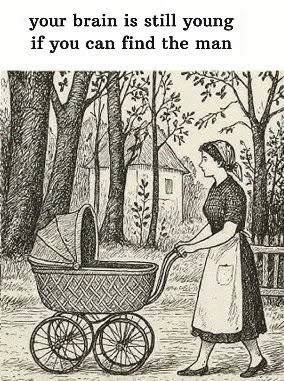
Vintage puzzle drawings and optical illusions have entertained audiences for over a century. These classic “hidden figure” illustrations test spatial perception, pattern recognition, and visual attention.
In this classic vintage sketch, a woman is seen pushing a baby carriage down a park pathway framed by trees and a distant cottage. While she appears to be alone, a man’s face is cleverly concealed within the lines of the landscape.
Here is the step-by-step solution to help you find the hidden man, along with insights into visual cognition and smart household management.
Where Is the Hidden Man? (The Solution)
+-----------------------------------------------------------------------+
|                      HIDDEN MAN PUZZLE SOLUTION                       |
+-----------------------------------------------------------------------+
| LOCATION    --> Look at the tree branches directly above the carriage |
+-----------------------------------------------------------------------+
                                   |
                                   v
+-----------------------------------------------------------------------+
| ORIENTATION --> Rotate or tilt your perspective to see the profile   |
+-----------------------------------------------------------------------+
                                   |
                                   v
+-----------------------------------------------------------------------+
| DETAILS     --> Trunks & branches form eyes, nose, and mustache       |
+-----------------------------------------------------------------------+
How to See the Face
-
Focus on the Trees: Look closely at the dark tree trunks and branches located in the upper-left quadrant above the baby stroller.
-
Observe the Negative Space: The outline of the man’s face is formed by the negative space and the contours of the central tree branches.
-
Identify the Features:
-
The curved branches form the outline of his forehead, nose, and chin.
-
The shading between the trunks creates his eye and mustache profile looking downward toward the woman and carriage.
-
Visual Illusion Breakdown Table
+------------------+-------------------+--------------------+--------------------+
| Element          | Foreground Image  | Hidden Illusion    | Cognitive Function |
+------------------+-------------------+--------------------+--------------------+
| Tree Trunks      | Landscape Scenery | Nose & Forehead    | Pareidolia         |
| Branch Shading   | Foliage Shadows   | Eye & Mustache     | Pattern Recognition|
| Pathway          | Stroller Path     | Jawline Contour    | Figure-Ground Distinction|
+------------------+-------------------+--------------------+--------------------+
The Science of Visual Perception & Brain Games
Visual puzzles like this rely on a psychological phenomenon known as pareidolia—the human brain’s tendency to perceive familiar patterns (especially human faces) in random shapes, landscape features, or object textures.
-
Figure-Ground Perception: Our brains automatically separate main objects (the woman and stroller) from background elements (the trees). Spotting the hidden face requires shifting your focus so the background becomes the primary figure.
-
Cognitive Agility: Regularly engaging in brain teasers, visual puzzles, and observational challenges keeps mental processing sharp and encourages flexible problem-solving skills.
Home Organization, Budgeting, and Financial Health
Taking breaks for low-stress cognitive exercises fits seamlessly into organized home routines and financial wellness.
Smart Household Planning & Budgeting
Managing daily family schedules and budgeting for leisure activities requires thoughtful organization. Keeping entertainment costs low through engaging, accessible brain games and home activities helps stretch monthly household budgets, allowing families to build emergency savings, manage credit balances, or allocate funds toward long-term financial security.
Preventive Healthcare and Mental Vitality
Maintaining active mental habits alongside physical exercise supports long-term wellness. Pairing cognitive stimulation with routine medical checkups through your health insurance provider ensures both physical vitality and personal financial peace of mind.
Frequently Asked Questions (FAQ)
Why is it difficult for some people to spot the hidden face immediately?
Because our visual processing system prioritizes the bright foreground figures (the woman and stroller), masking the subtle facial contours embedded in the background trees.
Does failing to see the face quickly mean anything about brain age?
No! Visual puzzle response times vary based on lighting, screen contrast, angle of view, and individual visual focus rather than cognitive age.
Conclusion
Did you manage to spot the hidden man in the trees? Vintage optical illusions remain a timeless way to challenge your observational skills. Share this fun puzzle with friends and family to see who can solve it first!
