
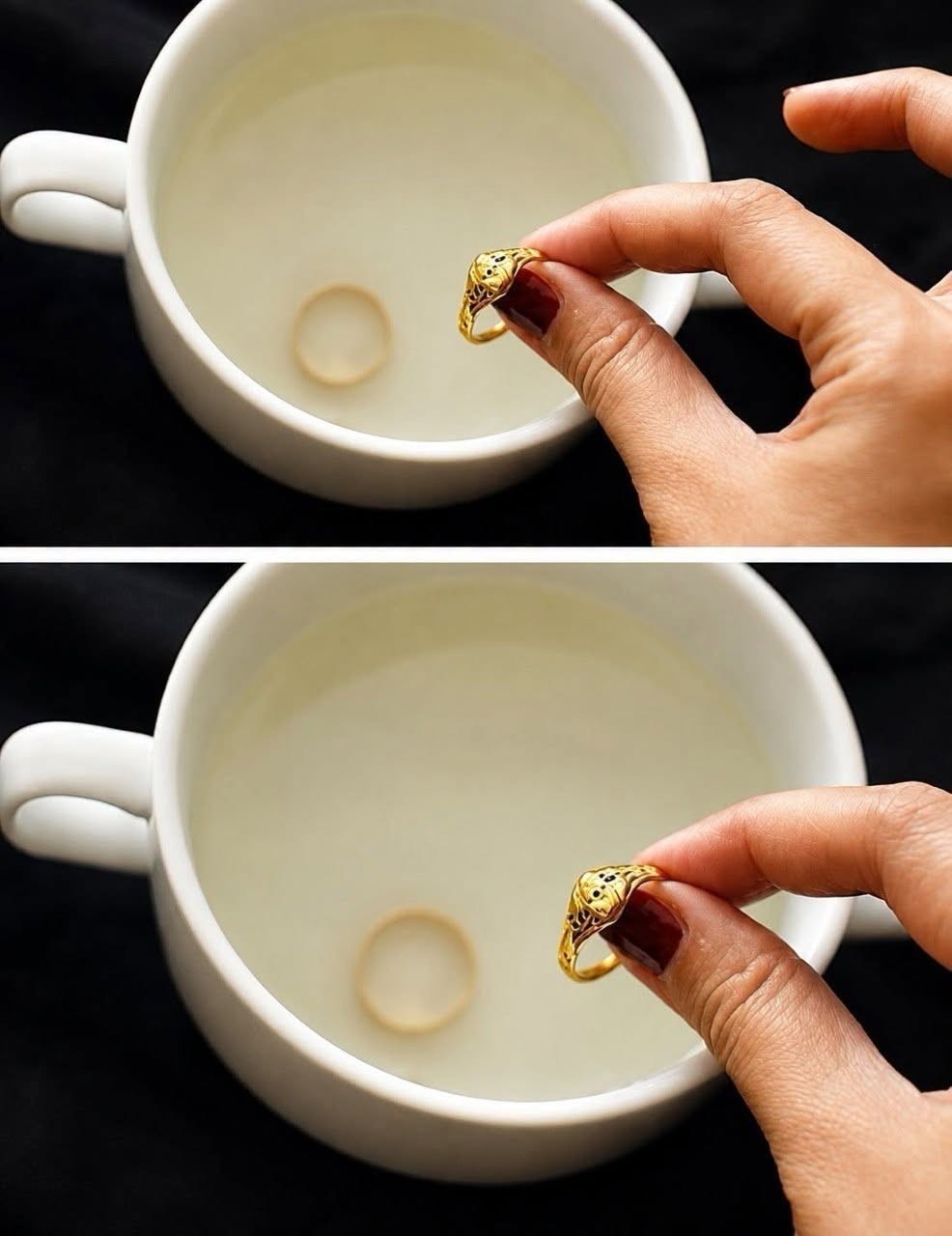
Gold jewelry is a cherished investment, but determining whether a piece is solid gold or plated metal can be tricky. A viral visual demonstration showing gold rings submerged in a bowl of household liquid highlights one of the easiest home methods for checking gold authenticity: the vinegar test.
Because real gold is a noble, non-reactive metal, it withstands acidic substances like household vinegar without changing color or tarnishing. Imitation metals, copper alloys, or cheap gold plating, on the other hand, will quickly react, discolor, or darken when exposed to acid.
In this jewelry care guide, we break down how to perform the vinegar test safely, how to interpret your results, and alternative ways to test gold at home.
Home Gold Testing Comparison Matrix
+-------------------------------------------------------------------+
|                    GOLD TESTING METHOD MATRIX                     |
|                                                                   |
|  [ VINEGAR TEST ] • Non-reactive = Pure Gold | Darkens = Fake     |
|  [ MAGNET TEST ]  • Gold is non-magnetic; magnetic pull = Fake   |
|  [ HALLMARK ]     • Look for stamps like 10K, 14K, 18K, or 750    |
+-------------------------------------------------------------------+
Key Highlights of the Vinegar Test:
-
Acid Resistance: Genuine high-karat gold does not oxidize, corrode, or react when brought into contact with white vinegar or mild acids.
-
Instant Discoloration on Fakes: Base metals like brass, iron, or copper coated in thin gold leaf will turn black, dark brown, or green under acid exposure.
-
Safe Home Method: Unlike heavy industrial nitric acid tests, white household vinegar is gentle enough to test items without immediate severe damage to skin or surround surfaces.
-
Complements Stamp Checks: Always check for official hallmark stamps (such as 14K, 18K, 585, or 750) alongside physical testing.
How to Perform the Vinegar Test Step-by-Step
Step 1: Clean the Jewelry
Wipe down your gold ring or chain with a soft microfiber cloth to remove skin oils, dust, or dirt.
Step 2: Apply White Vinegar
Place the item in a small ceramic bowl or apply 2 to 3 drops of white distilled vinegar directly onto a small, inconspicuous spot on the metal.
Step 3: Observe the Reaction
Wait 15 to 20 minutes. If the metal holds its bright yellow gold shine, it is real gold. If the liquid turns dark or the metal discolors, the piece contains base metals. Rinse thoroughly with water afterward.
Pro Tips for Preserving Your Jewelry
-
Always Check Hallmarks: Inspect the inner band of rings or clasps of necklaces with a magnifying glass for official karat stamps.
-
Avoid Harsh Chemicals: Keep fine jewelry away from household bleach, chlorine swimming pools, and harsh cleaning sprays to prevent erosion.
-
Consult a Professional: For high-value heirloom items or gemstones, visit a certified jeweler for professional XRF (X-ray fluorescence) testing.
Conclusion
Testing your jewelry at home doesn’t have to be complicated! The vinegar test is a quick, accessible, and reliable way to verify if your gold pieces are genuine solid gold or plated fashion items.
Frequently Asked Questions (FAQ)
Will vinegar ruin fake jewelry?
Yes, vinegar contains acetic acid that will react with base metals, causing plating to wear off or discolor permanently.
Does the vinegar test work on white gold or rose gold?
Yes, real white gold and rose gold alloys also resist vinegar discoloration, though rose gold contains copper, so a heavy acid test should be handled carefully.
What is the magnet test for gold?
Real gold is completely non-magnetic. If your gold jewelry strongly attracts to a powerful magnet, it contains iron, nickel, or steel underneath.
