
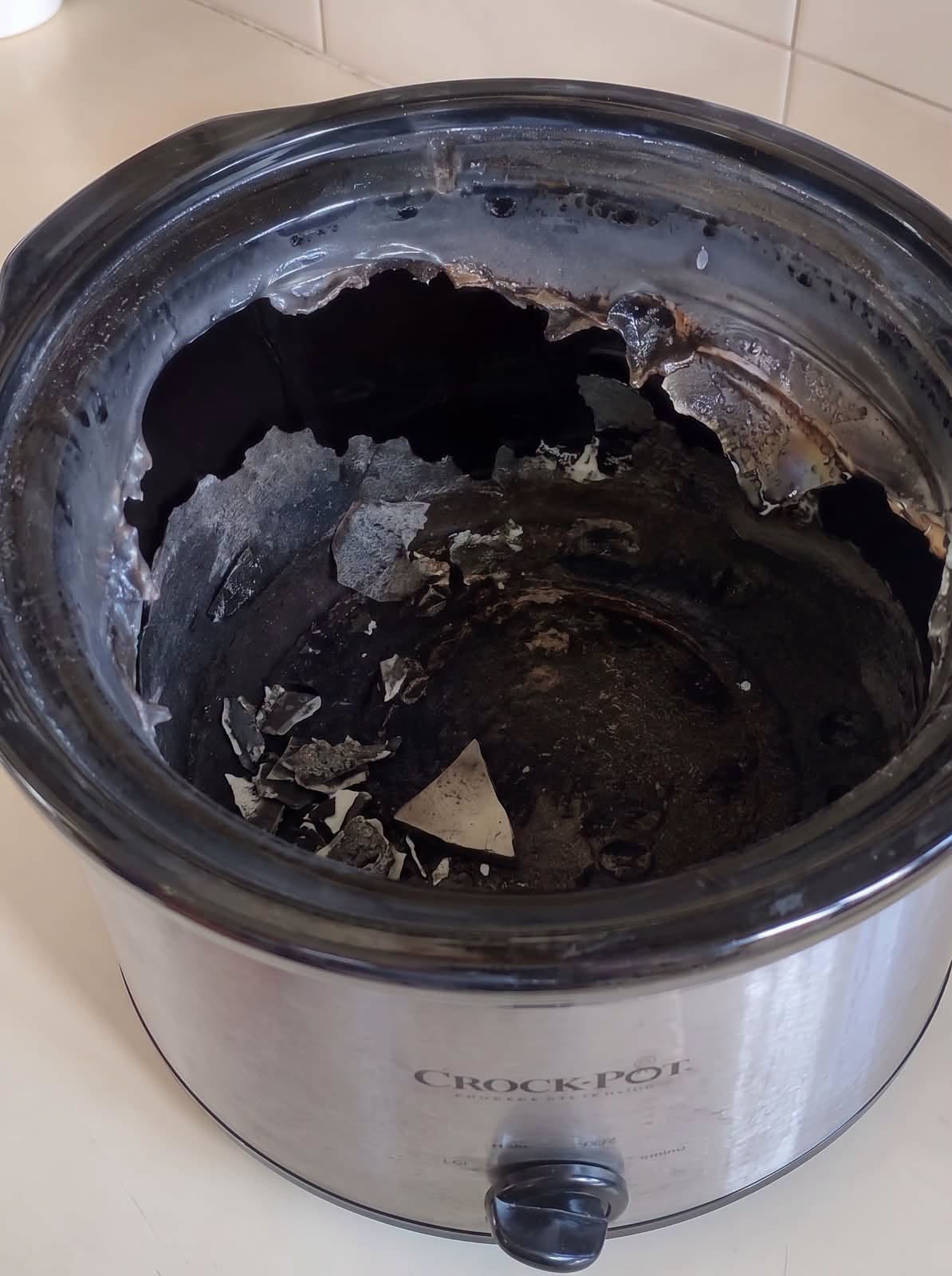
Slow cookers are beloved kitchen appliances known for convenient meal prep and hassle-free cooking. However, improper use can quickly lead to kitchen disasters. A shocking photo displaying a standard Crock-Pot with a completely melted plastic liner adhering to the bare metal heating base highlights a common and dangerous kitchen mistake.
Slow cooker liners are specially designed plastic bags meant to sit inside the removable ceramic or stoneware insert—never directly inside the metal heating housing. When placed directly on the heating base, high thermal temperatures instantly melt the plastic, producing toxic fumes, ruining the appliance, and creating a severe fire hazard.
In this kitchen safety guide, we break down essential slow cooker rules, safety best practices, and clean-up precautions.
Slow Cooker Safety Matrix
+-------------------------------------------------------------------+
|                   SLOW COOKER SAFETY MATRIX                       |
|                                                                   |
|  [ CERAMIC INSERT ] • Must ALWAYS be in place before cooking      |
|  [ LINER PLACEMENT] • Insert inside stoneware ONLY, never base    |
|  [ HEAT HAZARD ]    • Direct metal base contact melts plastic     |
+-------------------------------------------------------------------+
Essential Slow Cooker Rules:
-
Always Use the Stoneware Insert: The metal base contains heating elements that reach intense temperatures. Food and liners must always sit inside the heavy ceramic bowl.
-
Proper Liner Application: Slow cooker liners fit inside the ceramic pot to make clean-up easy, but they are not heat-proof when in direct contact with heating coils.
-
Prevent Fire Hazards: Operating a slow cooker without the ceramic bowl or with dry plastic inside creates an immediate smoke and fire risk.
-
Ventilation: If plastic ever melts inside an appliance, unplug it immediately, open windows, and allow the unit to cool before handling.
What To Do If Your Appliance Melts Plastic
Step 1: Unplug and Disconnect
Immediately cut power to the appliance by unplugging it from the electrical outlet. Avoid touching hot surfaces.
Step 2: Ventilate the Area
Turn on kitchen exhaust fans and open nearby windows to quickly clear dangerous plastic fumes and smoke.
Step 3: Assess the Damage
Once completely cool, inspect the heating element. Melted plastic inside the heating unit usually renders the slow cooker unsafe for future use due to chemical residues and damaged components.
Best Practices for Safe Slow Cooking
-
Check Assembly Before Turning On: Double-check that the ceramic insert, food ingredients, and lid are all properly positioned before setting the heat level.
-
Keep Base Clean and Dry: Always ensure the exterior of the ceramic bowl is completely dry before lowering it into the metal housing.
-
Replace Damaged Units: Never attempt to use a slow cooker with cracked stoneware or melted internal elements.
Conclusion
Understanding correct appliance operation prevents kitchen accidents and keeps your cooking safe. Always ensure your ceramic insert is in place before cooking with slow cooker liners!
Frequently Asked Questions (FAQ)
Are slow cooker liners safe to use?
Yes, slow cooker liners are heat-safe for food cooking when used inside the ceramic or stoneware insert as intended.
Can a slow cooker catch fire if left unattended?
When used properly with liquid and the ceramic liner in place, slow cookers are very safe. However, operating them dry, empty, or with improper materials inside can create fire risks.
Can you save a slow cooker if plastic melts inside the base?
If plastic melts directly into the heating base, replacing the unit is strongly recommended due to safety risks and toxic fumes when heated again.
