
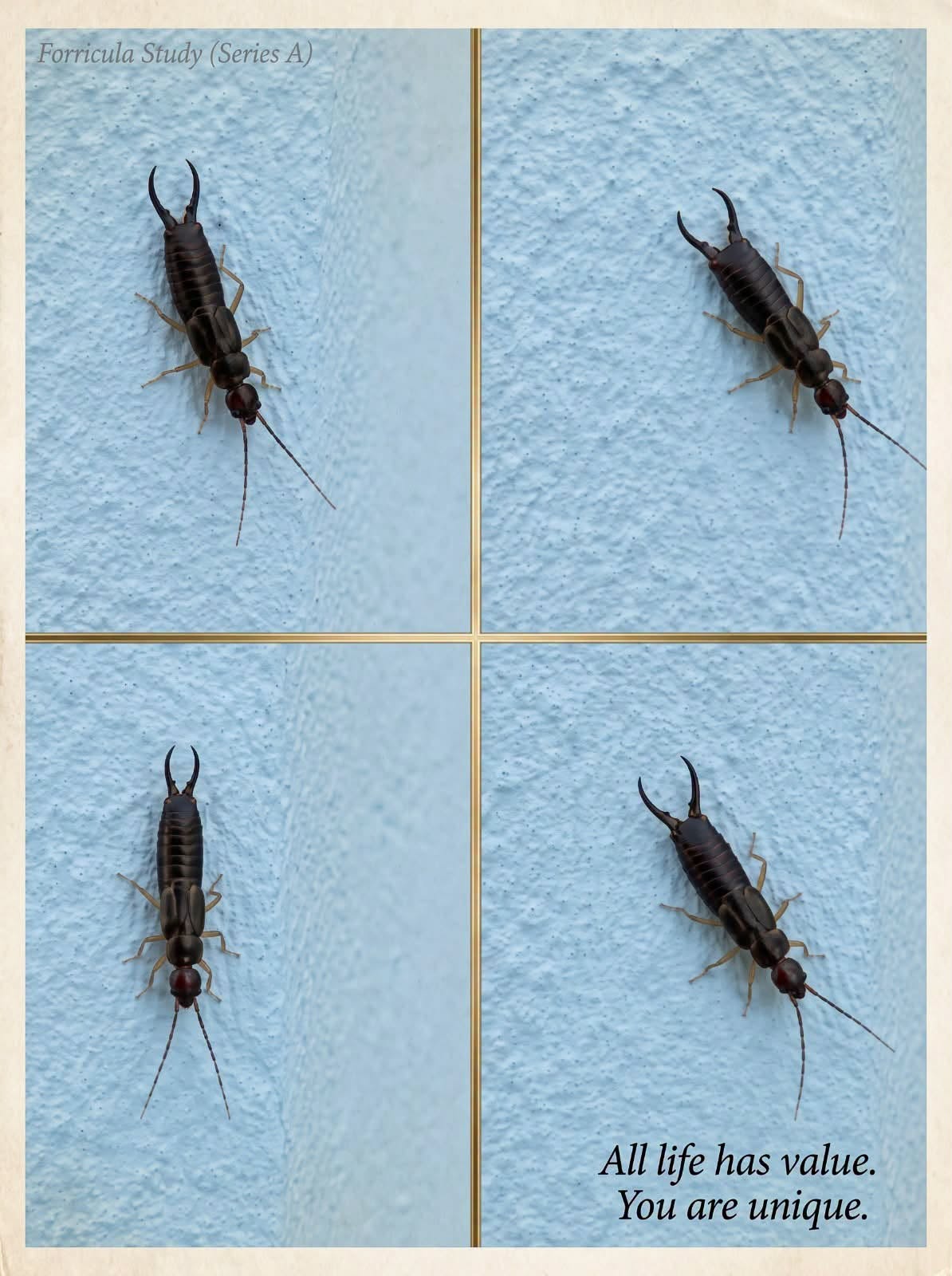
Earwigs often get a bad reputation due to old urban legends and their intimidating, pincer-like cerci. A striking four-panel macro study titled “Forficula Study (Series A)” showing earwigs on a textured blue surface accompanied by the quote “All life has value. You are unique.” offers a fresh perspective on these misunderstood insects.
Despite common misconceptions, earwigs play a vital role in natural ecosystems by decomposing organic matter and controlling garden pests like aphids and insect eggs.
In this natural history and pest awareness guide, we examine earwig facts, myth-busting science, and natural deterrent methods.
Earwig Ecosystem Role Matrix
+-------------------------------------------------------------------+
|                     EARWIG ECOSYSTEM MATRIX                       |
|                                                                   |
|  [ ECOLOGICAL ]  • Decomposes decaying leaves & organic debris   |
|  [ PEST CONTROL] • Hunts aphids, mites, and harmful insect eggs   |
|  [ DEFENSE ]     • Uses pincers (cerci) for defense & mating      |
+-------------------------------------------------------------------+
Key Facts About Earwigs:
-
Beneficial Garden Predators: Earwigs actively consume soft-bodied garden pests such as aphids, mites, and insect larvae, serving as natural pest control agents.
-
Organic Decomposers: As scavengers, they consume decaying plant material and organic matter, helping recycle nutrients into garden soil.
-
Myth-Busting Facts: Earwigs do not crawl into human ears to lay eggs or burrow into brains; this is a centuries-old myth with no truth in entomology.
-
Pincer Function: The pincers at the end of their abdomen (cerci) are used mainly for defense against predators and during mating rituals, posing no danger to humans.
Natural Tips for Managing Earwigs Around the Home
Step 1: Reduce Moisture and Humidity
Earwigs thrive in damp environments. Fix leaking outdoor spigots, clear damp leaf piles, and keep mulch levels away from home foundations.
Step 2: Seal Entry Points
Inspect exterior doors, windows, and basement vents for small gaps, applying weatherstripping or caulk where needed to block entry.
Step 3: Natural Trapping Methods
Place shallow rolled-up damp newspapers or cardboard tubes near gardens overnight, then shake collected earwigs into soapy water in the morning.
Pro Tips for Garden Harmony
-
Encourage Natural Predators: Birds, frogs, toads, and ground beetles naturally keep earwig populations balanced in outdoors spaces.
-
Protect Young Seedlings: If earwigs nibble on delicate young plant shoots, sprinkle food-grade diatomaceous earth lightly around seedbeds.
-
Use Soft Lighting: Earwigs are attracted to bright white lights at night; switching to yellow LED bug lights reduces attraction near doorframes.
Conclusion
Every creature in nature serves a purpose! Understanding earwigs helps us appreciate their ecological contributions while maintaining balance in our gardens and homes.
Frequently Asked Questions (FAQ)
Do earwigs bite or sting humans?
Earwigs do not bite or sting. While they can pinch slightly with their cerci if grabbed tightly, the pinch is harmless and rarely breaks the skin.
Why do earwigs come inside the house?
Earwigs seek dark, damp shelter indoors during hot, dry summer weather or prolonged wet conditions.
Are earwigs harmful to indoor house plants?
Earwigs generally prefer outdoor organic matter, but they may feed on soft greenhouse or houseplant foliage if trapped inside.
