
The Evolution of Public Appearance: Why Grocery Shopping Used to Be an Occasion
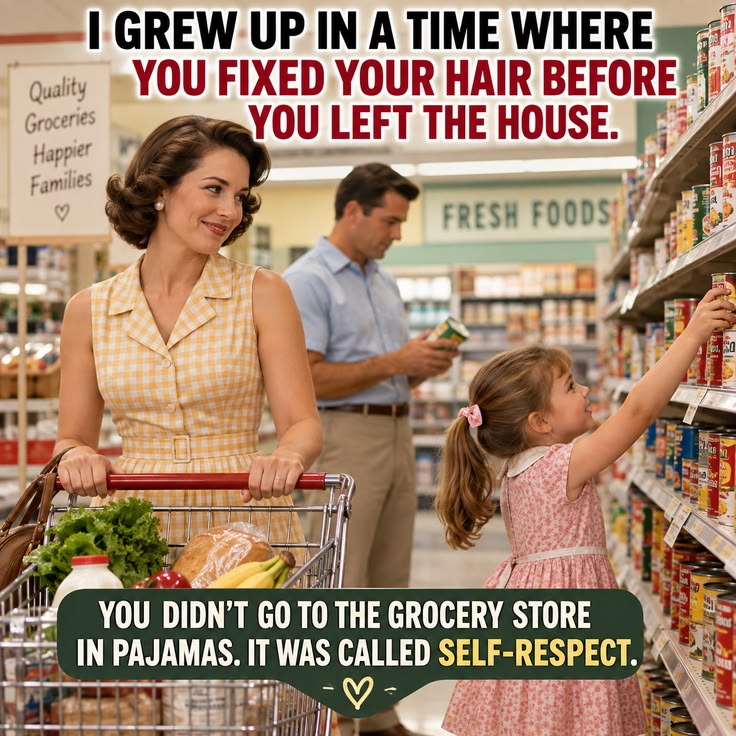
In today’s casual modern world, running errands often means stepping outside in sweatpants, hoodies, or even pajamas without a second thought. However, a popular viral meme reflects on a very different era, noting: “I grew up in a time where you fixed your hair before you left the house. You didn’t go to the grocery store in pajamas. It was called self-respect.”
This sentiment strikes a powerful nostalgic chord for millions who remember when public outings required a higher standard of dress, etiquette, and presentation. Examining the cultural history of public appearance, changing social norms, and why these traditional values still resonate reveals how much our everyday routines have transformed over the decades.
The Cultural Etiquette of Mid-Century Public Spaces
During the mid-20th century, public spaces like grocery stores, department stores, and banks were viewed as shared community environments where personal presentation mattered. Dressing well when leaving the house was a sign of respect—both for oneself and for the people around you.
Housewives, fathers, and children routinely donned structured clothing, styled hair, and neat shoes even for simple errands like picking up fresh produce or canned goods. This collective adherence to public standards created a sense of order, pride, and community dignity that shaped daily social life.
Community Pride: Dressing neatly in public demonstrated civic pride and respect for neighbors and local merchants.
Clear Boundaries: There was a distinct boundary between private relaxation at home (lounging in nightwear) and public engagement in society.
The Social Occasion: Errands were often treated as social outings where you dressed with intention before interacting with the community.
The Modern Shift Toward Casual Convenience and Comfort
Fast forward to the modern era, and convenience has largely replaced formality. The rise of 24-hour supermarkets, drive-thru lanes, curbside grocery pickup, and online delivery apps has transformed shopping into a transactional, rushed errand rather than a deliberate social outing.
Furthermore, contemporary culture places an overwhelming premium on personal comfort and time efficiency. Wearing relaxed clothing or loungewear in public is no longer viewed as a breach of etiquette, but rather as an acceptable norm focused on ease and stress reduction.
Prioritizing Comfort: Modern consumers favor athleisure, soft fabrics, and maximum comfort over restrictive garments when running quick errands.
Pace of Life: With busier schedules and packed daily routines, people often squeeze grocery runs into tight windows between work and family duties, leaving little time for elaborate grooming.
Shift in Social Judgment: Generational attitudes toward public dress codes have relaxed significantly, emphasizing individual freedom over traditional rules of presentation.
Financial Wisdom, Intentionality, and Self-Discipline
While dress codes have shifted, the underlying philosophy of the viral meme touches on a broader principle: the connection between intentional presentation and personal discipline. When you take the time to prepare yourself before stepping out into the world, it often sets a productive psychological tone for the rest of your day.
Applying traditional mindfulness and intentional habits to modern life yields lasting benefits:
Cultivate Self-Discipline: Small daily routines—such as waking up with purpose, dressing with intention, and keeping organized—build mental resilience and self-respect.
Elevate Your Mindset: Taking pride in your personal presentation, even for small tasks, can boost confidence and improve overall mood.
Value Quality Over Convenience: Just as investing care into daily habits pays off, applying financial discipline and thoughtful budgeting helps secure long-term stability.
Practical Tips for Balancing Comfort and Classic Pride
You don’t need to wear a full suit or vintage dress to the supermarket to appreciate the spirit of the past. Here is how to incorporate a little timeless pride into your modern routine:
Upgrade Casual Wear: Swap sloppy loungewear for clean, well-fitting athleisure or smart-casual basics when running errands.
Establish a Morning Routine: Give yourself enough time in the morning to groom, organize your thoughts, and start the day with intention before leaving the house.
Treat Errands as Outings: Reframe routine grocery trips as pleasant opportunities to engage with your community rather than rushed chores.
Fascinating Facts About Grocery Store History
The Birth of the Supermarket: Modern self-service grocery stores revolutionized American retail in the 1930s, replacing traditional counter service where grocers gathered items for customers from shelves.
The Introduction of Shopping Carts: Sylvan Goldman invented the first shopping cart in 1937, transforming how much food shoppers could conveniently purchase in a single trip.
The Evolution of Retail Dress Codes: During the mid-20th century, some upscale department stores and specialty food shops actually enforced strict dress codes, denying entry to customers who appeared underdressed.
Conclusion
The viral meme reflecting on grocery store dress codes captures a deep nostalgia for an era when public spaces felt more formal, respectful, and deliberate. While modern convenience and casual comfort are here to stay, remembering the value of self-respect and intentional presentation offers a wonderful grounding perspective on daily life.
FAQ Section
Why do people dress so casually in public today?
Modern culture prioritizes convenience, comfort, and time efficiency, leading to a widespread relaxation of traditional dress codes for routine errands like grocery shopping.
Did grocery stores ever have official dress codes?
While most standard grocery stores did not enforce strict written dress codes, societal expectations and cultural etiquette in the mid-20th century naturally encouraged neat, formal attire in public.
What does “self-respect” mean in the context of the meme?
In the meme, dressing neatly before leaving the house is framed as a reflection of personal pride, dignity, and respect for the shared public community.
