
The Dramatic Evolution of Men’s Fashion: From 1917 to 2017
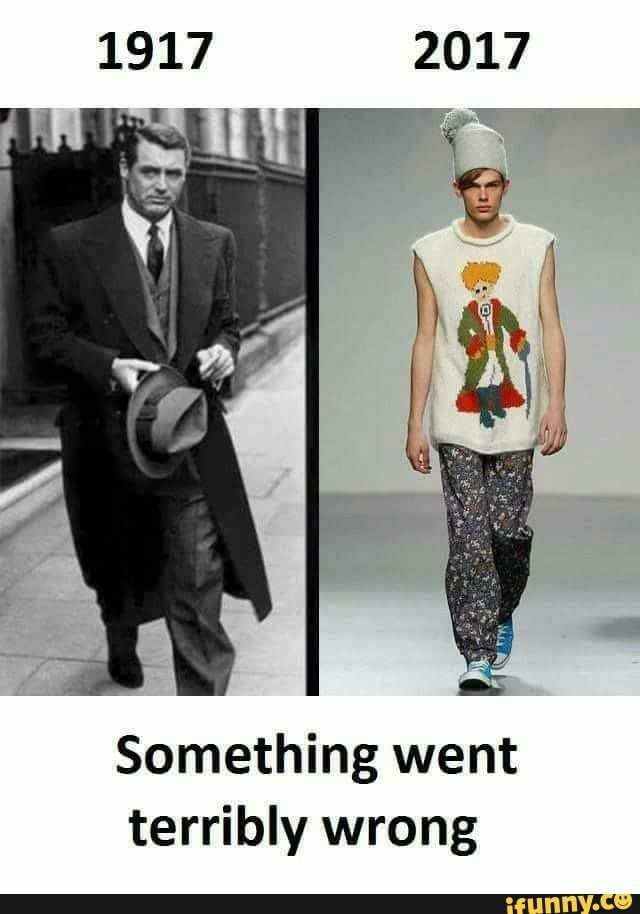
Cultural commentary often finds humor in comparing the aesthetics of past generations with the avant-garde trends of modern times. A popular viral meme contrasts a sharply dressed gentleman from 1917 wearing a tailored suit, overcoat, and fedora with a high-fashion runway model from 2017 sporting whimsical knitwear and patterned trousers, captioned with the provocative statement: “Something went terribly wrong”.
While this comparison is meant to be lighthearted and humorous, it opens the door to a fascinating discussion about how societal norms, tailoring traditions, and cultural expressions of masculinity have evolved over the past century.
The Tailored Elegance of 1917 Style
In the early 20th century, men’s fashion was characterized by rigid formality, structured tailoring, and conservative dress codes. Whether walking down a metropolitan street or heading to a professional workplace, adult men almost universally wore suits, vests, overcoats, and hats.
This style was rooted in practicality, social expectation, and craftsmanship. Tailors constructed garments from heavy, durable wools designed to withstand harsh weather conditions and last for decades.
Structured Formality: Wearing a suit and hat was not merely a fashion choice; it was a universal social standard expected of men in public life.
Durability and Quality: Garments were built with heavy materials, reflecting an era where clothing was an investment intended to be repaired rather than replaced quickly.
Symbol of Adulthood: Dressing formally marked a clear transition into professional and civic responsibility for young men.
The Avant-Garde Revolution of 2017 Runway Fashion
Fast forward one hundred years to 2017, and high-fashion runways present an entirely different universe. Modern runway shows are designed to challenge traditional boundaries, provoke thought, and experiment with colors, textures, and fluid gender silhouettes.
What appears on a high-fashion runway is rarely meant for everyday office wear; instead, it serves as high-art performance and conceptual design. Designers utilize novelty knitwear, playful graphics, and relaxed fits to push against historical constraints, reflecting an era that prioritizes individual self-expression and comfort over rigid social conformity.
Conceptual Artistry: Runway fashion functions more like a creative canvas than practical daily attire, exploring artistic boundaries and emotional storytelling.
The Shift Toward Comfort: Modern casual wear favors relaxed silhouettes, breathable fabrics, and athletic influences over heavy, restrictive wool suits.
Personalized Identity: Contemporary style encourages individuals to curate their own looks based on personal taste rather than adhering to strict generational dress codes.
Financial Wisdom, Wardrobe Investments, and Modern Consumerism
The stark contrast between 1917 and 2017 also highlights a massive economic shift in how clothing is manufactured, purchased, and valued. In earlier decades, men owned fewer garments of significantly higher quality, investing in custom tailoring or durable off-the-rack suits designed to endure years of wear.
In contrast, the modern fast-fashion era has made clothing inexpensive and disposable, leading to rapid trend cycles and large amounts of textile waste. Adopting smart financial habits when building a wardrobe involves balancing timeless quality with modern practicality:
Invest in Timeless Staples: Purchasing a few versatile, well-tailored pieces—such as a classic blazer or a quality overcoat—ensures longevity across changing fashion cycles.
Prioritize Durability: Inspect fabric composition and stitching quality to ensure that clothing purchases offer lasting value rather than temporary novelty.
Budget Mindfully: Avoid impulse purchases driven by ultra-fast micro-trends, directing savings toward long-term financial stability, investment portfolios, or emergency funds.
Practical Tips for Blending Classic Elegance with Modern Versatility
You do not need to choose between stiff historical formality and eccentric runway trends. Here is how to incorporate elements of both worlds into your personal style:
Embrace Tailored Fits: Modern tailoring combines the clean lines of classic menswear with comfortable, flexible fabrics that suit contemporary lifestyles.
Elevate Casual Wear: Pair classic items—like a structured jacket or leather boots—with comfortable modern basics for a balanced, sophisticated look.
Dress for the Occasion: Match your wardrobe choices to your environment, appreciating formal traditions when attending special events while enjoying casual comfort during daily routines.
Fascinating Facts About Fashion History
The Death of the Hat: The cultural shift away from daily hat-wearing for men is often attributed to the rise of automobiles in the mid-20th century, as low-ceilinged car interiors made bulky fedoras and top hats inconvenient.
The Origins of Runway Shows: Early fashion presentations in the 19th and early 20th centuries were intimate salon gatherings where models walked slowly among buyers, long before theatrical modern runway productions were invented.
The Evolution of Denim: Once considered exclusively rugged workwear for miners and laborers, denim transformed over the 20th century into a universal staple of global casual fashion.
Conclusion
The humorous meme contrasting 1917 and 2017 highlights how radically public expectations of men’s fashion have shifted over a century. While traditional tailoring represented an era of formal structure, modern style celebrates individual expression and comfort. Ultimately, fashion continues to reflect the changing values, needs, and creative freedoms of each passing generation.
FAQ Section
Why did men stop wearing suits and hats every day?
The widespread adoption of automobiles, changing workplace dress codes, and a cultural shift toward casual comfort during the mid-to-late 20th century led to the decline of daily suit and hat-wearing.
Are runway fashion clothes meant to be worn in daily life?
No. High-fashion runway collections are conceptual art pieces designed to showcase creative trends, color palettes, and tailoring innovations rather than practical everyday outfits.
Why do vintage styles remain so popular today?
Vintage clothing is admired for its exceptional tailoring quality, heavy-duty materials, timeless elegance, and the nostalgic connection it provides to past eras of craftsmanship.
