
Which Design Is Best? What Would You Do Under the Stairs?
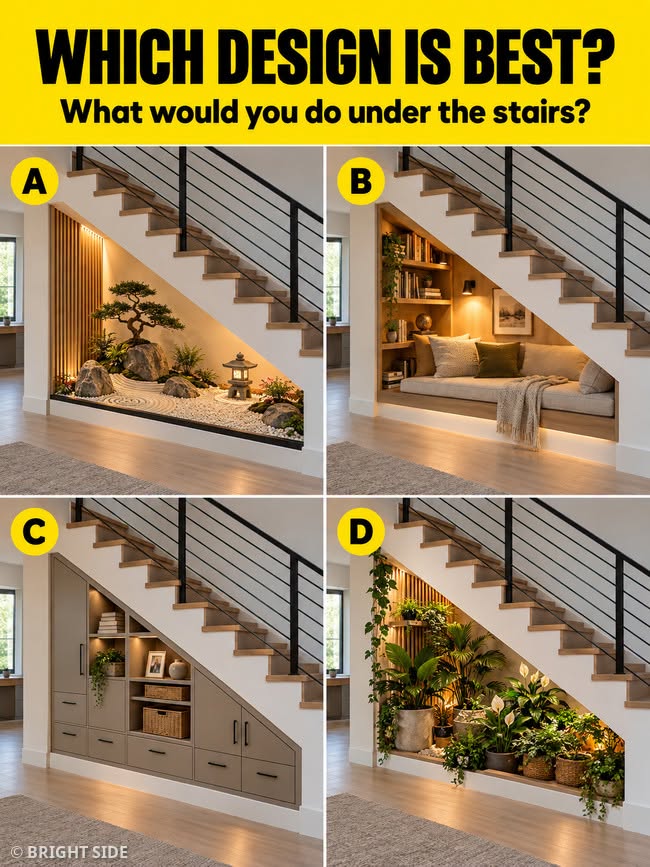
The space beneath a staircase is one of the most versatile yet frequently underutilized areas in modern home architecture. Often written off as awkward, dark dead space, interior designers and homeowners around the world are transforming this triangular alcove into stunning focal points. A popular design choice board currently circulating online presents four incredible options: A (a tranquil indoor Zen rock garden with bonsai), B (a cozy reading nook with built-in bookshelves and a daybed), C (custom built-in storage cabinets and shelving), and D (a lush indoor jungle filled with vibrant green plants).
In this comprehensive guide, we will explore the pros and cons of each under-stairs design, practical tips for optimizing small architectural spaces, and how thoughtful home organization parallels long-term planning and personal growth.
Exploring the Four Under-Stairs Design Options
Each design option on the board offers a completely different aesthetic and functional purpose, catering to various lifestyles and home layouts.
Design A: The Zen Rock Garden
The Concept: A miniature Japanese-style rock garden featuring white gravel, carefully placed stones, a bonsai tree, and a small decorative lantern, illuminated by warm accent lighting.
Best For: Creating a calming, meditative atmosphere and bringing a unique artistic element into an entryway or living room.
Considerations: Requires minimal maintenance compared to living plants, but needs occasional dusting of the gravel and stones.
Design B: The Cozy Reading Nook
The Concept: A built-in daybed or cushioned bench seat tucked under the stairs, accompanied by integrated bookshelves, warm lighting, and framed wall art.
Best For: Book lovers, maximizing comfort, and turning a tight corner into a functional relaxation zone.
Considerations: Requires custom carpentry to fit the triangular dimensions perfectly, but offers wonderful utility for small-space living.
Design C: Practical Custom Storage Cabinetry
The Concept: Sleek, built-in cabinets and drawers seamlessly integrated into the slope of the staircase, providing hidden storage alongside open display shelving.
Best For: Maximizing home organization, hiding clutter, storing shoes, winter coats, or household items.
Considerations: Highly practical for families and smaller homes where storage space is at a premium.
Design D: The Lush Indoor Plant Jungle
The Concept: A vibrant, overflowing indoor garden featuring tall potted palms, trailing vines, and illuminated foliage filling the entire alcove.
Best For: Plant enthusiasts looking to purify indoor air and bring a rich, natural touch of the outdoors directly inside the home.
Considerations: Requires adequate indoor lighting (or grow lights), regular watering, and plant care to keep the foliage thriving.
Practical Tips for Maximizing Under-Stairs Spaces
If you are inspired to renovate the space beneath your staircase, keeping a few practical guidelines in mind ensures success:
Assess Your Household Needs: Do you need more storage (Option C), a cozy spot to relax (Option B), or a visual statement piece (Options A or D)? Let your daily lifestyle guide your choice.
Invest in Proper Lighting: Because staircases naturally cast shadows, integrating warm LED strip lights, spotlights, or sconces is essential to make the dark alcove feel bright and inviting.
Prioritize Custom Fit: Because under-stairs spaces feature sloped ceilings, working with modular shelving or custom carpentry ensures every inch is utilized efficiently.
Consult Professionals: For complex projects involving built-in cabinetry, electrical wiring for lighting, or structural adjustments, consult with qualified interior designers, contractors, or home improvement specialists.
Parallels in Long-Term Planning: Home, Finance, and Organization
Just as transforming an awkward under-stairs space requires careful budgeting, design foresight, and execution, achieving stability in other areas of life demands similar dedication.
1. Financial Management and Mortgages
Optimizing your living space often goes hand-in-hand with managing your mortgage, planning home renovations, and budgeting for long-term investments. Ensuring your home meets your family’s evolving needs is a vital part of personal financial health.
2. Education and Skill Development
Just as a home requires continuous maintenance and upgrades, your mind grows through ongoing education, learning new technical skills, and adapting to modern business environments.
Interesting Facts About Staircase Architecture
The Origin of Under-Stairs Spaces: Historically, the space beneath stairs (often called a “cupboard under the stairs”) was used as modest storage or even makeshift servant quarters in older European architecture.
Feng Shui Principles: In traditional Feng Shui, leaving the space under the stairs open or clutter-free is believed to encourage smooth energy flow throughout the home.
Maximizing Square Footage: In modern urban housing where square footage is expensive, clever under-stairs conversions can add significant functional value to a home.
Custom Carpentry Evolution: Modern 3D modeling and modular furniture systems have made custom stair alcove designs much more accessible and affordable for homeowners worldwide.
Conclusion
Choosing the best design for the space beneath your stairs comes down to balancing aesthetics with practical utility. Whether you prefer the meditative calm of a Zen rock garden (A), the cozy comfort of a reading nook (B), the sleek efficiency of hidden storage cabinets (C), or the vibrant life of an indoor plant jungle (D), transforming this overlooked corner can completely revitalize your home’s interior.
As you continue exploring home improvement, lifestyle design, and personal projects, remember that thoughtful planning turns even the smallest spaces into extraordinary features.
Frequently Asked Questions (FAQ)
1. Which under-stairs design offers the most practical utility?
Design C (custom storage cabinetry) offers the most practical utility for everyday organization, helping hide clutter, shoes, and household items.
2. Are indoor plants difficult to maintain under a staircase?
It depends on natural light availability. If the area lacks sunlight, you may need to install specialized LED grow lights or choose low-light-tolerant plant species.
3. Can I build a reading nook or storage unit myself?
Simple shelving can be a DIY project, but custom-fitted daybeds and built-in cabinetry usually require professional carpentry to match the precise sloped angles of a staircase.
4. How can I brighten a dark space under the stairs?
Installing integrated LED strip lighting, warm wall sconces, or recessed spotlights can instantly transform a dark alcove into a bright, welcoming focal point.
