
The Wisdom of the Bee and the Fly: Why You Should Never Waste Energy Arguing
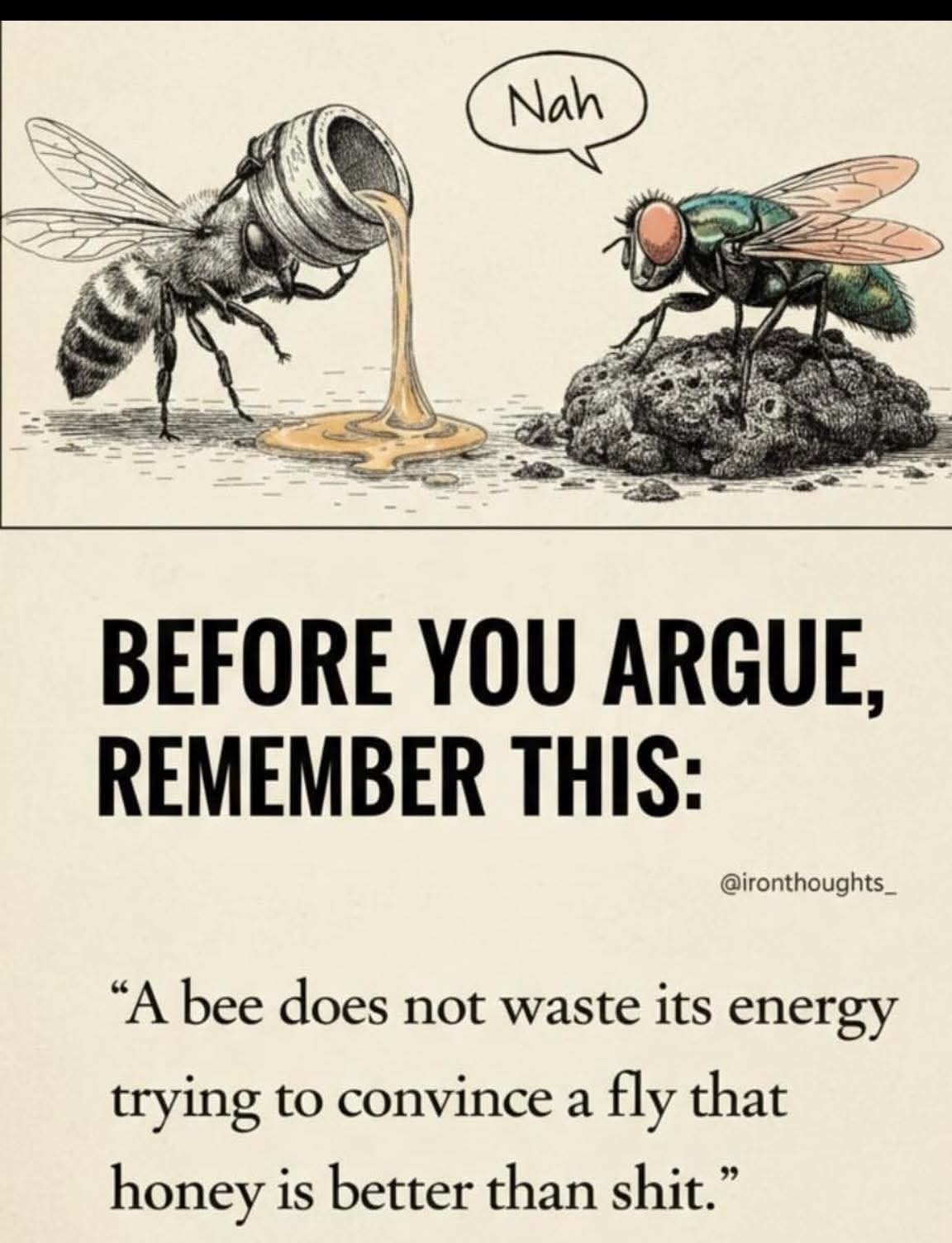
In a world filled with endless online debates, social media arguments, and conflicting opinions, protecting your mental peace is more important than ever. A widely shared viral meme captures this lesson with brilliant humor and blunt truth: “Before you argue, remember this: ‘A bee does not waste its energy trying to convince a fly that honey is better than shit.’”
The accompanying illustration shows a bee offering a jar of sweet honey, while a fly sitting on compost simply replies, “Nah.” This clever metaphor resonates with millions because it highlights a universal truth about human communication, boundaries, and energy conservation. Examining the psychology of persuasion, the futility of arguing with closed-minded individuals, and why protecting your peace matters reveals the lasting value of this advice.
The Psychology of Arguments and Perspective
Human beings naturally want to share their perspectives, correct misinformation, or help others see a different point of view. However, psychological studies on cognitive bias and confirmation bias show that people rarely change deeply entrenched opinions simply because someone argues with them online.
When two people operate from entirely different worldviews, values, or mental frameworks, attempting to force agreement is often a complete waste of time and emotional energy. Just like the bee and the fly, different individuals are naturally drawn to entirely different things.
Confirmation Bias: People tend to seek out information and opinions that reinforce their existing beliefs while rejecting outside perspectives.
Emotional Exhaustion: Engaging in endless, unproductive debates drains mental energy that could be spent on positive, productive pursuits.
The Value of Selectivity: Choosing your battles wisely is a hallmark of emotional maturity and self-respect.
Protecting Your Peace and Emotional Energy
In personal relationships, professional settings, and digital spaces, learning when to walk away from a toxic or pointless argument is a critical life skill. Trying to convince someone who has no interest in listening or growing only leads to frustration.
Recognizing when an argument is futile allows you to redirect your focus toward constructive environments, supportive communities, and personal growth.
Preserve Your Focus: Direct your energy toward goals, creative projects, and people who appreciate your input.
Establish Firm Boundaries: Disengage gracefully from unnecessary conflict rather than getting dragged down into negativity.
Choose Peace Over Winning: Realizing that you do not need the last word brings incredible mental freedom and peace of mind.
Financial Wisdom, Resource Allocation, and Focus
The principle of conserving energy and avoiding wasted effort applies directly to financial management and business strategy. Just as your personal energy is limited, your financial resources require careful stewardship:
Avoid Bad Investments: Do not throw good money after bad ventures or risky schemes driven by outside pressure or stubbornness.
Focus on High-Yield Priorities: Allocate your capital and time toward reliable, high-value assets and proven strategies for long-term growth.
Protect Your Resources: Practice financial discipline by walking away from unprofitable deals or unnecessary consumer traps.
Practical Tips for Avoiding Unproductive Arguments
If you want to protect your time and emotional well-being from draining conflicts, try these simple strategies:
Pause Before Reacting: Before engaging in a heated discussion or online debate, ask yourself if it will matter a year from now.
Practice the “Walk Away” Rule: If you notice the other person is closed-minded and looking for a fight rather than a conversation, gracefully exit the exchange.
Invest in Supportive Circles: Surround yourself with open-minded, positive people who encourage mutual growth and constructive dialogue.
Channel Energy Creatively: Redirect the frustration of disagreements into productive hobbies, work projects, or physical fitness.
Fascinating Facts About Bees, Flies, and Nature
The Incredible Bee: Honeybees are essential pollinators responsible for pollinating roughly one-third of the human diet, working tirelessly to produce nutrient-rich honey for their colonies.
The Ecological Role of Flies: While houseflies are associated with decay, various species of flies play a vital role in natural decomposition cycles and plant pollination.
The Origin of Proverbial Wisdom: Using animal metaphors to teach moral and psychological lessons dates back to ancient fables, utilizing simple imagery to convey profound human truths.
Conclusion
The viral meme of the bee and the fly offers a hilarious yet profoundly wise reminder about the nature of human arguments. By recognizing when an interaction is unproductive and choosing to conserve your energy, you protect your mental peace and focus your attention on what truly matters.
FAQ Section
What does the “bee and the fly” meme mean?
The meme illustrates that arguing with closed-minded people is futile, comparing it to a bee trying to convince a fly that honey is better than garbage; both creatures simply prefer entirely different things.
Why is it so hard to walk away from an argument?
Human ego, the desire to be proven right, and emotional reactivity often make it difficult to disengage from conflicts, even when winning the argument offers no real benefit.
How can I stop getting pulled into online debates?
You can avoid online debates by recognizing your triggers, muting or scrolling past controversial arguments, and intentionally investing your time in offline, productive activities.
