
Discovering a cockroach scuttling across your kitchen counter, bathroom sink, or living room floor is one of the most unsettling experiences a homeowner can face. Beyond the immediate shock, seeing a single cockroach during daylight hours often signals a deeper issue. Because cockroaches are nocturnal pests that thrive in dark, humid, and secluded environments, spotting one out in the open usually means hiding spots are becoming crowded or food and water sources are nearby.
Cockroaches are highly resilient pests capable of surviving in harsh environments, reproducing rapidly, and contaminating food prep surfaces with bacteria like Salmonella and E. coli. Simply squishing one roach will not protect your home. To prevent a minor sighting from turning into a full-scale infestation, you need a proactive, systematic strategy that targets their nests, eliminates attractants, and destroys them safely using proven home methods.
In this comprehensive guide, we will break down the exact immediate actions you must take when you spot a cockroach, explore simple DIY elimination remedies using common pantry ingredients like baking soda and sugar, detail preventive sanitation steps, and examine how maintaining a clean, pest-free home protects your health, property value, and personal finances.
The Immediate Action Plan: What to Do in the First 5 Minutes
When you spot a cockroach, taking immediate, deliberate steps prevents the insect from retreating back into inaccessible wall voids, cabinet cracks, or plumbing lines.
1. Identify the Entry Point and Hiding Direction
Take note of where the cockroach emerged and where it attempts to hide. Did it dash beneath the kitchen sink, behind the refrigerator, into a baseboard gap, or down a floor drain? Identifying its flight path highlights primary structural entry points or moisture sources that require sealing.
2. Isolate Food and Water Sources Immediately
Cockroaches enter human homes primarily seeking two things: moisture and food. Immediately wipe up standing water around sinks, dry out stainless steel basins, clean up pet food bowls, and store open pantry items in airtight glass or thick plastic containers.
3. Avoid Stomping on Carrying Females
While your first instinct might be to stomp on the roach, squishing a female carrying an egg case (ootheca) can potentially spread eggs across your flooring or footwear if not cleaned immediately with disinfectant. Using a damp paper towel with soap or an active home bait is a cleaner, more hygienic approach.
The Baking Soda and Sugar Trick: A Safe, Non-Toxic Home Remedy
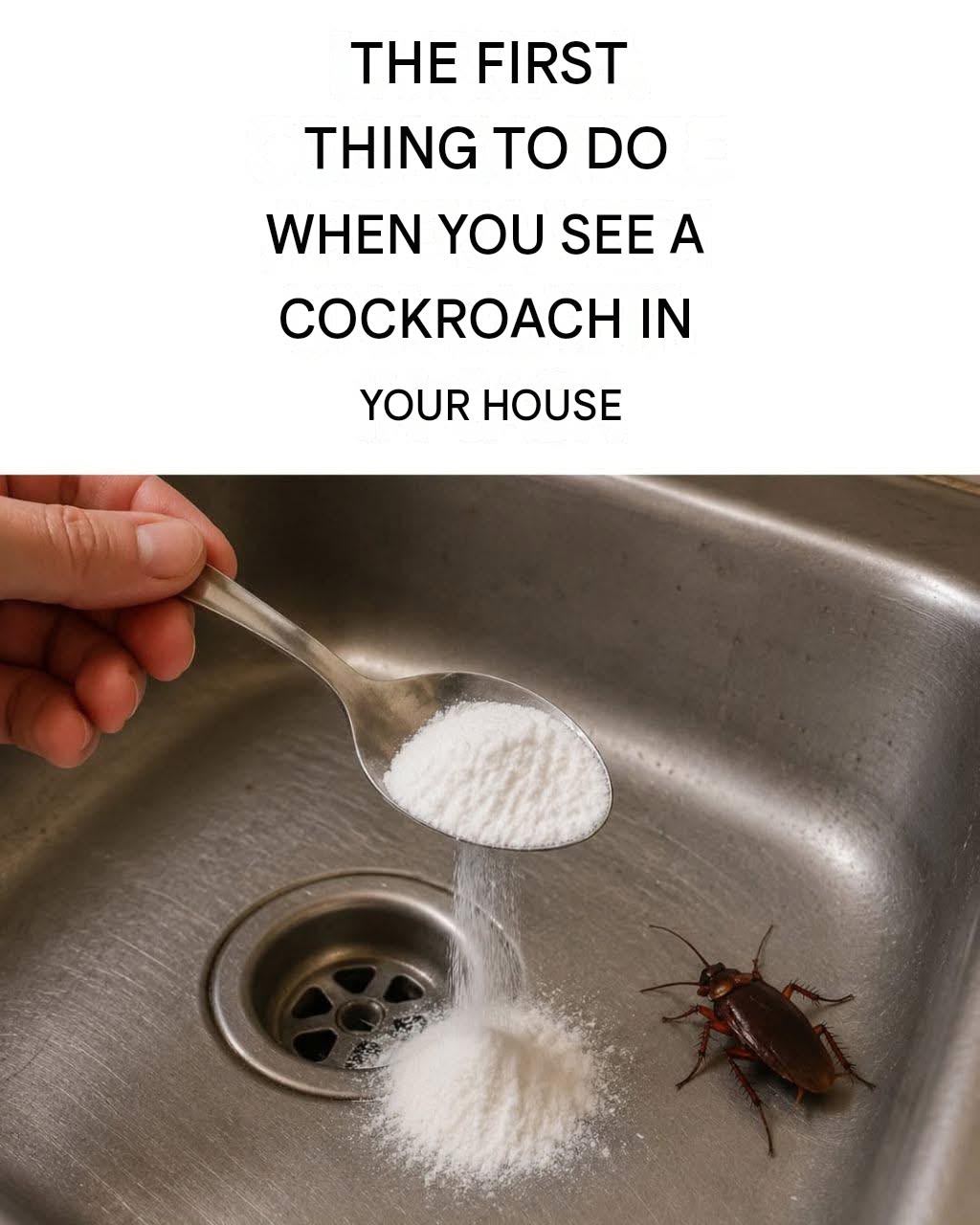
As shown in household pest control remedies, baking soda (sodium bicarbonate) serves as a remarkably effective, non-toxic cockroach killer when combined with a sweet attractant.
How Baking Soda Kills Cockroaches
Cockroaches lack complex digestive systems. When a cockroach ingests baking soda, the compound reacts with the acid in the pest’s stomach, generating carbon dioxide gas. Because cockroaches cannot release trapped internal gas, the rapid gas buildup creates severe internal pressure that eliminates the insect from within.
Step-by-Step DIY Bait Recipe
Ingredients Needed:
2 tablespoons baking soda (sodium bicarbonate)
2 tablespoons powdered sugar or white granulated sugar
Small shallow bottle caps or small cardboard squares
Instructions:
Mix Equal Parts: Thoroughly combine 2 tablespoons of baking soda with 2 tablespoons of powdered sugar in a small bowl. The sugar acts as irresistible bait, masking the alkaline taste of the baking soda.
Place in Strategic Hotspots: Sprinkle small amounts of the dry powder mixture or place filled shallow caps directly where cockroaches travel—under kitchen sinks, behind refrigerators, near trash cans, and close to floor drains.
Provide Water Nearby: Place a small cap of clean water near the bait. When the cockroach consumes the sugary baking soda mix and drinks water, the internal chemical reaction accelerates, eliminating the pest quickly.
Comparing DIY Cockroach Elimination Methods
Understanding how different home remedies work helps you choose the best treatment for your household needs.
Method / Remedy Active Ingredient Mode of Action Safety Level Around Pets & Kids
Baking Soda & Sugar
Sodium Bicarbonate & Sugar
Gas expansion in digestive system
Very High (Non-toxic food items)
Diatomaceous Earth (DE) Amorphous Silica Dust Desiccates & breaks down outer waxy exoskeleton High (Food-grade versions are safe)
Boric Acid & Flour Bait Borate Salts Disrupts nervous system & stomach lining Moderate (Keep away from pets)
Commercial Gel Baits Fipronil or Indoxacarb Slow-acting nerve agent that destroys nests Moderate (Use inside enclosed bait stations)
Long-Term Prevention: Depriving Roaches of Survival Essentials
To keep cockroaches from returning permanently, you must eliminate the environmental conditions that attracted them in the first place.
1. Seal Structural Cracks and Pipe Gaps
Use silicone caulk or expanding foam to seal gaps around plumbing pipes under sinks, baseboard crevices, wire entry points, and cabinet gaps. Sealing entry points stops roaches from migrating between wall cavities or neighboring units.
2. Deep Clean Kitchen Appliances and Countertops
Cockroaches can feed on microscopic grease splatters and bread crumbs. Pull out refrigerators, stoves, and microwave units every few months to sweep and mop accumulated food particles and grease.
3. Maintain Dry Plumbing and Drains
Cockroaches can survive for weeks without food, but only days without water. Fix leaky faucets under sinks immediately, dry out bathroom tub basins overnight, and cover shower and floor drains with fine mesh strainers.
Connecting Pest Control, Property Insurance, and Financial Peace of Mind
Managing home pest control and structural maintenance directly impacts your living environment, family health, and financial well-being.
Protecting Indoor Air Quality and Health
Cockroach droppings, shed skins, and saliva contain potent protein allergens that trigger severe indoor allergies and asthma attacks, particularly in young children. Keeping your living space clean and free of pests reduces exposure to harmful bacteria, supporting long-term health and minimizing unnecessary trips to the clinic or doctor.
Protecting Property Value and Homeowners Insurance
Unchecked pest infestations and underlying water leaks can lead to structural decay, wood damage, and mold growth. While standard homeowners insurance policies cover sudden accidental water damage, they routinely exclude damage caused by gradual maintenance neglect or unmanaged pest infestations. Maintaining your kitchen plumbing, sealing wall gaps, and keeping drains dry protects your real estate investment, supports your personal finance goals, and preserves your home’s resale value.
Combining proactive home upkeep with sound long-term planning—such as maintaining comprehensive health, property, and life insurance coverage—provides complete financial stability and peace of mind for your household.
Fascinating Facts About Cockroaches
Extreme Survival Resilience: Cockroaches can survive for up to one week without a head because their breathing system operates through tiny spiracles located along the sides of their body segments.
Ancient Evolutionary Lineage: Fossil records prove that primitive cockroaches existed over 300 million years ago during the Carboniferous period, outlasting the dinosaurs.
Rapid Speed: A cockroach can run up to 3 miles per hour relative to its body size, allowing it to dart into dark hiding spots almost instantly when lights turn on.
Nutritional Flexibility: Cockroaches are opportunistic omnivores capable of digesting starch, leather, soap scum, hair, wallpaper paste, and fallen bookbinding glue when traditional food is unavailable.
Conclusion: Taking Control of Your Home’s Hygiene
Seeing a cockroach in your home is a clear warning sign that requires prompt, decisive action. By reacting quickly, using safe and effective home remedies like baking soda and sugar, and eliminating moisture sources under sinks and drains, you can disrupt pest activity before it becomes a major problem.
Practicing routine home sanitation, sealing structural cracks, and taking advantage of preventive health and home maintenance steps protects your household’s hygiene, safeguards your family’s health, and gives you long-term peace of mind.
Frequently Asked Questions
Does seeing one cockroach mean there is an infestation?
Not always, but it is a strong warning sign. Cockroaches are secretive, nocturnal insects that prefer hiding in dark cracks. Seeing one roach during the day often suggests that nests are getting crowded or that food and water sources are nearby, making immediate inspection and preventative treatment essential.
Is baking soda really safe around pets and children?
Yes. Standard baking soda (sodium bicarbonate) and sugar are common food ingredients that are non-toxic to dogs, cats, and humans. Unlike chemical sprays or toxic powders, baking soda bait can be safely placed under kitchen sinks and behind appliances.
How long does it take for baking soda bait to kill cockroaches?
Cockroaches that ingest the baking soda and sugar mixture typically die within 12 to 24 hours after consuming water. Maintaining fresh bait traps for 1 to 2 weeks ensures that newly hatched nymphs are also eliminated.
Why do cockroaches like bathroom and kitchen sinks?
Sinks provide everything cockroaches need to thrive: constant moisture, dark cabinet hiding spots, organic soap scum, and drain access to sewer or plumbing lines. Keeping sinks completely dry overnight cuts off their primary water supply.
Should I hire a professional exterminator?
If you continue to see multiple cockroaches daily despite using home remedies, deep cleaning, and sealing entry gaps, hiring a licensed pest control professional is recommended. Professionals can apply targeted, low-toxicity gel baits and insect growth regulators (IGRs) to destroy hidden nests deep inside wall cavities.
